SecLive Feed
Sec breaking news and instant alerts. Crypto Feed's minimalist interface delivers verified headlines, price movements, and protocol updates the moment they happen. Fast, focused, no fluff.
- LIVE
 ETF Delays Shake Market Confidence, But XRP’s Volume Spike Supports a $2.9 Bullish Signal
XRP is staging a remarkable rebound, rising from early October lows of $1.77 to over $2.60, even as the U.S. Securities and Exchange Commission (SEC) prolongs its review of pending XRP ETF filings. The delays have sparked mixed market sentiment, yet XRP’s trading volume and technical setup indicate growing bullish momentum. Over the weekend, XRP surged to $2.68, breaking critical resistance at $2.63 on a 147% volume spike, one of the largest in recent months. This explosive move coincided with renewed optimism following Ripple’s strategic acquisitions, including the integration of Ripple Prime and GTreasury, which CEO Brad Garlinghouse said place XRP “at the center of everything Ripple does.” Technical Indicators Strengthen the Bullish Outlook From a technical perspective, XRP’s chart paints a clear bullish picture. The token has moved firmly above both its 50-day and 200-day exponential moving averages (EMAs), key indicators of trend continuation. It has also formed an inverse head-and-shoulders pattern, historically signaling potential for higher highs. The Relative Strength Index (RSI) remains near 70, showing strong demand despite slightly overbought conditions. Analysts expect a confirmed breakout above $2.70 to set the stage for XRP to reach the $2.90–$3.00 range in the near term. Momentum indicators such as the True Strength Index (TSI) and rising open interest in CME XRP futures, which recently crossed $27 billion in notional volume, reinforce this bullish outlook. However, traders are watching the $2.54–$2.58 support zone closely. A drop below this range could weaken momentum and invite short-term corrections. Institutional Flows Signal Confidence in XRP’s Future While ETF delays have briefly dented sentiment, institutional accumulation around XRP remains strong. The token’s rapid integration into U.S.-listed ETFs, expanding derivatives markets, and corporate adoption, including Evernorth’s treasury allocation, underscore growing confidence in Ripple’s long-term fundamentals. Institutional demand continues to accelerate through vehicles like the REX-Osprey XRP ETF, which recently surpassed $100 million in assets under management, placing XRP as a mainstream financial instrument rather than a speculative token. With global crypto market capitalization hovering near $3.8 trillion and the Federal Reserve’s upcoming rate decision expected to ease liquidity constraints, analysts believe XRP could outperform peers in the next leg of the bull cycle. If buying pressure holds above $2.70, the $2.90 breakout target may only mark the beginning of a broader rally, one that cements XRP’s role at the heart of institutional digital finance. Cover image from ChatGPT, XRPUSD on Tradingview
- LIVE
 NYSE Lists Solana, Hedera, Litecoin Spot Crypto ETFs for Trading This Week
NYSE moves ahead with listings for four new spot crypto ETFs as SEC staff process approvals despite the government shutdown.
- LIVEHuione Laundered Millions Through South Korean Exchanges
The US recently sanctioned Cambodia-based Huione Group, calling it a transnational crime organization. Authorities have now confirmed that the group laundered criminal funds through South Korean cryptocurrency exchanges. Data from South Korea’s Financial Supervisory Service (FSS) shows significant capital movements. Bithumb Processed Most of the Suspicious Transactions Huione’s subsidiary, Huione Guarantee, conducted extensive transactions with Korean won-market exchanges over the past three years. In total, deposits and withdrawals in Tether (USDT) reached about 15.9 billion KRW ($12 million). The office of ruling People Power Party lawmaker Lee Yang-soo disclosed the FSS data on Monday. The records reveal that Huione Guarantee was deeply involved in financial activity with Korean exchanges. Further, officials suspect the funds are linked to kidnapping, human trafficking, and voice phishing operations currently under investigation in Cambodia. 5/ Huione has directly facilitated laundering billions in illicit funds over the past couple years from pig butchering scams, investment scams, human trafficking and hacks/exploits in Southeast Asia. Last week the US applied additional restrictions against Huione in relation to… pic.twitter.com/L2ZIoMx6By— ZachXBT (@zachxbt) October 19, 2025 Bithumb processed the majority of transactions, handling about 14.6 billion KRW, while Upbit and Korbit accounted for 889 million KRW and 454 million KRW, respectively. Meanwhile, the timing of these transfers has raised an alarm. They coincide with a spike in fraud, kidnapping, and human trafficking cases in Cambodia. On October 18, the South Korean government repatriated 64 Korean nationals arrested in Cambodia for participating in online fraud schemes. Many were reportedly held captive by Chinese crime syndicates. Possible Links to Kidnapping and Sanctions Recent high-profile cases involving Korean victims of kidnapping, confinement, and murder have prompted a broader probe. South Korean authorities are investigating whether these incidents are tied to Huione Group’s operations. Investigators noted that transactions between Bithumb and Huione surged in 2024, around the same time reports increased of Koreans being lured to Cambodia under false job offers and then detained. Right after the U.S. cut Huione Group off from the global financial system, One Property in Phnom Penh suddenly told residents they can no longer pay through ABA, only Prince Bank or Huione. That shift looks less like a business adjustment and more like a strategy to keep… pic.twitter.com/KjAfzfA30y— Jacob in Cambodia (@jacobincambodia) October 17, 2025 Who Is the Huione Group? Huione Group presents itself as a legitimate Cambodian conglomerate. Yet, its subsidiary Huione Guarantee has been accused of facilitating online fraud and money laundering under the guise of offering payment and surety services. The group first drew international attention in July 2024, when blockchain analytics firm Elliptic reported that Huione Guarantee was a key platform for cryptocurrency laundering. Initially launched in 2021 as a peer-to-peer marketplace for cars and real estate, the platform evolved into a major exchange hub for Chinese yuan and USDT among criminal networks across Southeast Asia. Elliptic estimated that it processed about $11 billion in illicit funds. Today, OFAC and FinCEN, with UK's FCDO, designated the Prince Group TCO and 146 associates, while Huione Group was named under Section 311 of the USA PATRIOT Act. DOJ also seized a record $15B in bitcoin linked to these Southeast Asian crypto scam operations. Read more here:… pic.twitter.com/MgjkMFmCbl— Chainalysis (@chainalysis) October 14, 2025 Crackdown and US Sanctions On October 14, 2025, the US Treasury Department’s Financial Crimes Enforcement Network (FinCEN) imposed sanctions on Huione Group. The action effectively cut the conglomerate off from the US financial system. The Treasury cited confirmed links between Huione Group and North Korean cybercrime operations as well as large-scale virtual asset scams across Southeast Asia. Authorities continue to trace the network’s financial ties as investigations expand across multiple jurisdictions. The post Huione Laundered Millions Through South Korean Exchanges appeared first on BeInCrypto.
 White House Officially Taps Mike Selig As CFTC Chair – Inside the Shake-Up After Quintenz
U.S. President Donald Trump has tapped the Securities and Exchange Commission’s (SEC) Mike Selig to lead the Commodity Futures Trading Commission, the latter confirmed on Saturday.Mike Selig Speaks Amid CFTC Chair NewsSelig, who most recently led the SEC’s Crypto Task Force as chief counsel, took to X on October 25 to say he was “honored” to spearhead the CFTC. I am honored to be nominated by President Trump to serve as the 16th Chairman of the U.S. Commodity Futures Trading Commission. With the President’s leadership, a Great Golden Age for America’s Financial Markets and a Wealth of New Opportunities stand before us. I pledge to work… https://t.co/cO2vLBAv0z— Mike Selig (@MikeSeligEsq) October 25, 2025 “With the President’s leadership, a Great Golden Age for America’s Financial Markets and a Wealth of New Opportunities stand before us,” Selig said.“I pledge to work tirelessly to facilitate Well-Functioning Commodity Markets, promote Freedom, Competition and Innovation, and help the President make the United States the Crypto Capital of the World,” he added.Brian Quintenz Nomination Withdrawn After Winklevoss ConcernsSelig’s nomination comes after the nomination process for Trump’s initial pick for CFTC chair, a16z policy head Brian Quintenz, stalled earlier this year.In July, reports emerged that Gemini co-founders Cameron and Tyler allegedly voiced concerns over whether Quintenz was aligned with the Trump administration’s plans for crypto.In September, Quintenz shared a series of messages between him and Tyler Winklevoss on X before his nomination was rescinded later that month. I’ve never been inclined to release private messages. But in light of my support for the President and belief that he might have been misled, I’ve posted here the messages that include the questions Tyler Winklevoss asked me pertaining to their prior litigation with the CFTC. I… pic.twitter.com/MN75M1XUpT— Brian Quintenz (@BrianQuintenz) September 10, 2025 Trump, who largely campaigned with support from the blockchain sector, has received both praise and scrutiny for his affiliation with the digital asset industry.Shortly before his inauguration, Trump selected Yammer founder David Sacks to serve as the newly established White House A.I. and Crypto Czar.Following news of Selig’s nomination, Sacks praised him as “deeply knowledgeable about financial markets” and “passionate about modernizing our regulatory approach in order to maintain America’s competitiveness in the digital asset era.”“On behalf of the President’s Working Group on Digital Assets, @patrickjwitt and I look forward to continuing our work with Mike to deliver on President Trump’s promise to make the U.S. the crypto capital of the planet,” he continued.The post White House Officially Taps Mike Selig As CFTC Chair – Inside the Shake-Up After Quintenz appeared first on Cryptonews.
- NYSE Lists Solana, Hedera, Litecoin Spot Crypto ETFs for Trading This Week
NYSE moves ahead with listings for four new spot crypto ETFs as SEC staff process approvals despite the government shutdown.
 Crypto Phones Struggle as Solana Quietly Pulls Plug on Saga
Solana Mobile has quietly ended software and security support for its first-generation Saga phone, quietly closing the device’s lifecycle just over two years after its May 2023 debut and leaving roughly 20,000 active units without further updates.Marketed around an on-device Seed Vault, the smartphone briefly drew mainstream attention when memecoin airdrops made preloaded wallets unusually valuable.To continue reading this as well as other DeFi and Web3 news, visit us at thedefiant.io
 Canada Races to Finalize Stablecoin Rules Before Budget Reveal – Why?
Canada is moving quickly to finalize long-awaited rules for stablecoins ahead of its federal budget announcement on November 4, as policymakers rush to keep pace with the United States and prevent a loss of financial sovereignty amid rising use of U.S. dollar-backed tokens.According to Bloomberg, government officials have spent weeks holding closed-door consultations with regulators and industry stakeholders to develop a regulatory framework for stablecoins. According to Bloomberg, Canada is accelerating the development of its stablecoin regulatory framework, with details expected to be officially announced in the federal budget to be presented by Finance Minister François‑Philippe Champagne on November 4. Government officials…— Wu Blockchain (@WuBlockchain) October 27, 2025 The rules are expected to be outlined in the upcoming budget to be presented by Finance Minister François-Philippe Champagne.Officials familiar with the discussions said the government is now working toward addressing stablecoin oversight directly in the budget documents.The move comes amid growing concern from policymakers, market participants, and economists that Canada is falling behind other major economies, particularly the United States, in establishing clear rules for the stablecoin industry.Ottawa Urged to Act on Stablecoin Rules or Risk Losing Capital to U.S.Stablecoins, cryptocurrencies pegged to traditional currencies like the U.S. dollar, have grown into a central part of the global digital payments ecosystem. They are often issued by private companies such as Tether and Circle and backed by assets like U.S. Treasury bills to maintain price stability. The United States recently passed the GENIUS Act, granting regulators the authority to supervise stablecoin issuers, set reserve standards, and enforce anti–money laundering rules. The new law classified compliant stablecoins as payment instruments, giving the U.S. a clear framework that the industry has widely embraced.In contrast, Canada still lacks dedicated legislation. Regulators have said stablecoins could fall under existing securities or derivatives laws, but industry experts argue they should be treated as payment instruments instead. John Ruffolo, vice chair of the Council of Canadian Innovators, has urged Ottawa to act swiftly, warning that inaction could push capital south of the border.Without a clear framework, he said, Canadian investors and savers may increasingly turn to U.S. stablecoins to transfer funds internationally, effectively enriching American institutions and shifting financial data and liquidity outside the country.Data from Desjardins supports that concern. Foreign exchange strategist Mirza Shaheryar Baig noted that roughly 99% of global stablecoin value is pegged to the U.S. dollar. Since the GENIUS Act requires issuers to hold primarily U.S. Treasuries, he said, foreign adoption is fueling new and sustained demand for U.S. debt. Baig warned that widespread use of U.S. dollar stablecoins in Canada could weaken the country’s monetary sovereignty and reduce the Bank of Canada’s control over its money supply.The central bank itself has echoed the urgency. Ron Morrow, the Bank of Canada’s executive director of payments, supervision, and oversight, said in September that Canada must “weigh the merits of federal stablecoin regulation, similar to what other countries have done.”Source: Bank of CanadaMorrow warned that for stablecoins to function as real money, they must be “as safe and stable as the balance in your bank account.” The Office of the Superintendent of Financial Institutions (OSFI) has also expressed concern over the lack of regulatory clarity, calling for consistent national rules.Can New Rules Keep Canada Competitive in the Digital Payments Era?The absence of legislation has already begun to show economic consequences. A Desjardins report in October cautioned that Canada risks falling behind the U.S. and Europe, both of which have implemented stablecoin frameworks.Source: DesjardinsThe report also linked Shopify’s recent move to accept payments in USDC, a dollar-pegged stablecoin, to the growing attractiveness of U.S. digital payment systems.While a few domestic projects, such as QCAD and CADC, have introduced Canadian dollar–backed stablecoins, their adoption remains limited due to uncertainty over compliance and licensing requirements.Tetra Trust, a regulated Canadian custodian backed by National Bank and Shopify, plans to launch its own CAD-backed stablecoin in 2026, but experts say progress will remain slow until federal rules are established.Canada’s crypto adoption rate remains moderate compared to global trends. According to the Bank of Canada’s most recent “Methods-of-Payment” report, only around 3% of Canadians used Bitcoin for transactions in 2023, while cash accounted for 20% of all purchases. E-transfers remain the country’s most popular payment option, used by nearly 60% of respondents.Source: Bank of CanadaDespite this, Canada remains an early hub for crypto infrastructure, hosting over 3,000 Bitcoin ATMs, the second-largest number in the world.Institutional interest in digital assets has also grown. A 2024 KPMG survey found that 39% of Canadian institutional investors had some exposure to crypto, up from 31% in 2021. Many industry participants view regulatory clarity as key to maintaining that momentum. Coinbase, one of the world’s largest exchanges, has warned that without reform, Canada risks losing its competitive edge. @coinbase warns Canada risks losing its global economic edge without crypto reforms, urging innovation-friendly regulations to harness the potential of digital assets and maintain competitiveness.#canada #cryptohttps://t.co/xy66i2EN0L— Cryptonews.com (@cryptonews) March 27, 2025 The federal government’s fragmented regulatory structure, split between federal agencies, the Bank of Canada, OSFI, and 13 provincial securities commissions, has slowed policymaking. Advocates hope the upcoming budget will unify these efforts and provide a coherent framework for stablecoins similar to the U.S. approach.The issue also carries political weight. With an election on the horizon, the Liberal government faces pressure to demonstrate progress on financial innovation. Prime Minister-designate Mark Carney, a former Bank of England and Bank of Canada governor, has previously expressed skepticism about cryptocurrencies, though he has acknowledged in his book Value(s) that central bank–issued digital currencies could represent “the most likely future of money.”The post Canada Races to Finalize Stablecoin Rules Before Budget Reveal – Why? appeared first on Cryptonews.
 NYSE certifies Bitwise Solana staking ETF: Hong Kong beats U.S. to market
Bitwise crossed a key milestone toward launching the U.S. market’s first Solana staking ETF, securing NYSE listing certification. However, Hong Kong moved ahead, with ChinaAMC introducing the world’s first spot Solana ETF today.
 Digital Yen Goes Live: JPYC EX Integrates Traditional Finance With DeFi
Japan has officially stepped into the regulated stablecoin era with the launch of JPYC EX, the country’s first fully licensed digital yen under the revised Payment Services Act. This milestone marks a pivotal moment for Japan’s financial sector, bridging...
- Trump Family’s American Bitcoin Gains 10% With Fresh BTC Purchases
American Bitcoin, a BTC miner/treasury firm launched by the Trump family, holds a little under $4.5 million in Bitcoin. The firm’s stock price has climbed in recent days. The company hopes to use its mining operations and “Trump Bump” to remain at the cutting edge. Still, it’s hard to make any long-term predictions in today’s uncertain environment. A Trump Family Bitcoin Treasury President Trump has been introducing a lot of chaos to crypto markets, but many of his family’s business ventures are far less provocative. The President’s family has been receiving substantial incomes from its industry connections, and Trump venture American Bitcoin is making huge acquisitions: And we are just getting warmed up! Incredibly excited about $ABTC and what we are building. https://t.co/hjv8KCbCNx— Eric Trump (@EricTrump) October 27, 2025 According to a new press release, American Bitcoin has acquired 1,414 BTC since September, bringing its total holdings to 3,865. At current market rates, this represents a little under $4.5 billion in total, a major stockpile. Eric Trump repeatedly claimed that the firm plans to keep buying Bitcoin. Past Gains and Future Concerns American Bitcoin has only existed for a few months, but the Trump family’s support has already brought the firm a ton of success. The company’s stock value has been climbing since before the purchase announcement, growing roughly 20% in the last five days. Still, this new publicity caused an additional spike today alone: American Bitcoin Price Performance. Source: Yahoo Finance Much of the firm’s BTC stockpile comes from these purchases, but its mining operations have also helped buoy its mNAV. While most digital asset treasury (DAT) firms are struggling under this limitation, mining and the “Trump Bump” could help American Bitcoin remain competitive. Still, the whole DAT sector is facing a ton of challenges, both in terms of finance and possible legal issues. Although the latter concern likely won’t matter for a Trump family venture, American Bitcoin is still in a very chaotic sector. The post Trump Family’s American Bitcoin Gains 10% With Fresh BTC Purchases appeared first on BeInCrypto.
 Swiss Bitcoin App Relai Acquires MiCA License in France
The Zurich-based company is one of the first Bitcoin-only apps to obtain the MiCA license from the French regulatory body, the AMF. With this license, the Bitcoin-only platform becomes one of the first Bitcoin service providers to obtain the license. Its award-winning app will feature new enhancements, including Instant SEPA and the highest security standards within the industry. Relai aims to increase its marketing efforts across Europe by providing local educational content and hosting events within the EU. Relai has been a breakthrough star in a challenging market within the digital asset space, having secured a Series A funding round last year and surpassed 500,000 app downloads. With today’s announcement, the company is taking a giant step forward. As one of the first Bitcoin companies, the Swiss startup successfully obtained authorization as a Crypto-Asset Service Provider (CASP) under the EU’s MiCA Regulation, granted by the French Financial Markets Authority (AMF). This license enables Relai to take the next step and offer its award-winning app to users across the European Union, subject to completion of the passporting notification process. This is a milestone not only for the Swiss Bitcoin start-up but also for Bitcoin in Europe. So far, the company has built a loyal and engaging user base in Switzerland and Italy, but it aims to expose Bitcoin to even more users through its platform. With the MiCA license, Relai will be able to extend its regulated services to EU users, offering a range of features designed to enhance accessibility and transparency, such as: Instant SEPA – Everyone in the EU can buy Bitcoin within seconds. Higher Trading Limits – Users will have the ability to buy more BTC for their Euros. A Fixed Price – Users will see the exact price when creating their order, ensuring complete transparency on costs and conversion rates. Educational Content – Dedicated content with great learning initiatives. Events Across Europe – Relai will host and sponsor dedicated events in the EU. Best-in-Class Security – The app will utilize the latest security technology. “We’re incredibly proud to be one of the first Bitcoin companies to get the MiCA license and are eager to expand to France first and Europe in a second step!” — Julian Liniger, Co-Founder and CEO at Relai AG, Switzerland. Relai will also be guided by an outstanding advisory board, seated with Jean Guillaume, Daniel Astraud, and Herve de Kerdrel. All are veterans within the industry and an excellent addition to Relai’s expansion in Europe. “Relai is one of the first Bitcoin-only companies to receive the MiCA license. This is a breakthrough not just for us, but for the whole Bitcoin industry across Europe. Our goal is clear: Bringing Bitcoin to as many people as possible. Simple, secure, regulated.” — Adem Bilican, Co-Founder and President at Relai EU. MiCA enables the Bitcoin-only provider to create new and exciting products, gaining a foothold in an ever-evolving market within the EU. The next step for the company is to plan marketing campaigns and events for 2026, as well as exciting updates to the app in the coming weeks. Disclaimer: Relai is authorized to provide crypto-asset services in Switzerland and across the European Union under the MiCA regulatory framework. The company is actively expanding its services to EU member states following the completion of passporting notifications. About Relai Relai is a Swiss startup founded in 2020 in Zurich by Julian Liniger and Adem Bilican. Their Bitcoin-only app is designed to be intuitive and straightforward, allowing anyone to buy and sell Bitcoin within minutes. Relai stands out in the crowded cryptocurrency market with its unique approach to self-custody. Unlike other platforms, Relai does not hold user funds; instead, it empowers users to control their financial futures with an easy-to-use self-custodial wallet. Relai is a Swiss-licensed financial service provider with over $1 billion in trading volume and has successfully acquired a Markets in Crypto-Assets Regulation (MiCA) license from the French Financial Markets Authority (AMF). In 2024, Relai was named one of the fastest-growing startups in Europe, and the company won the Top 100 Swiss Startup award for the best fintech in September 2025. Learn more at relai.app Photos of Relai founders: https://drive.google.com/drive/folders/1ZKrjc2WUhVsacpsy3nrdIjDNx1wOesao Relai logos: https://drive.google.com/drive/folders/1d7RjUvBUI6TP8Ne0qIbJFAzthzyOa0Fj
 IBM launches Digital Asset Haven to manage digital asset operations
Renowned technology giant, IBM has announced the launch of Digital Asset Haven, a comprehensive platform for financial institutions, governments, and corporations to secure manage and scale digital asset operations. The firm confirmed the development in a blog post on...
 Digital Yen Goes Live: JPYC EX Integrates Traditional Finance With DeFi
Japan has officially stepped into the regulated stablecoin era with the launch of JPYC EX, the country’s first fully licensed digital yen under the revised Payment Services Act. This milestone marks a pivotal moment for Japan’s financial sector, bridging traditional banking infrastructure with the Web3 ecosystem. Building on earlier versions of JPYC, the new JPYC EX is designed to serve as a compliant, yen-backed stablecoin connecting the nation’s banking system to blockchain-based commerce, DeFi applications, and cross-border payments. With full legal authorization and asset backing, it positions the yen as a future cornerstone in global digital finance. According to CryptoQuant, the total stablecoin market capitalization has now surpassed $150 billion, forming the backbone of liquidity for crypto markets, DeFi protocols, and global payments. Analysts from Citi and Bloomberg project that this figure could expand to between $1.6 and $4 trillion by 2030. Within that rapid growth, JPYC is forecasted to capture roughly 2% of the market, reaching a valuation of around $70 billion. A Fully Regulated Digital Yen Bridging Japan’s Finance and Web3 What distinguishes JPYC EX from other stablecoins is its combination of regulatory clarity, asset backing, and technical versatility. Domestic bank deposits and Japanese government bonds fully collateralize each token, ensuring complete transparency and stability. This structure makes JPYC EX one of the world’s most legally robust stablecoins. A benchmark for compliance-driven innovation in digital finance. Built on Ethereum, Polygon, and Avalanche, JPYC EX provides instant yen transfers with near-zero fees. Making it a practical tool for businesses and individuals alike. It supports commerce, payroll, peer-to-peer payments, and DeFi applications, offering the efficiency of blockchain without sacrificing legal or operational safeguards. JPYC EX also aligns closely with Japan’s digital transformation strategy, which aims to merge traditional finance with emerging Web3 systems. By serving as a settlement layer for e-commerce platforms, NFT marketplaces, and cross-border transactions, the stablecoin enables instant yen transfers across Asia, lowering costs and increasing accessibility for international trade. Looking ahead, analysts forecast JPYC’s market capitalization could reach $70 billion by 2030. It represents roughly 2% of the global stablecoin market. This growth potential underscores Japan’s ambition to establish the digital yen as a key pillar of the decentralized global economy. With its blend of regulatory trust, technological precision, and global reach, JPYC EX may redefine how national currencies operate in the Web3 era. Stablecoin Dominance Shows a Cooling Phase After Recent Surge The chart shows that stablecoin market dominance currently sits around 8.31%, following a sharp rise earlier in October that pushed the ratio above 9%. This level often signals heightened demand for liquidity and safety, as traders move capital into stable assets amid market uncertainty. Over the past few months, dominance has steadily climbed from the 7.3%–7.5% range, reflecting a cautious sentiment as Bitcoin and major altcoins face selling pressure. However, the recent pullback suggests that some funds are beginning to rotate back into risk assets, a potential early sign of market stabilization. Technically, the dominance remains above both the 50-day and 200-day moving averages, indicating a broader uptrend in liquidity positioning. If this level holds, it may serve as a buffer during continued volatility. Conversely, a sustained drop below 8% could signal that traders are redeploying capital into crypto assets, possibly fueling short-term rallies. Stablecoin dominance remains elevated — a sign that market participants still prefer holding dry powder. Until dominance begins a more decisive decline, this cautious stance will likely persist, underscoring the market’s fragile balance between risk-off sentiment and the readiness for re-entry into volatile assets. Featured image from ChatGPT, chart from TradingView.com
- NYSE certifies Bitwise Solana staking ETF: Hong Kong beats U.S. to market
Bitwise crossed a key milestone toward launching the U.S. market’s first Solana staking ETF, securing NYSE listing certification. However, Hong Kong moved ahead, with ChinaAMC introducing the world’s first spot Solana ETF today.
- Aragon Enhances DeFi Security with Guardians and LockToVote Plugin
Aragon strengthens onchain governance with Aragon Guardians and the new LockToVote plugin, enhancing security and flexibility. The Ethereum Foundation secures significant assets using these tools, highlighting trust in Aragon's solutions. The LockToVote plugin allows ERC20 tokens in governance, maintaining...
 Bitcoin Faces Fork Risk: BIP-444’s Legal Warnings Ignite Community Backlash
The Bitcoin (BTC) developer community is facing some disquiet after the publication of Bitcoin Improvement Proposal 444 (BIP-444), a “reduced data” soft fork that aims to restrict certain types of data storage on-chain. The proposal, introduced by contributor dathonohm and linked to long-time developer Luke Dashjr, has triggered debate due to language suggesting legal consequences for rejecting the fork. The Contentious Proposal Published on October 24, 2025, BIP-444 is labeled a “Reduced Data Temporary Softfork.” Its main goal is to stop people from storing large files, like images, within Bitcoin transactions. The authors argue this is needed because Bitcoin Core 30 lifted the 80-byte cap on OP_RETURN transactions, allowing users to store nearly 4 MB of non-financial data on-chain. They claim it could lead to illegal content being permanently added to the blockchain, putting every person running a Bitcoin node at legal risk. Dashjr previously described the changes made to OP_RETURN transactions as “utter insanity,” warning it would open the door to spam and unwanted data. Supporters of the modification argued that Bitcoin should remain neutral, relaying all valid transactions regardless of purpose. Now, BIP-444 appears to be a counterreaction to that liberalization, an effort to reintroduce strict limits after Core 30’s expansion. However, critics argue that the proposal’s tone and technical implications cross a line. In one section, the draft warns that “rejecting this softfork may subject you to legal or moral consequences, or could result in you splitting off to a new altcoin like Bcash.” This has been seen by many as an attempt to force the change through by using fear. Another part calls for “retroactive chain reorganization” to counter “an immediate crisis” caused by alleged illegal content in Bitcoin Core 30. This means that if a block with “troublesome content” is found, the new rules could be applied to erase it and all blocks after it, effectively rewriting a part of the blockchain’s history. Critics point out that the proposal admits it does not completely stop spam. It also places strict limits on advanced smart contracts, which could pause development on projects like BitVM. Community Division and Technical Concerns The backlash from well-known community figures has been swift and severe. Research group BitMEX Research warned that the plan could have the opposite of its intended effect. “A bad actor who wants to conduct a double spend attack could put CSAM onchain to cause a re-org and succeed with their attack,” they posted. “The proposal therefore provides an economic incentive for onchain CSAM.” Many are worried about the technical fallout. Developer Stephan Livera highlighted a comment from a fellow expert who warned that restricting Taproot scripts and removing OP_IF could “freeze funds” or block legitimate smart contract use cases like inheritance and recovery systems. Another developer, Nitesh, expressed a common feeling of frustration, posting: “The way the BIP has been worded sounds like the govt is threatening us.” Developer Matt Corallo summed up the concerns of many by comparing the careful approach usually taken with Bitcoin changes to this proposal’s aggressive style, simply stating, “This BIP: ‘YOLO’”. Supporters, however, see the measure as a short-term fix. On-chain analyst _Checkmate defended the plan, saying, “We need a temporary soft fork to stop the spread of spam. Just give us two weeks.” Dashjr himself responded to critics by saying the proposal has “no technical objections” and aims to make spam-based Taproot abuse invalid. The post Bitcoin Faces Fork Risk: BIP-444’s Legal Warnings Ignite Community Backlash appeared first on CryptoPotato.
 China’s Central Bank Calls Stablecoins a ‘Threat,’ Vows Crackdown: Report
China’s central bank has issued one of its strongest warnings yet against stablecoins, calling them a threat to global financial stability and vowing to tighten its crackdown on domestic cryptocurrency activities.Speaking at the 2025 Financial Street Annual Meeting in Beijing, Pan Gongsheng, governor of the People’s Bank of China (PBoC), said that stablecoins, digital assets pegged to fiat currencies like the U.S. dollar, have created new vulnerabilities in the global financial system and could undermine the monetary sovereignty of smaller economies.Sign for the Annual Conference of Financial Street Forum 2025, Beijing, October 26, 2025. Source: VCGCan Stablecoins Ever Meet China’s Strict Financial Standards?Pan said virtual currencies remain in their early stages of development, despite the rapid expansion of the market in recent years. He warned that “stablecoins have amplified weaknesses in the global financial system,” citing their role in market speculation and their failure to meet key compliance standards such as customer identification and anti-money laundering (AML) requirements.“Stablecoins, as a form of financial activity, still cannot meet the basic requirements of financial supervision,” Pan told the conference. “They expose loopholes that can facilitate illegal fund transfers, terrorist financing, and money laundering.”Pan said the central bank would continue to work closely with law enforcement to crack down on cryptocurrency operations and speculative activities within mainland China. He described the measures implemented by the PBoC in recent years as “effective,” reaffirming the country’s zero-tolerance policy toward private digital currencies.China has maintained a sweeping ban on crypto trading, mining, and exchange operations since 2017, citing financial risks and the potential for consumer harm. The PBoC has consistently positioned digital assets as a threat to economic order while promoting the state-backed digital yuan (e-CNY) as a safer alternative.Pan also said the central bank would “closely monitor and assess the development of stablecoins in overseas markets,” suggesting that the PBoC remains wary of how foreign stablecoin growth could influence China’s financial stability.The warning comes amid growing global debate over the rapid expansion of the stablecoin sector. Chinese Economists Warn USD Stablecoin Growth Threatens Yuan InternationalizationAccording to data from blockchain analytics firm DefiLlama, the total market capitalization of stablecoins has reached about $308 billion, with Tether (USDT) and USD Coin (USDC) accounting for nearly 87% of the supply.Source: DefiLlamaThe two tokens have processed more than $27 trillion in settlements over the past year, according to research from Andreessen Horowitz.Stablecoin transaction volumes have surged to $46 trillion in total value over the past twelve months, roughly comparable to the U.S. Automated Clearing House (ACH) system that underpins much of the American banking network.Source: A16z Even when adjusted for artificial trading activity, the sector processed about $9 trillion, representing more than half of Visa’s global payment volume.This explosive growth has sparked warnings not only from China but also from international regulators. During the recent International Monetary Fund (IMF) and World Bank Annual Meetings in Washington, D.C., global finance ministers and central bank governors raised concerns about the systemic risks posed by stablecoins.Many officials echoed Pan’s comments, saying the tokens fall short of basic AML and know-your-customer (KYC) standards and could enable illicit financial flows.Economists in China have also voiced concerns that the global rise of U.S. dollar-backed stablecoins could weaken the country’s financial autonomy. Wang Yongli, a former deputy governor of the Bank of China, wrote in June that the dominance of USD-pegged stablecoins “poses a strategic challenge” to the renminbi’s internationalization. Former Bank of China deputy governor urges a mainland policy shift to counter the growing influence of dollar-linked stablecoins and explore offshore digital yuan models.#china #stablecoin #cbdchttps://t.co/HM3J0sQn4d— Cryptonews.com (@cryptonews) June 3, 2025 He warned that if the digital yuan cannot compete with the efficiency and global reach of these tokens, China’s efforts to promote its currency abroad could face “serious obstacles.”Wang urged the government to accelerate the rollout of the e-CNY and explore the possibility of an offshore yuan-denominated stablecoin through Hong Kong.China Blocks Tech Giants’ Stablecoin Ambitions as Hong Kong Opens Licensing RegimeThe issue has also touched China’s major tech companies. Earlier this month, Ant Group and JD.com paused their plans to issue stablecoins in Hong Kong following reported instructions from the PBoC and the Cyberspace Administration of China. China's Ant Group and https://t.co/C3Cvy06AMt have paused their Hong Kong stablecoin plans after Beijing signalled that private firms should not issue currency-like tokens.#AntGroup #JD.com #Stablecoins https://t.co/u6zilMlnBh— Cryptonews.com (@cryptonews) October 20, 2025 Officials reportedly told both firms to suspend their projects to prevent private companies from issuing tokens that function like money, arguing that the right to issue currency must remain with the state.Hong Kong, however, has moved in the opposite direction. In August, the city introduced one of the world’s first dedicated stablecoin licensing regimes, inviting applications from major financial institutions and blockchain firms.The Hong Kong Monetary Authority (HKMA) has already received expressions of interest from more than 40 companies, including Ant Group, JD.com, Circle, and Standard Chartered.While Hong Kong positions itself as a global digital asset hub, Beijing’s stance remains strict. In August, Chinese regulators ordered brokerages and think tanks to halt the publication of reports or seminars that promote stablecoins, citing fraud and speculative risks. Chinese financial regulators have instructed local brokerages to halt publishing studies or hosting seminars that promote stablecoins.#China #Stablecoinshttps://t.co/fN6nPVdI2h— Cryptonews.com (@cryptonews) August 8, 2025 Pan’s latest remarks reinforce that Beijing’s long-standing crypto policy is unlikely to soften soon. He emphasized that while blockchain technology holds promise, its application must “operate within strict regulatory boundaries.”“Virtual assets and their derivatives must never undermine financial stability or monetary sovereignty,” he said. “The People’s Bank of China will continue to act decisively to safeguard economic and financial order.”The post China’s Central Bank Calls Stablecoins a ‘Threat,’ Vows Crackdown: Report appeared first on Cryptonews.
 Bitcoin Soft Fork Sparks Fury Over ‘Legal Threats’ – Core Devs Face Backlash
A new Bitcoin improvement proposal has ignited controversy across the Bitcoin community, with developers and users clashing over claims that it threatens legal consequences for those who reject it.The proposal, titled Bitcoin Improvement Proposal 444 (BIP-444), was published late Friday by an anonymous developer using the alias “Dathon Ohm.”It calls for a temporary soft fork to limit the amount of arbitrary data that can be included in Bitcoin transactions, a move supporters say is meant to protect node operators from legal risks, but critics are calling an attempt to impose censorship on the network.Legal Threats or Misunderstood Wording? Inside Bitcoin’s Latest Developer FeudThe document, which spans multiple technical sections, includes a contentious line that has become the center of the storm. On line 261, it states that “there is a moral and legal impediment to any attempt to reject this soft fork.” A few lines later, between lines 270 and 272, it adds: “Rejecting this soft fork may subject you to legal or moral consequences or could result in you splitting off to a new altcoin like Bcash. However, strictly speaking, you are free to choose.”Source: GitHubThat phrasing triggered immediate backlash on X (formerly Twitter), with critics accusing the proposal’s authors of using “legal threats” to coerce the Bitcoin community into accepting the soft fork. Ben Kaufman, a Bitcoin developer, described it as “the most clear case of an attack on Bitcoin.” Canadian cryptographer Peter Todd shared a screenshot of the section, saying it was “clear [Luke Dashjr] expects his soft fork to get adopted due to legal threats.” A fork under the threat of “legal consequences” is the most clear case of an attack on Bitcoin— Ben Kaufman (@_benkaufman) October 26, 2025 Galaxy Digital’s Alex Thorn called it “explicitly an attack on Bitcoin” and “incredibly stupid.”Luke Dashjr, a longtime Bitcoin Core developer and outspoken critic of Ordinals, has publicly supported the proposal but denied writing it. Dashjr said on X that the soft fork is “on track with no technical objections,” describing it as a “simple, temporary measure” to buy time for a long-term solution. “This isn’t intended to be an ideal fix,” he wrote, “only good enough to give us breathing room.” No. BIP 444 is already on track with no technical objections.https://t.co/sF7HUiGgRm— Luke Dashjr (@LukeDashjr) October 26, 2025 New Bitcoin Proposal Seeks to Limit Data Storage, Citing Legal Threats to Node OperatorsThe soft fork proposal follows the release of Bitcoin Core v30, which went live earlier this month. That update effectively lifted the 83-byte limit on OP_RETURN data, allowing larger payloads to be attached to Bitcoin transactions. While only about 6.5% of reachable nodes have adopted v30 so far, according to Bitnodes data, the change has reignited debate over what Bitcoin should, and should not, be used for.Source: BitnodesBIP-444’s authors argue that Bitcoin’s expanded data capacity could expose node operators to criminal liability if illegal material, such as child sexual abuse content, is uploaded to the blockchain.“If the blockchain contains content that is illegal to possess or distribute, node operators are forced to choose between violating the law (or their conscience) or shutting down their node,” the document states.“This unacceptable dilemma directly undermines the incentive to validate, leading to inevitable centralization and posing an existential threat to Bitcoin’s security model.”To address that, the proposal introduces a set of technical restrictions. OP_RETURN outputs would be capped at 83 bytes, most other scriptPubKeys at 34 bytes, and data push sizes limited to 256 bytes. It also seeks to invalidate unused script versions, restrict Taproot Merkle trees, and ban the OP_IF command in Tapscript, a change that would effectively disable Ordinals inscriptions.These measures would make some transactions previously considered valid become invalid, though the proposal emphasizes that the soft fork would last only about a year while developers seek a permanent solution.Security Fix or Threat to Bitcoin’s Voluntary Consensus?Despite the technical rationale, the proposal’s wording has alarmed many Bitcoiners. Some called the “moral and legal impediment” language “Orwellian,” referencing George Orwell’s depiction of authoritarian control in 1984.Others warned that using moral or legal arguments to push through a fork contradicts Bitcoin’s principle of voluntary consensus.Supporters of the proposal argue that the “legal consequences” phrasing has been misinterpreted. They say the line refers to the potential liability that could arise from running nodes containing illegal content, not an actual legal threat to dissenters. Dashjr himself echoed this explanation, saying, “It doesn’t say that. Maybe you can propose a clarification if you think it’s unclear.” It doesn't say that. Maybe you can propose a clarification if you think it's unclear— Luke Dashjr (@LukeDashjr) October 26, 2025 He added that “may isn’t certain,” suggesting that the clause originated in an earlier draft and should be updated for clarity.Still, many remain unconvinced. Jameson Lopp, co-founder of Bitcoin security firm Casa, criticized the proposal for failing to define what constitutes “illegal or immoral” content, noting that “legal experts disagree on the liability node operators would face.”Lopp added, “By running a node, you consent to the consensus rules of the network. If you don’t consent, you can simply not run a node.”Source: Github/LoppOthers warned that forcing consensus around the proposal could lead to a network split. A user under the handle Leonidas, known in the Ordinals community, argued that censoring data transactions “sets a dangerous precedent,” equating it to state censorship of financial transactions. An open letter to Bitcoin Core,Any serious attempt by Bitcoin Core to tighten policy rules or censor Ordinals and Runes transactions will be met with decisive action. If necessary, the $DOG Army will fund the development and maintenance of an open source fork of Bitcoin Core… https://t.co/qmWV5jXgYO— Leonidas $DOG (@LeonidasNFT) September 6, 2025 “There is no meaningful difference between normalizing the censorship of JPEG or memecoin transactions and normalizing the censorship of monetary transactions by nation-states,” he said.Meanwhile, Peter Todd claimed to have already demonstrated a workaround, posting a transaction that he said contains the entire text of BIP-444 yet remains “100% standard and fully compatible” with the proposed rules, a move that, if true, would undermine the technical purpose of the soft fork.The BIP-444 proposal has not yet been submitted to Bitcoin’s official development mailing list, a necessary step before any draft improvement proposal can move toward formal review or activation. But the uproar around its language has already deepened existing divisions between developers over the direction of Bitcoin’s protocol.The post Bitcoin Soft Fork Sparks Fury Over ‘Legal Threats’ – Core Devs Face Backlash appeared first on Cryptonews.
 Ripple CEO Highlights Top 5 Acquisitions The Company Has Made As XRP Ledger Usage Rises
Ripple’s rapid expansion across the global finance space, along with the continued growth of the XRP Ledger (XRPL), has drawn significant attention from the broader market. Ripple CEO Brad Garlinghouse recently spotlighted the company’s top five strategic acquisitions, emphasizing how these deals are shaping the crypto payment firm’s future and reinforcing XRP’s central role within the evolving ecosystem. Ripple and XRP Ledger Solidify Global Position Through Acquisitions In an X social media post on Friday, Garlinghouse confirmed that with the complete acquisition of Hidden Road, now rebranded as Ripple Prime, the crypto payments company has finalized five key takeovers in roughly two years. These include GTreasury, Rail, Standard Custody, Metaco, and now Ripple Prime. Each acquisition strengthens the company’s position in the global finance ecosystem and aligns with its vision to create what Garlinghouse calls an “internet of value,” where one moves as easily as information does online. Garlinghouse emphasized in his post that XRP sits “at the center of everything Ripple does,” underscoring its vital role in the company’s growing range of financial products. Every acquisition, whether focused on liquidity management, custody, or settlement, aims to enhance how institutions leverage Ripple’s payment technology and, ultimately, the XRP Ledger to transfer value globally with greater efficiency and security. Following Garlinghouse’s post, crypto market expert Crypto Sensei raised an important question about how the company’s new integration would handle settlement. He also asked whether the company’s stablecoin, RLUSD, which already lives on Ethereum, would also operate on the XRP Ledger. While the Ripple CEO has not confirmed the specifics, the community chimed in, suggesting that the payments firm plans to roll out RLUSD on XRPL soon. This would allow the recently acquired brokerage platform, Ripple Prime, to handle both liquidity and settlement natively on the ledger. If this happens, the company could soon control everything from trade execution to settlement, with XRP acting as the core bridge asset. It’s a move that could help the company achieve its clear goals of integrating traditional financial infrastructure with blockchain-based liquidity. The Firm Uses XRP In Landmark Equity Deal In another major development, crypto enthusiast Diana announced that Ripple has confirmed through a US Securities and Exchange Commission (SEC) filing that it paid for a corporate acquisition using XRP as the payment currency. The filing by Armada Acquisition Corp II revealed that Ripple contributed 126,791,458 XRP, approximately $305 million, in exchange for equity units that would convert into PubCo Class A shares upon closing. The transaction marks one of the first instances where XRP has been used directly as a financial instrument in a regulated equity deal. This move signifies a milestone for Ripple, especially since it officially concluded a 7-year lawsuit with the SEC earlier this year, which had alleged that XRP was a security. According to Diana, the purchase will effectively transform XRP from a utility token into a form of institutional capital. The payment firm’s use of XRP as payment also comes on the heels of its GTreasury acquisition and its inclusion in the Federal Reserve’s Faster Payments Task Force Steering Committee, further embedding XRP into mainstream financial operations.
 IBM Launches ‘Digital Asset Haven’ as Institutional Crypto Activity Accelerates
IBM has launched a new platform dubbed the IBM Digital Asset Haven, designed to help financial institutions, governments, and enterprises manage their digital asset operations. Meet IBM Digital Asset Haven, built for the next era of finance.It’s a single, secure environment for the clients to manage and transact digital assets, empowering institutions to enter this new economy.Learn more: https://t.co/fRvcQhBeV3 pic.twitter.com/Ro0pYfidEO— IBM Hybrid Cloud & Infrastructure (@IBMcloud) October 27, 2025 The platform has been developed in partnership with Dfns, a digital wallet infrastructure provider. The platform integrates IBM’s trusted infrastructure with Dfns’ advanced digital asset management technology. Dfns claims to have created more than 15 million wallets for over 250 clients.Bringing Institutional-Grade Compliance and SecurityAs tokenized assets and stablecoins gain global traction, IBM explains that the Digital Asset Haven platform will give institutions the tools to evolve. The platform gives native support for residency controls, programmable multi-party approvals, and policy-based governance, allowing organizations to operate digital asset programs that meet regulatory expectations.“With IBM Digital Asset Haven, our clients have the opportunity to enter and expand into the digital asset space backed by IBM’s level of security and reliability,” said Tom McPherson, General Manager of IBM Z and LinuxONE. “This unified platform delivers the resilience and data governance they have been asking for, empowering governments and enterprises to build the next generation of financial services.”Full Lifecycle Management and IntegrationsThe platform’s Transaction Lifecycle Management feature automates the entire blockchain process—from execution and routing to monitoring and settlement—across more than 40 public and private blockchains. Its Governance and Entitlement Management framework allows for customizable multi-party authorization and policy enforcement to suit institutional-grade operations.To speed up deployment, IBM said the Digital Asset Haven also offers pre-integrated services for KYC, AML, and yield generation, along with APIs and SDKs for developers. Built on IBM’s Security HeritageAt the foundation of IBM Digital Asset Haven is a holistic security framework combining Multi-Party Computation (MPC), Hardware Security Modules (HSM), and IBM’s Offline Signing Orchestrator (OSO) for compliant cold storage. These tools, supported by quantum-safe cryptography, prepare institutions for both current and future regulatory standards.“Together with IBM, we’ve built a platform that goes beyond custody to orchestrate the full digital asset ecosystem, paving the way for digital assets to move from pilot programs to production at a global scale,” said Clarisse Hagège, CEO of Dfns.IBM Digital Asset Haven will be available as a SaaS and hybrid SaaS solution in Q4 2025, with an on-premises release planned for Q2 2026—marking IBM’s boldest move yet to bring bank-grade infrastructure to the digital asset sector.IBM’s ‘Lightweight Engine’In 2024, IBM unveiled its new “Lightweight Engine” for the WatsonX.ai platform, marking a major step in the evolution of artificial intelligence (AI) deployment for businesses.While IBM primarily targets large enterprises, the innovation could prove to be a game-changer for small to mid-sized companies, particularly in rapidly growing sectors like fintech.The post IBM Launches ‘Digital Asset Haven’ as Institutional Crypto Activity Accelerates appeared first on Cryptonews.
 Hedera price rises after major Canary HBAR ETF news
Hedera price rose for four consecutive days after Canary filed Form 8-A of its spot HBAR ETF with the Securities and Exchange Commission, and as the crypto market rally continued. HBAR ETF could start trading this week Hedera Hashgraph (HBAR)…
 Vitalik Buterin and Anatoly Yakovenko Clash Over Ethereum’s Layer-2 Security
Vitalik Buterin and Anatoly Yakovenko debate whether Ethereum’s Layer-2 networks truly ensure security and decentralization.
 1inch and Innerworks Flip the Script on Hackers: Deploying AI-Powered Immune Layer
1inch, a decentralized exchange (DEX) aggregator, announced on Monday that it has joined forces with cybersecurity firm Innerworks to launch a new era of AI-driven protection for digital assets. New layer of security, now live.1inch integrates Innerworks’ AI-based threat detection — to stay one step ahead of synthetic attacks and bot fraud.DeFi’s defenses can’t be static. Innerworks feeds real-time intelligence into our system, exposing hacker tactics before they…— 1inch (@1inch) October 27, 2025 In a press release shared with CryptoNews, the firm explains that by integrating Innerworks’ device intelligence and RedTeam hacking platform, 1inch plans to transform the way DeFi protocols defend against cyber threats. Together, the companies are developing a “predictive AI-powered immune system”—one designed to anticipate and neutralize attacks before they happen.DeFi’s rapid growth has attracted sophisticated threat actors capable of exploiting even minor vulnerabilities. 1inch said it maintains strong defenses, but the rise of AI-assisted hacking has changed the game. The new collaboration positions 1inch at the forefront of an industry-wide movement toward proactive, adaptive security. Op-ed: Your AI assistant wants to help — and that’s exactly how hackers trick it.What if its biggest strength is also your biggest risk?#AI #DataPrivacy #CyberSecurityhttps://t.co/wFJlj2AB5j— Cryptonews.com (@cryptonews) October 17, 2025 From Defense to ImmunityInstead of waiting for attacks, Innerworks’ AI solution studies hacker behavior and feeds this intelligence directly into 1inch’s defense systems. The company’s platform continuously runs ethical penetration tests through its RedTeam system, exposing weaknesses before malicious actors can exploit them.As cybercriminals increasingly deploy AI-generated “synthetic” attacks that mimic human activity online, Innerworks uses similar frontier AI models to predict and counter these threats. All of this occurs seamlessly in the background, with zero user input required, ensuring a frictionless experience for 1inch’s 25 million users.“We’re flipping the script on hackers,” said Sergej Kunz, Co-Founder of 1inch. “By leveraging AI to anticipate their movements, we can proactively adapt our defenses to meet emerging threats head-on. This commitment to continuous testing and improvement is what makes 1inch one of the most secure DeFi projects today.”AI as the Ultimate Red TeamInnerworks CEO Oli Quie emphasized that modern hackers are no longer just human. “Hackers are synthetic, powered by AI, and capable of breaching every mainstream solution,” he explained. “Our RedTeam proves this with a 99% bypass rate. By partnering with 1inch, we are converting this intelligence into a collective immune system that defends crypto—and eventually, the wider internet,” said Kunz.This AI-driven approach marks a shift from traditional “firewall-style” defense to bio-inspired, adaptive protection, mirroring how living organisms build immunity over time.Building a Safer Digital Economy1inch said it continues to expand its DeFi ecosystem—offering seamless swaps, self-custody wallets, and even crypto debit cards—while ensuring that user safety evolves as rapidly as the technology itself.Together, 1inch and Innerworks say they are redefining the standard for intelligent, predictive defense in Web3—turning the battle against hackers into a science of digital immunity.The post 1inch and Innerworks Flip the Script on Hackers: Deploying AI-Powered Immune Layer appeared first on Cryptonews.
 New SOL ETF Begins Trading: What’s Different This Time?
The new Solana ETF will begin trading, differing from conventional ETFs. Approval is not required from the SEC, simplifying the listing process. Continue Reading:New SOL ETF Begins Trading: What’s Different This Time? The post New SOL ETF Begins Trading:...
- Bitfinex Hacker “Razzlekhan” Thanks Trump for Early Prison Release
Heather “Razzlekhan” Morgan, one of the Bitfinex hackers, just thanked President Trump for her release from prison. She was released a few days ago to little fanfare amidst more famous pardons. The community has been confused; even if Trump is trading pardons for bribes, what could she actually offer him? However, Trump’s desire to retain BTC seized from the hackers might hold the key. Trump Releases Razzlekhan President Trump’s decision to pardon CZ, the former CEO of Binance, last week shocked and polarized the Web3 space. However, one thing this act also did was steal the spotlight from other acts of crypto clemency. Heather “Razzlekhan” Morgan, one of the famous Bitfinex hackers, just thanked President Trump for her early release: Def missed my tub in prison! Should I film my interview show from here? 樂路‍♀️吏‍♀️ pic.twitter.com/W1ElYP1By4— Heather "Razzlekhan" Morgan (@HeatherReyhan) October 26, 2025 In a recent video recorded from a bathtub, Razzlekhan gave a “shoutout to Papa Trump” for shortening her prison sentence. She was only set to serve 18 months for money laundering, most of which had already been completed. Apparently, her release date was supposed to be in January 2026 before Trump’s intervention. Why Set Her Free? This act of clemency has left the community baffled. Razzlekhan may be an infamous crypto personality, but there’s no clear reason for Trump to reduce her sentence. CZ had his business connections with the President, and Ulbricht enjoyed community support, but what does Razzlekhan have? After all, SBF remains in prison despite his high stature, and his extensive political contributions largely went against Trump. Even if one assumes that the President is purely assigning crypto clemency based on personal favors and corruption, it’s hard to find a clear benefit to him. Her release largely went unnoticed, so it’s not even a PR stunt. Looks like Razzlekhan got an early release from prison. Originally scheduled for 1/12/26, according to the federal inmate locator tool. https://t.co/WXpBgu2qzB— Jacob Silverman (@SilvermanJacob) October 27, 2025 Possible Bitcoin Reserve Connections Trump has proposed creating a “Crypto Strategic Reserve”, similar to the US oil reserve, to strengthen national crypto holdings. But if the government were to reimburse Bitfinex victims, it could lose more than $10 billion in Bitcoin from that pool. By portraying Razzlekhan’s prosecution as an overreach of Biden-era crypto enforcement, the Trump administration could potentially justify keeping the seized BTC as state property. To be clear, though, this is speculation. Trump has a material interest in keeping the seized Bitfinex assets, and Razzlekhan is only a small piece of that puzzle. If there is a plan to hold onto this BTC, it’s in the early stages. Still, Trump’s crypto pardons are causing a ton of chaos. If blatant criminals keep walking free and resuming business operations, it could cause irreversible damage. The post Bitfinex Hacker “Razzlekhan” Thanks Trump for Early Prison Release appeared first on BeInCrypto.
- Vitalik Buterin and Anatoly Yakovenko Clash Over Ethereum’s Layer-2 Security
A public exchange between Ethereum co-founder Vitalik Buterin and Solana co-founder Anatoly Yakovenko has gotten attention in the X crypto community. The debate centered on the level of security that Ethereum’s Layer 2 (L2) networks offer. Security and Centralization Risks Buterin recently defended Ethereum’s L2 architecture on X, saying that even if 51% of validators collude or suffer a software bug, they cannot steal user assets. However, he acknowledged that there are limitations if the validator set is trusted with tasks outside the chain’s control. He explained that in such a scenario, more than half of them could then collude and provide a false answer with no recourse. Yakovenko challenged this view, arguing that the claim that L2s inherit Ethereum’s security is incorrect. “The promise of L2s != the reality of L2s,” he wrote. He pointed out that five years into the L2 roadmap, Wormhole ETH on Solana faces the same worst-case risks as ETH on Base while generating comparable revenue for ETH L1 stakers. The Solana co-founder suggested that there is an inherent flaw in the networks that makes achieving the desired security difficult. He highlighted several major issues with how L2s function today. Their complex codebases create broad attack surfaces that are difficult to audit thoroughly. Multisig custody setups can also allow funds to be moved without user approval when signers collude or are compromised. Additionally, off-chain execution systems concentrate too much control in a few hands, undermining the decentralization that blockchain is meant to uphold. Yakovenko Proposes Ethereum as a Solana Layer-2 Yakovenko has proposed creating a dedicated bridge that would let Ethereum operate as a layer-2 on Solana to enable smooth asset movement between the two. He noted that this approach would not require any changes to the blockchain itself, and as zero-knowledge proving on the chain continues to evolve, the process will become even easier. Ethereum currently supports more than one million active validators, far exceeding Solana’s estimated 2,000. Supporters like crypto lawyer Gabriel Shapiro believe that this wide validator base strengthens protection against coordinated attacks. He explained that many critics either misunderstand or intentionally ignore that L2s are not simple servers running a blockchain. Since they are linked to Ethereum, specific transactions can be enforced within blocks, meaning decentralization on their level is unnecessary because the network itself provides that security. The post Vitalik Buterin and Anatoly Yakovenko Clash Over Ethereum’s Layer-2 Security appeared first on CryptoPotato.
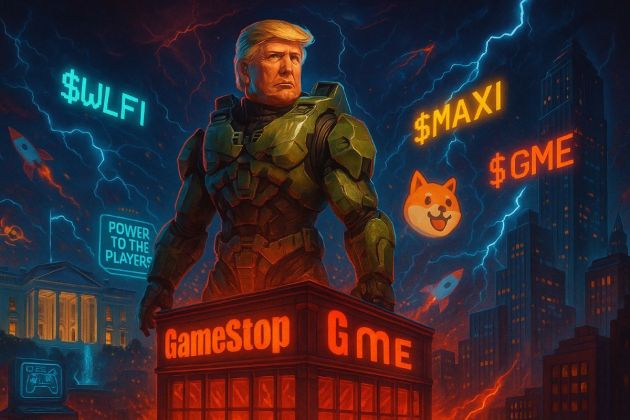 White House GameStop Tweet Causes WLFI Frenzy as Volume Spikes to $222M: Maxi Doge to Soar Next?
What to Know: 1️⃣ A surprise White House post featuring Donald Trump as Halo’s Master Chief sent social media — and GameStop traders — into overdrive, fueling speculation of deeper ties between Trump’s circle and retail-favorite stocks. 2️⃣ Binance founder CZ’s presidential pardon restores a key link between Trump-aligned World Liberty Financial (WLFI) and global crypto liquidity, with WLFI’s trading volume spiking to $222 million. 3️⃣ GameStop’s parody “end of the console wars” post cleverly revived nostalgic gaming culture while amplifying retail investor attention — just as WLFI and meme-coin markets caught fire. 4️⃣ Meme coin Maxi Doge ($MAXI) has surged past $3.7 million in presale funding, with whales and retail traders alike viewing it as the next high-momentum play alongside $WLFI and $GME. First, US President Donald Trump pardons Binance founder Changpeng Zhao, also known as CZ. Next, Gamestop drops a mocking, press-release-style announcement declaring the end of the console wars. Then, the White House (yes, that one) pushes a pic of Donald Trump as Halo’s Master Chief. All fun and games, or is there something brewing underneath it all? In the wake of the tweets, $WLFI’s trading volume briefly spiked to $220M before falling back below $200M. Will CZ’s restoration push $WLFI even higher on the back of Trump’s support? Time for a closer look at what’s going on, and why meme coin upstart Maxi Doge ($MAXI) could take off. CZ + Binance + MGX = WLFI It’s no secret that CZ had lobbied for the pardon for years. It’s also no secret that Binance has been a key player in negotiations between MGX – the Abu Dhabi-based investment company that sank $2B into USD1, World Liberty Financial’s stablecoin – and WLFI. That deal probably generates significant amounts (around $50M per year) of income for World Liberty Financial based on yield from treasury notes. Regardless of the gory details of the deal between MGX and WLFI, Binance’s role is clear. And now, with CZ cleared and a potential return to Binance possible, Trump’s World Liberty Financial has (re)gained an important ally. But what about GameStop? GameStop + Halo = Memes, Evolved The original title for Halo – back in the halcyon days of 2004 – was ‘Halo: Combat Evolved.’ GameStop remembers those days and decided to remind everyone of them in a probably unserious press release on X. Fair play on GameStop, which knows its memes and popular culture. The ‘PR’ jokingly refers to the end of the console wars, the decades-long competition over which company and console would launch the biggest games (and draw the most players). Halo, released initially on Xbox, is finally arriving on PlayStation in 2026. Two decades+ later, but finally full circle. Enter Donald Trump’s social media team at the White House, who saw an opportunity and took it: Why the shout-out? That’s where the details end and the speculation begins: Could Barron Trump, whose stake in the World Liberty fortune probably amounts to nearly $150M, be looking for a new place to invest? Would GameStop work? Could GameStop seek further support from Trump’s White House? Is the move merely a distraction, taking away from the ongoing shutdown? There’s no way to tell. Regardless, GameStop is honoring Halo, and then the White House’s response. However, as it sets up for the biggest crypto presales of 2025 to achieve immediate success, Max Doge. Maxi Doge ($MAXI) – Lift, Pump, Repeat for Maximum Doge Gains Barron Trump is 6’8” tall. He stands out in a crowd, just like Maxi Doge ($MAXI) intends to do in the $40B dog-themed meme coin market. What is Maxi Doge? It’s a pure meme coin. No utility, no real-world application, no problem; it’s all about relentless marketing and the meme coin momentum shared with Maxi’s better-known sibling, Dogecoin ($DOGE). Why would anyone look twice at $MAXI? Because while it’s a simple project, there’s a real vibe there. Over $3.7M has poured into the $MAXI presale, headlined by two major whale buys of $314K each. The project supports the presale with a tokenomics structure that allocates a full 40% of available tokens to marketing opportunities. During the presale, investors can stake their purchases for an additional 80% APY. If that sounds like a win, you can learn how to buy and stake $MAXI with our guide. Our price prediction for Maxi Doge suggests the token could potentially climb from $0.000265 to $0.0058, generating 2088% returns for investors who get in now. To avoid missing out, check out the $MAXI presale page for the latest information. What will CZ do now that he’s been pardoned? And where will WLFI go from here? The token is already up 10% for the week, with a 24-hour trading volume of around $176M; will it make further moves in the future? Watch $MAXI, $GME, and $WLFI for more crypto craziness and potentially game-changing moves. As always, do your own research – this isn’t financial advice. Authored by Bogdan Patru for Bitcoinist — https://bitcoinist.com/white-house-gamestop-tweet-causes-wlfi-frenzy
 IBM to Enter Crypto with Institutional Client Custody Platform
IBM is re-entering the blockchain space with Digital Asset Haven, a secure crypto custody platform for institutions launching in 2025 through a partnership with Dfns. The post IBM to Enter Crypto with Institutional Client Custody Platform appeared first on...
 IBM Launches Digital Asset Haven to Help Banks and Governments Manage Digital Asset Operations
IBM has announced the launch of Digital Asset Haven, a new platform to help financial institutions and governments securely manage and scale their digital asset operations. The platform aims to provide an integrated system for managing the entire digital...
- XRP Price Needs Just A 7% Push To Rally — Two Metrics Hint It’s Close
XRP has gained nearly 6% in the past week, trimming some of last month’s weakness. It’s still down in the three-month band, but the token remains up over 400% year-on-year — showing that the larger uptrend hasn’t been broken. Now, a small 7% move could be all it takes to unlock the next rally zone. The latest on-chain and chart signals suggest it might happen sooner than many expect. Whales And The Short-Term Chart Hint At A Push Coming Big XRP holders are adding again. Since yesterday, wallets holding over 1 billion XRP have increased their stash from 25.07 billion to 25.12 billion, a 50 million addition. Additionally, wallets holding 10 million–100 million XRP have added around 70 million coins, taking their total from 8.15 billion to 8.22 billion. In total, these wallets have added tokens worth $314 million. XRP Whales Are Active: Santiment That accumulation often happens when large players expect near-term momentum to pick up. The 4-hour chart supports this, showing improving short-term structure. Want more token insights like this? Sign up for Editor Harsh Notariya’s Daily Crypto Newsletter here. The 20-period Exponential Moving Average (EMA), which tracks recent price momentum, has already crossed above the 50-period EMA and is now approaching the 100-period EMA. That would form another golden crossover. XRP’s 4-Hour Price Chart: TradingView If the faster EMA moves above the longer one, it typically means buying strength is growing and traders are starting to position for a breakout. Together, the steady whale inflows and strengthening short-term chart set the stage for a test of XRP price’s most important resistance. We will reveal that in the next sections. Cost-Basis Heatmap Shows Where The Price Battle Lies Before looking at the price chart, the cost-basis heatmap helps us understand where most holders are sitting on potential profits or losses, and where they might sell. Data from Glassnode shows that the heaviest supply cluster is between $2.78 and $2.80. This zone is where roughly 135 million XRP were last acquired. XRP Price Supply Zone: Glassnode This is the zone where traders who bought earlier may try to sell and lock in profits. Breaking above it means absorbing that supply, which often triggers follow-up buying. That $2.78–$2.80 zone aligns almost perfectly with the next chart-based breakout level we’ll look at next. What the XRP Price Chart Shows On the daily chart, XRP continues to trade inside a falling wedge. This pattern usually signals a bullish reversal once the upper boundary is breached. That boundary lies near $2.81, the same level marked by the heatmap’s dense supply band. A daily close above $2.81 would confirm the breakout and validate the technical and on-chain signals. Once broken, price targets appear at $3.37 and $3.66. XRP Price Analysis: TradingView If XRP fails to break above $2.81 and instead slips below $2.59, it could delay the next move higher. Losing $2.43 could even bring $2.27 back into the mix, invalidating the near-term bullishness. But for now, the combination of whale buildup, positive short-term EMA signals, and a concentrated resistance zone just 7% (6.98% to be exact) away makes the setup hard to ignore. The post XRP Price Needs Just A 7% Push To Rally — Two Metrics Hint It’s Close appeared first on BeInCrypto.
- IBM to Enter Crypto with Institutional Client Custody Platform
IBM is launching a crypto platform thanks to a partnership with a digital wallet infrastructure builder. The “Digital Asset Haven” will handle custody, transactions, settlements, and more for institutional clients. Although IBM hasn’t shown much interest in digital assets in the past, the sector is growing explosively. The firm may retain some of its previous skepticism, yet this project is a useful attempt to enter the field. IBM Enters Crypto IBM, a massive technical and industrial research firm, has been interested in Web3 for many years. The firm filed hundreds of blockchain patents in 2019 alone, but many of its relevant products proved non-viable in the ensuing years. However, IBM is taking another crack at the industry with a new interest in crypto. According to a recent press release, IBM is launching a “Digital Asset Haven, a major crypto custody solution. This platform is intended for institutional clients like corporations or government actors, and it will handle everything from custody and transactions to settlements, all under regulatory compliance: “With IBM Digital Asset Haven, our clients have the opportunity to enter and expand into the digital asset space backed by IBM’s level of security and reliability. This new, unified platform delivers the resilience and data governance they have been asking for,” Tom McPherson, General Manager at IBM Z and LinuxONE. IBM claims that this new crypto platform will be operational, at least as a software-as-a-service (SaaS) subscription, by the end of 2025. It further stated that an “on-premises” launch will take place in Q2 2026. However, it didn’t clarify how this will differ from the previous incarnation. Regardless of IBM’s plans for this crypto platform, the firm has built a solid partnership to develop the technology. It’s teaming up with Dfns, a French firm that specializes in digital wallet infrastructure. This company has created 15 million wallets for 250+ clients, but IBM’s infrastructure could take its expertise to the next level. Long-Running Skepticism? Additionally, this project may serve as a way for IBM to hedge its bets on crypto. The firm has shown far more interest in blockchain and AI than crypto over the years; earlier this month, its CTO told BeInCrypto that he was concerned about quantum attacks on Bitcoin. Nonetheless, IBM’s press release claimed that “institutions will need to evolve” due to rising crypto adoption and TradFi integration. Whether or not any of the company’s previous concerns turn out to be valid, this platform could be a useful way to test the waters. If the firm doesn’t make any commitments to crypto, its competitors could leave it in the dust. With the Digital Asset Haven, IBM will have the opportunity to remain relevant in the field. The post IBM to Enter Crypto with Institutional Client Custody Platform appeared first on BeInCrypto.
 Gli ETF statunitensi su Ethereum registrano le prime settimane consecutive di deflussi da aprile — Cosa sta succedendo?
Gli ETF spot su Ethereum negli Stati Uniti hanno registrato la seconda settimana consecutiva di deflussi di capitale. Questo andamento negativo arriva dopo un ottobre deludente per la performance di prezzo della seconda criptovaluta più grande al mondo. Dopo mesi di forti afflussi di capitale, gli ETF su Ethereum sembrano attraversare una fase di raffreddamento, con un evidente cambio nel sentiment degli investitori. Gli ETF su Ethereum negli Stati Uniti registrano deflussi per 93,6 milioni di dollari Secondo gli ultimi dati di mercato, il settore degli ETF su Ethereum negli Stati Uniti ha registrato un deflusso netto giornaliero totale di 93,6 milioni di dollari venerdì 24 ottobre. Questa chiusura negativa ha segnato il terzo giorno consecutivo di deflussi per i prodotti di investimento legati alle criptovalute. Curiosamente, l’iShares Ethereum Trust di BlackRock (ticker ETHA) è stato l’unico ETF su Ethereum a registrare un deflusso negativo nella giornata. Il più grande ETF su Ethereum per valore netto degli asset ha perso quasi 101 milioni di dollari, chiudendo la settimana in calo. Nel frattempo, il Grayscale Ethereum Mini Trust (ticker ETH) è stato l’unico altro ETF spot su ETH che ha mostrato attività di trading venerdì. I dati di SoSoValue indicano che questo prodotto d’investimento legato a Ether ha visto un afflusso di capitale pari a 7,4 milioni di dollari. Un trend settimanale preoccupante La performance negativa di 93,6 milioni di dollari ha aggravato una settimana già difficile per gli ETF statunitensi su Ethereum, portando la serie di deflussi consecutivi a tre giorni. Nel complesso, il bilancio settimanale ammonta a circa 243,9 milioni di dollari di deflussi netti. Ciò che preoccupa di più è che si tratta della seconda settimana consecutiva di deflussi, la prima volta che accade da aprile. Questo dato segnala un calo della domanda e un indebolimento dell’interesse degli investitori. La forte richiesta per questi ETF, che fino a poco tempo fa rappresentava un punto di forza per Ethereum, sembra ora in fase di rallentamento. Andamento del prezzo di Ethereum È difficile separare la performance degli ETF su Ethereum da quella dell’asset sottostante. Questa correlazione diretta è evidente osservando l’andamento della scorsa settimana, in cui il prezzo di Ethereum ha faticato a riprendersi. Sebbene l’intero mercato delle criptovalute stia vivendo un momento di debolezza, le criptovalute a grande capitalizzazione sembrano soffrire di più. Il prezzo di Ethereum, in particolare, ha incontrato difficoltà nel superare e mantenersi sopra la soglia psicologica dei 4.000 dollari.
 Crypto Recovery Efforts Often Futile, Prevention Essential, Says Circuit CEO
Harry Donnelly, CEO of Circuit, emphasizes prevention over recovery in crypto security, highlighting the challenges faced by victims of hacks and the risks posed by recovery firms. (Read More)
 Q3 2025: Bitcoin Surged to ATH But With ‘Notable Laggard’ as Ethereum Led the Quarter
The third quarter of 2025 was a significant one, posting substantial achievements, according to the latest crypto industry report by crypto data aggregator CoinGecko. Yet, despite Bitcoin (BTC)’s surge to a fresh ATH, major altcoins – particularly Ethereum (ETH) – strongly outperformed.The crypto market recorded its third consecutive rallying quarter in Q3 this year. This is also the second consecutive quarter of “significant capital appreciation,” the report noted.Moreover, it was the market’s second leg of recovery, powered by liquidity, a sharp recovery of trading activity, and renewed institutional inflows.The total market capitalization increased by 16.4% with $563.6 billion, hitting the $4 trillion mark. Notably, this is the highest level since late 2021.Source: CoinGeckoMoreover, the average daily trading volume saw “a decisive reversal” in Q3, suggesting higher market participation. It went up nearly 44% from Q2 to $155 billion, following two consecutive quarters (Q1 and Q2) of diminishing spot activity.At the same time, Bitcoin dominance noted a significant shift, dropping to 56.9%. This signaled “a material rotation into ETH and other large-cap altcoins” and “a material shift from the ‘flight to quality’ trend seen earlier in the year,” CoinGecko noted.The main beneficiary was Ethereum, as will be discussed below. Its market share rose to 12.5%, showing a renewed interest and capital inflows into ETH.Other major altcoins benefited as well, including XRP (+0.5 percentage points), BNB (+0.7 p.p.), and SOL (+0.4 p.p.). You may also like: Q1 2025: Bitcoin Boosts Dominance as Market Cap and Investor Activity Plunge ChatGPT's XRP analysis has revealed that XRP is consolidating at $2.6834 in a key decision zone, as the XRP ETF surpasses $100 million in assets under management. Meanwhile, Ripple CEO Brad Garlinghouse is reportedly being considered for President Trump's Crypto Advisory Board, and Evernorth holdings reach 388.7M XRP at 95% of the target. ChatGPT's XRP analysis synthesizes 26+ technical indicators at the key $2.61-$2.74 decision range. Key EMA Sandwich Zone XRP at $2.6834 reflects... Altcoins In Focus, Bitcoin LaggingAltcoins strongly outperformed in Q3 this year, CoinGecko highlighted. BTC was “the notable laggard” in the top 5 coins category, with a 6.4% appreciation.At the same time, ETH led the list with a 66.6% rise, outperforming major altcoins and even hitting a new all-time high of nearly $5,000.Source: CoinGeckoNotably, there was a clear renewed interest in ETH, fueled by strong net inflows into US Spot ETH exchange-traded funds (ETFs) and institutional buy pressure from treasury companies such as Tom Lee’s Bitmine Immersion and Joe Lubin’s SharpLink.At the same time, BNB went up 53.6%, SOL 34.7%, and XRP 27%. BNB exploded in Q3, also hitting an ATH, powered by closer integration with Binance via Binance Alpha and the perp DEX Aster success, says the report.Also, SOL reached a quarterly high of $248 with an influx of treasury companies. However, it lost momentum amidst a late-September market pullback and ETF approval delay. You may also like: Sharplink Gaming Adds $80M in Ethereum to Strategic Reserve After Month-Long Lull Sharplink Gaming added 19,271 Ether worth about $80.37m to its strategic reserve on Monday, ending a month of quiet accumulation and signaling renewed conviction in the asset. The purchase lifts the company’s holdings to 859,400 Ether valued at roughly $3.6b, placing it second among disclosed corporate treasuries behind BitMine, which holds about 3.24m Ether worth $13.5b. ACY Securities said that the fresh buy fits Sharplink’s prior accumulation pattern and looks like positioning ahead... Speaking of ETFs…CoinGecko highlighted that BTC’s early surge followed continuous retail and institutional accumulation, particularly through Bitcoin ETFs.However, analysts also noted a reversal of the inflow trend at the end of September. US spot BTC ETFs recorded outflows amidst a general market decline.US Spot BTC ETFs net inflows decreased from $12.8 billion in Q2 to $8.8 billion in Q3. Total AUM grew by 16% from $143.4 billion to $166.3 billion.At the same time, US spot ETH ETFs noted $9.6 billion in net inflows. This was “by far the largest quarter and the first time it has surpassed BTC ETFs,” the report says. Total AUM reached $28.6 billion, marking a 177.4% jump quarter-on-quarter.Moreover, crypto digital asset treasury companies (DATCos) spent at least $22.6 billion in new crypto acquisitions in Q3. This was “by far the largest quarterly amount thus far.” Of this, altcoin DATCos accounted for $10.8 billion (47.8%).Overall, DATCos held some $138.2 billion worth of crypto by the end of Q3.Strategy dominated with >50% share, while two ETH DATCos made the top 5 list (Bitmine Immersion and Sharplink).Stablecoin Market Cap Hits New ATHIn the previous quarter, the top 20 stablecoin market cap surged by over 18%, with $44.5 billion, reaching a new ATH of $287.6 billion.Top gainers are: Ethena’s USDe: jumped by 177.8% or $9.4 billion in market cap, with the market share growing from 2% to 5%, overtaking USDS as the third-largest stablecoin. Tether’s USDT: saw the largest absolute increase, adding $17 billion to its market cap, while its market share fell from 65% to 61% due to the accelerated growth of other stablecoins. The market cap has continued to climb in early Q4, surpassing $300 billion. At the time of writing in late October, it stands at $312 billion, per CoinGecko. You may also like: Japan Breaks New Ground with Launch of First Yen-Denominated Stablecoin Japan will debut the world’s first stablecoin pegged to the yen on Monday, a small but significant step in a market still dominated by cash and card payments. The move aims to pull blockchain into everyday finance and test demand for a digital yen proxy. JPYC, a Tokyo startup, said it will issue a fully convertible yen stablecoin backed by domestic bank deposits and Japanese government bonds (JGBs). The company plans to waive transaction fees at launch to spur usage, and instead earn... DeFi SurgesDeFi Total Value Locked (TVL) was up 40.2% from $115 billion at the start of July to $161 billion at the end of September. ETH’s “outsized appreciation and the ongoing stablecoin narrative” fueled this surge, CoinGecko says.Moreover, the DeFi sector’s market cap climbed to $133 billion shortly after ETH hit $3,000 in mid-July. In late September, it hit the Q3 peak of $181 billion following a price jump of newly launched tokens from perpetual DEXes such as Avantis (AVNT) and Aster (ASTER).DeFi’s market share increased from 3.3% in Q2 to 4% in Q3 2025.CEX and DEXIn Q3, the top centralized exchanges (CEXes) recorded $5.1 trillion in spot trading volume. This is a nearly 32% increase from Q2’s $3.9 trillion. Upbit was the largest gainer, rising +40.5%, climbing to #9. Bybit rose by 38.4%, moving from #6 to #3. Its monthly average volume moved above $120 billion, the level last seen in February before the hack. Binance’s trading volume grew 40 QoQ for a cumulative $2.06 billion. Its market share increased slightly to 40%. Coinbase ranked #10 globally. Its volume rose by 23.4% but was still “outpaced by its rivals.” Meanwhile, the trading volume of the top 10 perpetual decentralized exchanges grew by +87% from $964.5 billion in Q2 to $1.81 trillion in Q3.Aster, Lighter, and edgeX are challenging Hyperliquid for the position of the largest Perp DEX. The latter had a 54.6% market share in Q3.“From an OI perspective, Hyperliquid still retains a sizeable lead amongst perp DEXes, with 75% share of OI as at October 1. No other competitor had You may also like: Upbit Corners 72% of S Korean Crypto Market as Smaller Exchanges ‘Face Extinction’ South Korean industry officials are once again voicing concerns that the crypto exchange Upbit may be a de facto monopoly, with smaller competitors’ market presence becoming “insignificant.” The South Korean newspaper Seoul Kyungjae reported that, per data from the regulatory Financial Supervisory Service (FSS), Upbit’s share of total domestic crypto trading volumes was 71.6% in the first six months of 2025. The platform’s operator, Dunamu, is on the verge of a merger with Naver, the... The post Q3 2025: Bitcoin Surged to ATH But With ‘Notable Laggard’ as Ethereum Led the Quarter appeared first on Cryptonews.
 Alibaba’s Qwen AI Predicts The Price of XRP, DOGE, and SOL for November 2025
Qwen AI, Alibaba’s flagship model, has released price predictions that XRP, Cardano, and Ethereum could generate rapid, explosive gains in the coming month. An ongoing real-market cryptocurrency trading competition has found that Chinese AI models generate more profitable trades, beating out Western powerhouses like ChatGPT. DeepSeek is the new king now.It’s gaining 125% in just 9 days, making more than GPT-5 and Gemini 2.5 Pro lost combined.DeepSeek is just a side project of a hedge fund, confirmed. pic.twitter.com/YhJ2GLo2gk— Yuchen Jin (@Yuchenj_UW) October 27, 2025 Qwen stands second in the tables, growing its initial capital of $10,000 to $20,776 in just 9 days—a 107% gain, while Western leader Claude notches just 22%.While the altcoins have missed out on “Uptober” tailwinds with renewed US-China trade war tensions weighing on market sentiment, November could mark a turnaround. This week’s FOMC meeting stands to set the tone, with signs of potential U.S. monetary easing expected to revive risk appetite and fuel deeper capital rotation into altcoins.XRP Price Prediction: Qwen AI Sees Institution-Driven RallyQwen AI presents an optimistic outlook that XRP could surge past $6.50 in November, marking a 150% increase from its current $2.63 level.XRP Price Predictions for November. Source: Qwen3-Max.The forecast centers on institutional-grade adoption, positioning XRP as a bridge asset for high-volume payment corridors, potentially tied to central bank or SWIFT-level integrations.It also prices in regulated exposure in U.S. TradFi markets through spot ETFs, opening up a new touch point for institutional demand and boosting XRP’s role in global liquidity networks.Technicals support the bullish setup. A triple-bottom reversal formed through October serves as a launchpad for November gains, fueling a potential year-long ascending triangle breakout.DOGE / USD 1-day chart, ascending triangle. Source: TradingView.More so as momentum indicators flash bullish. The MACD histogram has its widest lead on the signal line since the July bull run, while the RSI has broken above neutral, suggesting the new uptrend has real staying power. If catalysts align, XRP could approach $6.50 this month and extend toward $8 into 2026.Dogecoin Price Prediction: Qwen AI Predicts Potential $1.20 MoveQuen maintains that, despite growing mainstream exposure through a U.S. spot ETF, DOGE remains heavily tied to social sentiment. An optimistic case eyes, $1.20, but not without influence. It cites proactive endorsements from key opinion leaders like Elon Musk as fundamental to significant gains this cycle, eying front-line integration into payment services. While Musk has humored Dogecoin as a payment option on X and Tesla in the past, some real follow-through could translate into massive social momentum and demand for Dogecoin. Looking at the charts, a $1 setup could be in play. A similar October triple bottom reversal structure could be the setup for a breakout from a symmetrical triangle in November. Still, momentum indicators suggest hesitation. The MACD maintains only a narrow lead above the signal line, while the RSI has again been rejected at the neutral zone—signs of weak buy pressure.For now, broader macro tailwinds could provide support in November, but a $1 move still looks premature without renewed hype or major utility news.Solana Price Prediction: Real World Utility Lays Grounds For SurgeQwen AI eyes a 133% move to $700 for Solana, citing its growing status as the leading Ethereum alternative and its expanding role in real-world asset (RWA) tokenization.The model highlights Solana’s growing competitiveness in tokenized stocks, payments, and identity solutions, positioning it as a go-to blockchain for scalable, real-world applications.Solana is also emerging as the second-fastest-growing developer ecosystem behind Ethereum, with exponential monthly onboarding of new builders. Consumer crypto apps, with a total value locked already exceeding $40 billion, could drive real-world use through major gaming or social platform launches.Technically, the 7-month ascending channel offers a clear $500 setup, supported by a triple-bottom reversal structure forming along its lower boundary.Momentum indicators suggest renewed buyer strength. The MACD is widening its lead above the signal line while the RSI breaks above the neutral line, creating a strong foundation for a surge.If near-term catalysts like spot ETFs deliver, SOL could approach $700 next month and extend toward $1000 into 2026.Snorter: How to Make The Most of Your TradesWith November expected to deliver the breakout Uptober couldn’t, traders are honing in their entries and exit strategies. Snorter ($SNORT) is quickly becoming the go-to tool for investors who want to make the most of every move in this volatile market. Snorter Bot has the full competitive trading toolset: limit-order sniping for precision entries, MEV-resistant swaps that block frontrunners, copy trading that follows proven winners, and rug-pull protection to filter out scams before you commit.Just as crucially, it helps traders exit right, locking in profits before momentum fades instead.This isn’t your average trading bot. It’s built for the speed, chaos, and opportunity of a bull market.With the presale now over, the untapped demand of exchanges is knocking. Early adopters of $SNORT are getting ready to ride the next Solana rally — with sharper entries, cleaner exits, and smarter trades.Visit the Offical Snorter Website HereThe post Alibaba’s Qwen AI Predicts The Price of XRP, DOGE, and SOL for November 2025 appeared first on Cryptonews.
 Crypto.com Wants to Become A Real Life Bank: Here’s There Plan
Crypto.com has submitted its application to become a national trust bank. The Office of the Comptroller of the Currency (OCC) will regulate it. They still need to approve the application; however, if it goes through, it would allow Crypto.com to operate as a federally regulated trust bank. This will enable Crypto.com to offer a range of crypto-related financial services across the US without needing individual state licenses. Moreover, with a trust bank license, Crypto.com will be able to offer its services under federal supervision, without becoming a fully commercialized bank, which comes with its own set of complex rules and responsibilities. According to its application, Crypto.com wants to establish the new entity under the name, Crypto.com Trust. The entity will be headquartered in Washington DC and will serve its purpose as a wholly owned subsidiary of Crypto.com’s parent company, Forix Dax. Excited to announce that https://t.co/bbHWVWCATn has filed a National Trust Bank Charter application. This is our is the latest step in building product and service portfolio through regulated and secure offerings. More information at: https://t.co/HQhHZC9LX8 — Eric Anziani (@ericnode) October 24, 2025 According to the exchange, the trust bank will focus on providing “secure and compliant crypto-native financial services,” including custody, settlement and management for digital assets. Meanwhile, Crypto.com has stated that obtaining a US banking license aligns with its broader strategy to expand within the US. Kris Marszalek, Co-Founder and CEO of Crypto.com said, “We are committed to working with regulators to advance responsible innovation and bring the benefits of digital assets to more people.” If the license is approved, operationally, things will become significantly more streamlined for the exchange. No more dealing with red tapes. Moreover, it would also enable Crypto.com to serve a broader range of clients, including fintech startups, investment funds, and others. EXPLORE: Top 20 Crypto to Buy in 2025 Crypto.Com Bank Application: Quest To Go Legit Without Red-Tapism Crypto firms like Anchorage Digital have already received approval for their applications from the OCC, indicating that regulators are slowly warming up to the idea of crypto companies working with the traditional banking system. If Crypto.com achieves its license, it will join a small group of crypto-native companies that aim to connect Decentralized Finance (DeFi) with the rules and safeguards that regulated banks provide as safety precautions. Furthermore, this also reflects a broader industry trend in the crypto landscape. As this industry grows and matures, crypto-native companies are seeking clearer and more streamlined legal roadmaps to operate, thereby avoiding unnecessary bureaucratic hurdles. Continuing in the same vein, these companies also want to offer new and innovative products, but within the framework that regulators understand. In the meantime, the OCC hasn’t made any public statement about Crypto.com’s application. EXPLORE: Best New Cryptocurrencies to Invest in 2025 Crypto.Com’s Broader Global Expansion Plans Over the last couple of years, Crypto.com has been investing heavily in expanding across the crypto hotspots in the world. Recently, it partnered with the South Korean fintech called Travel Wallet, which helps travelers manage and exchange funds digitally. The two companies signed a memorandum of understanding (MoU) according to which Trust Wallet will become Crypto.com’s official card partner in South Korea. They plan to jointly launch a prepaid card that allows users to spend both fiat and crypto anywhere in the world. https://t.co/vCNztATkNg has signed a Memorandum of Understanding with Travel Wallet to expand digital payment and cryptocurrency services in South Korea. Read more https://t.co/wQBl6LMnTq pic.twitter.com/b4XtClhmM6 — Crypto.com (@cryptocom) October 21, 2025 Travel Wallet already supports more than 40 wallets as of now, and crypto is the logical next step. Travel Wallet’s app will integrate Crypto.com’s services where users will be able to buy and sell crypto directly without having to leave the app. Promotion of Trust Wallet’s won-backed stablecoin is also on the cards. EXPLORE: Next 1000X Crypto – Here’s 10+ Crypto Tokens That Can Hit 1000x This Year Key Takeaways Crypto.com applied for a U.S. national trust bank license via the OCC Approval would allow nationwide crypto services without state-by-state licensing Partnership with Travel Wallet expands Crypto.com’s global reach and prepaid crypto card offerings The post Crypto.com Wants to Become A Real Life Bank: Here’s There Plan appeared first on 99Bitcoins.
 Mt Gox Crypto Repayment Delayed Again: Another Year of Waiting or a Blessing in Disguise for BTC Price?
The Mt Gox crypto saga continues to stretch on, as Japan’s defunct Bitcoin crypto exchange has officially pushed back its creditor repayment deadline by yet another year. Nobuaki Kobayashi, the court-appointed rehabilitation trustee, confirmed on October 27, 2025, that repayments (Originally expected by October 31, 2025) will now be due by October 31, 2026. With over 34.689 BTC (worth about $ 4 billion) still locked, this marks the fourth extension in the long, frustrating road to compensation. But is this merely another delay, or could it secretly be bullish for BTC price as supply remains frozen for another year? Market Cap 24h 7d 30d 1y All Time What Was Mt Gox, and How Did It Become the Biggest BTC Crypto Disaster? Long before FTX or Celsius ever made headlines, Mt. Gox was the beating heart of the early Bitcoin crypto market. Founded in 2010 by Mark Karpeles in Tokyo, it began as a trading site for Magic: The Gathering cards before pivoting to crypto. By 213, Mt. Gox was processing over 70% of all global BTC transactions, making it the largest exchange in the world. In the early days of crypto, Mt. Gox achieved absolute dominance by processing over 70% of global Bitcoin transactions. But… It took 3 years for Mt. Gox to lose over 744,408 $BTC worth over $21Bn today. Here's the Insider story of how this happened(Like & Bookmark ↓) pic.twitter.com/pgOqH3KlVg — Ebenezer () (@_9figures) July 29, 2023 But success came at a cost. In 2014, Mt. Gox got hacked, resulting in the loss of a staggering 850,000 BTC, worth billions today. The breach exposed major security flaws and sent shockwaves through the young crypto industry. The exchange filed for bankruptcy shortly after, leaving over 20.000 creaditors stranded and setting the stage for a decade-long legal and logistical nightmare that still lingers today. DISCOVER: 16+ New and Upcoming Binance Listings in 2025 How Did the Mt Gox Hack Turn Into a Decade-Long Repayment Saga? After its collapse, the rehabilitation process began in 2018, led by trustee Nobuaki Kobayashi. He recovered about 200.000 BTC, marking one of the most significant asset recoveries in crypto history. Repayments officially started in July 2024, with early distributions made in BTC, .cwp-coin-chart svg path { stroke-width: 0.65 !important; } .cwp-coin-widget-container .cwp-graph-container.positive svg path:nth-of-type(2) { stroke: #008868 !important; } .cwp-coin-widget-container .cwp-coin-trend.positive { color: #008868 !important; background-color: transparent !important; } .cwp-coin-widget-container .cwp-coin-popup-holder .cwp-coin-trend.positive { border: 1px solid #008868; border-radius: 3px; } .cwp-coin-widget-container .cwp-coin-trend.positive::before { border-bottom: 4px solid #008868 !important; } .cwp-coin-widget-container .cwp-coin-price-holder .cwp-coin-trend-holder .cwp-trend { background-color: transparent !important; } .cwp-coin-widget-container .cwp-graph-container.negative svg path:nth-of-type(2) { stroke: #A90C0C !important; } .cwp-coin-widget-container .cwp-coin-popup-holder .cwp-coin-trend.negative { border: 1px solid #A90C0C; border-radius: 3px; } .cwp-coin-widget-container .cwp-coin-trend.negative { color: #A90C0C !important; background-color: transparent !important; } .cwp-coin-widget-container .cwp-coin-trend.negative::before { border-top: 4px solid #A90C0C !important; } Bitcoin Cash BCH $564.33 7.13% Bitcoin Cash BCH Price $564.33 7.13% /24h Volume in 24h $809.07M ? --> Price 7d // Make SVG responsive jQuery(document).ready(function($) { var svg = $('.cwp-graph-container svg').last(); if (svg.length) { var originalWidth = svg.attr('width') || '160'; var originalHeight = svg.attr('height') || '40'; if (!svg.attr('viewBox')) { svg.attr('viewBox', '0 0 ' + originalWidth + ' ' + originalHeight); } svg.removeAttr('width').removeAttr('height'); svg.css({'width': '100%', 'height': '100%'}); svg.attr('preserveAspectRatio', 'xMidYMid meet'); } }); Learn more and Japanese yen. Mt. Gox has just moved $2.7B in $BTC out of cold storage. It’s happening! pic.twitter.com/95WqB9n0k1 — Jacob King (@JacobKinge) July 5, 2024 However, delays quickly piled up. The first repayment target was initially set for October 2023, but was subsequently extended to 2024, 2025, and now to 2026. According to Kobayashi’s latest statement, thousands of creditors have yet to complete procedural steps, including documentation verification and anti-money laundering checks. To date, around 19,500 creditors have received payments, but many more remain stuck in limbo. This history of postponements has become emblematic of crypto’s early chaos, teaching exchanges hard lessons that shaped today’s stronger custody standards, regulatory framework, and proof-of-reserves systems. DISCOVER: 15+ Upcoming Coinbase Listings to Watch in 2025 What Does the New Mt Gox Repayment Delay Mean for BTC Price and the Market? The most recent delay may frustrate creditors, but it’s being seen as a short-term bullish signal for Bitcoin. By postponing repayments until October 2026, the release of $4Bn in BTC back into circulation is delayed, effectively removing a primary near-term source of selling pressure. Analysts note that if these coins had been listed on exchanges now, some holders might have cashed out immediately, creating a sharp (albeit temporary) drop in the BTC price. BREAKING: MT. GOX DELAYS ITS $BTC REPAYMENTS UNTIL OCT 2026 NO SELL PRESSURE = SUPER BULLISH FOR $BTC pic.twitter.com/KARbkpxmma — Money Ape (@TheMoneyApe) October 27, 2025 Instead, the market now has another year to gradually absorb the impact. With .cwp-coin-chart svg path { stroke-width: 0.65 !important; } .cwp-coin-widget-container .cwp-graph-container.positive svg path:nth-of-type(2) { stroke: #008868 !important; } .cwp-coin-widget-container .cwp-coin-trend.positive { color: #008868 !important; background-color: transparent !important; } .cwp-coin-widget-container .cwp-coin-popup-holder .cwp-coin-trend.positive { border: 1px solid #008868; border-radius: 3px; } .cwp-coin-widget-container .cwp-coin-trend.positive::before { border-bottom: 4px solid #008868 !important; } .cwp-coin-widget-container .cwp-coin-price-holder .cwp-coin-trend-holder .cwp-trend { background-color: transparent !important; } .cwp-coin-widget-container .cwp-graph-container.negative svg path:nth-of-type(2) { stroke: #A90C0C !important; } .cwp-coin-widget-container .cwp-coin-popup-holder .cwp-coin-trend.negative { border: 1px solid #A90C0C; border-radius: 3px; } .cwp-coin-widget-container .cwp-coin-trend.negative { color: #A90C0C !important; background-color: transparent !important; } .cwp-coin-widget-container .cwp-coin-trend.negative::before { border-top: 4px solid #A90C0C !important; } Bitcoin BTC $115,208.34 3.58% Bitcoin BTC Price $115,208.34 3.58% /24h Volume in 24h $64.05B ? --> Price 7d // Make SVG responsive jQuery(document).ready(function($) { var svg = $('.cwp-graph-container svg').last(); if (svg.length) { var originalWidth = svg.attr('width') || '160'; var originalHeight = svg.attr('height') || '40'; if (!svg.attr('viewBox')) { svg.attr('viewBox', '0 0 ' + originalWidth + ' ' + originalHeight); } svg.removeAttr('width').removeAttr('height'); svg.css({'width': '100%', 'height': '100%'}); svg.attr('preserveAspectRatio', 'xMidYMid meet'); } }); Learn more trading near $116K, institutional demand through ETFs, and ongoing FOMO driving altcoin season, the delay gives bulls more breathing room. However, some traders warn that this relief is temporary. The supply overhang hasn’t disappeared; it’s merely been pushed to 2026. When repayments finally resume, many early holders could take profits, especially after waiting over 11 years. Still, for now, this extension maintains Bitcoin’s upward momentum and sentiment remains cautiously optimistic. DISCOVER: 10+ Next Crypto to 100X In 2025 Could This Be the Final Delay, or Will Mt Gox Keep Haunting the Market? While Kobayashi insists the extra year will “ensure all eligible creditors can be repaid,” history suggests caution. Bureaucratic slowdowns, legal disputes, and technical bottlenecks have plagued the process since day one. Many in the crypto community remain skeptical that 2026 will truly mark the end of the Mt. Gox repayment saga. Yet there’s a silver lining: with Bitcoin adoption higher than ever, each passing year makes this old wound less relevant to market fundamentals. If repayment concludes smoothly (or even partially) without sparking major sell-offs, it could finally close one of crypto’s darkest chapters. DISCOVER: 9+ Best High-Risk, High-Reward Crypto to Buy in 2025 Join The 99Bitcoins News Discord Here For The Latest Market Updates Key Takeaways Mt Gox repayment postponed by another year. Is BTC USD going to push higher? The post Mt Gox Crypto Repayment Delayed Again: Another Year of Waiting or a Blessing in Disguise for BTC Price? appeared first on 99Bitcoins.
 Essential Crypto Tax Software Features: 2025 Feature Guide
Over the past decade, the cryptocurrency market has grown from a pennies-worth ecosystem into a trillion-dollar industry. This is unsurprising as the market has won the hearts of retail investors, deep-pocketed individuals, institutional firms, wealth funds, and even governments. However, with many people making money from the industry, government authorities around the world have seen the need to impose taxes on crypto. Each country has its crypto tax guidelines that users must comply with. Most tax authorities mandate taxpayers to create and submit accurate tax reports showing their crypto transactions throughout the tax year. But compiling these can be difficult, especially for those who frequently engage with crypto. What’s the best solution? Crypto tax software tools. This article highlights five top software tools that you can choose from regardless of your location. We also highlighted essential crypto tax software features that will guide your choice. Key Takeaways: Crypto taxation has now become completely mainstream and unavoidable. Get ahead or overpay in taxes. Manual reporting is not only outdated, but also risky. Avoid penalties and overpayments. 2025 and 2026 bring new US reporting requirements. Choosing the right crypto tax software depends heavily on your activity level. Automation, security, and compliance are pretty much non-negotiable. Understanding Crypto Taxes As we embark on a quest to understand the essential features of crypto tax software, it is crucial to first establish a solid understanding of what crypto taxes entail and how they impact traders and businesses investing in the cryptocurrency asset industry. It is common knowledge that governments impose levies, known as taxes, on individuals and businesses, which are usually channeled into financing public expenditures and funding various socio-economic initiatives. Similarly, cryptocurrency traders and investors are also subject to paying tax on their crypto asset transactions, including capital gains tax on profits from buying and selling cryptocurrencies. Apart from countries like El Salvador, many prominent nations around the world are currently implementing their own policies on crypto taxes. For instance, in the United States, the Internal Revenue Service (IRS) considers crypto as a digital asset and treats it in the same manner as stocks, bonds, and other capital assets. Hence, the country imposes taxes on both short-term and long-term gains. In the United Kingdom, the HM Revenue & Customs (HMRC) considers crypto as property and imposes a fee on crypto gains above a £6,000 ($8,020) exemption. Meanwhile, the National Tax Agency (NTA) and the Ministry of Finance in Japan view crypto gains as miscellaneous income and treat them as taxable income. In Canada, the Canada Revenue Agency (CRA) classifies crypto gains as either capital gains or business income, depending on whether they are generated under capital or business income. In Germany, the Federal Ministry of Finance (Bundesministerium der Finanzen) imposes tax on profits generated from crypto assets sold within a year, but not on crypto assets held for more than a year. Africa is also not left out. Nations like Nigeria, South Africa, and Kenya have either introduced or are working on policies that will treat cryptocurrencies as taxable activities. Starting January 2026, Nigerians will pay tax on profits gained from crypto trades, and exchanges will be required to submit reports on users’ activities for tax purposes. On the other hand, South Africa already taxes crypto transactions under normal income tax rules, and the taxman expects taxpayers to declare their crypto assets. Criteria for Crypto Taxes Given the tax policies on crypto assets in several countries, does this imply that the government will levy taxes on every single crypto-related activity, including buying, selling, trading, and holding crypto assets? No! Certain specific exemptions and thresholds apply. For instance, buying and holding small quantities of crypto assets for personal use does not incur a tax fee in most countries. In some regions, individuals are also not required to pay tax for receiving or giving out crypto assets as gifts, inheriting from families, or donating crypto to Non-Governmental Authorities (NGOs) or a tax-exempt charity. However, below are some of the following cases where crypto investors must pay tax on transactions: Buying and selling crypto assets for fiat currencies like USD or EUR. Exchanging crypto assets for another, e.g., Bitcoin for Ethereum. Receiving or using cryptocurrency to purchase goods or services. Earning cryptocurrency through mining or staking: In this case, individuals are charged based on the current market value of the crypto asset. Receiving salary in crypto: This will be charged based on the individual’s income tax rate. Crypto received from airdrops (a promotional offer or giveaway by a crypto project) or forks (a blockchain split that creates new coins for existing holders). How Does Crypto Tax Software Work? As we have established, crypto taxes are mandatory in most countries. Yet, navigating this complex landscape can be a daunting task, regardless of your experience level. Whether you’re new to crypto, an experienced investor, or a DeFi expert, manually compiling and calculating your crypto taxes can be an arduous, time-consuming, and error-prone process. This is especially true when juggling multiple accounts across various exchanges and wallets. This is precisely where crypto tax software offers a much-needed solution, streamlining the process, saving you time, and reducing the risk of errors. Crypto tax software is a tool or platform designed to help individuals and businesses compile, calculate, and report their cryptocurrency taxes accurately. The calculation covers all crypto transactions, including buying, selling, mining, etc. How Does This Software Work? First, the user links their exchange or wallet to their preferred crypto tax software. Then, the platform extracts the user’s transaction history through the Application Programming Interface (API) after the user provides their API keys. Alternatively, the user can upload their data using Comma-Separated Values (CSV) format, especially if it’s from a self-custodial wallet. Next, the software tracks the user’s transactions and categorizes them into buying, selling, trading, and transfers. Following that, the app calculates the user’s capital gains and losses based on the transaction data by leveraging market data from trusted sources to accurately determine the market value of their cryptocurrencies at the time of each transaction. Based on the user’s tax filing status and existing tax laws, the software calculates their tax liabilities from their gains and losses, then compiles the data into detailed tax reports and summaries. The software then allows the user to review the report for mistakes and provides an avenue to edit and adjust any errors. If everything is accurate, the user can then submit the generated tax reports to the relevant tax authorities. Crypto tax software platforms not only compile your crypto transactions into tax reports, but also help track your portfolio in real time. In addition, they offer audit support and tax planning guidance, including features like tax-loss harvesting, to help minimize your taxable income. What’s new for crypto tax reporting in 2025 and what to expect going into 2026? In 2025, the Internal Revenue Service (IRS) continues treating cryptocurrencies as property – not as currency. This means that gains and losses are taxed in a similar way to stocks and real estate. In other words, if you sell, trade, convert, or even use crypto, you will typically have a taxable event. Form 1099-DA From January 2025 Starting on January 1st, 2025, crypto brokers and exchanges must issue a new form (Form 1099-DA). It reports gross proceeds from digital asset sales and exchanges. From January 2026: The same Form 1099-DA will also require reporting of cost basis. In other words, the purchase price together with fees. What this means for regular users: Many of us are likely to receive new reporting documents from exchanges. Additionally, the IRS will have more visibility into our crypto transactions. Wallet-by-wallet cost basis tracking The IRS is shifting away from a “universal pool” or the aggregated tracking of assets across wallets and exchanges. Starting in 2025, you may also need to track the cost basis and your gains per wallet or per account in accordance with Form 1099-DA. Repeal of some broker-reporting requirements in DeFi In April 2025, there was a bill signed into law, which nullified the requirement for certain DeFi platforms to have to act as “brokers” and to report transactions to the IRS under the previous rule. For regular users, this means that some peer-to-peer platforms might carry less reporting duty than before. Tax deadlines and rates Despite the new forms and reporting requirements mentioned above, the main tax deadline and rates remain the same—you have until April 15th to file your taxes. What are the Essential Crypto Tax Software Features? With a multitude of crypto tax software platforms available in the market, investors may find it overwhelming to choose the right one. There are several crypto tax software platforms with a diverse range of options, each catering to specific needs. Therefore, a crypto investor needs to identify their individual requirements and priorities. Whether you’re a casual investor or a seasoned trader, understanding what features matter most to you will help you navigate the market and select a platform that accurately meets your needs, whether that’s ease of use, advanced portfolio management, DeFi tracking, or professional support. When sourcing for a crypto tax software tool to suit your needs best, there are several features to look out for. They include: Support for local tax laws: When choosing a crypto tax software, users must check for platforms that support their country of residence. While some software tools like Koinly and TokenTax may offer multi-country support for individuals, others like TaxBit provide services primarily for EU and US users. Exchange, wallet, and blockchain integration: This is another essential feature to look out for. Ensure that the crypto tax software you plan to use supports and can seamlessly connect with the various cryptocurrency exchanges, wallets, and blockchain networks you use. This feature facilitates automatic import of transaction history, seamless tracking of holdings and transactions, and accurate calculation of tax liabilities. Security and data protection: The importance of security can never be overemphasized, especially in the crypto industry. Before choosing a crypto tax software tool, ensure that the platform has robust encryption, two-factor authentication, and secure servers to protect your sensitive financial information and cryptocurrency data from unauthorized access, breaches, or losses. A reputable crypto tax platform must adhere to industry-standard security protocols, such as SSL/TLS encryption, and maintain a strong track record of protecting user data. Compliance with local tax rules: It is essential to confirm that your crypto tax software tool complies with your local tax laws, regulations, and reporting requirements. Considering this feature will help you get accurate calculations of tax liabilities, generate necessary tax forms, and help you file taxes correctly, without the risk of audits, penalties, or fines. In addition, ensure the platform stays up-to-date with changing tax laws in case specific tax regulations are revised. Support for your transaction type: Each trader can choose to be involved in only one or more aspects of the crypto sector. This can include buying, selling, trading, staking, lending, etc. It is essential to confirm if your crypto tax platform can take into account the complexities of each transaction type and accurately handle and generate accurate tax reports for various kinds of cryptocurrency transactions. Integration with accounting tools: Seamless integration with certain accounting platforms like QuickBooks, Xero, etc, means that your transactions will sync automatically with traditional financial records. This is very important because it eliminates manual data entry, reduces the possibilities for human errors, and provides a unified view of your overall finances. AI reconciliation for missing trades: AI-powered reconciliation can detect gaps in transaction history by automatically cross-referencing wallet, exchange, and blockchain data. It can identify missing trades or mismatched records to help you ensure complete accuracy when filing your taxes. Automatic wash-trade detection: This feature identifies transactions where the assets are sold and repurchased within very short periods and, hence, disallows losses that aren’t tax-deductible under IRS rules. Practical tips for choosing the best crypto tax software By now, you probably understand quite a bit, but of course, you don’t need to opt in for a tax software that has all of these features. Here are five practical and expert tips for choosing the best solution. Match the tool with your activity level. The more exchanges and wallets you use, the more advanced your tool should be. This also means that you are going to pay a higher fee, but that’s only natural. On the other hand, if you are not as active, there is no need for you to opt in for all of the fancy features and you can save up some money. Prioritize compliance for your own country. This is especially true with the new U.S. Form 1099-DA reporting and the wallet-by-wallet cost basis rules that kicked in at the beginning of 2025. Check data import methods. Again, this should be tailored to your own abilities. If you aren’t comfortable working with APIs, use a tool that allows you to import a simple CSV table. Ensure strong data security. Your choice should have some basic security features, which include encryption and 2FA. On a more thorough level, you should look for GDPR-compliant data handling, especially if you are in the European Union. Consider some addons. Many of the tools that we cover offer services on demand, meaning that you don’t necessarily have to buy them. However, some of these “addons” can save you a lot of money. For instance, features like tax-loss harvesting and CPA support might be well worth their money in certain cases. You can also read our detailed guide on how to choose the best crypto tax software in 2025. Top Five Crypto Tax Software Tools in 2025 For an in-depth breakdown, check our guide on the best crypto tax software for 2025. Here are the top five crypto tax software you can choose from to cater to your tax needs: .cp-only-mobile{display:none} @media(max-width:720px){ .cp .table .price .cp-only-mobile{display:inline;font-weight:600;margin-right:.25rem} } Name Key Pros Price Rating Koinly Best Overall Connects with 700+ exchanges and hundreds of blockchainsSimple yet advanced interface suitable for beginners and prosIncludes tools for tax optimization and multiple accounting methodsFully compliant with GDPR and SOC 2 security standards Price: $49 - $199 4.9/5 Visit Website CryptoTaxCalculator Ideal for DeFi and NFT Users Covers thousands of integrations across DeFi and NFTsAI automatically detects errors and missing dataAccurately handles complex decentralized transactionsFast, responsive customer support team Price: $49 - $499 4.7/5 Visit Website CoinTracker Best for Exchange-Based Portfolios Compatible with 500+ exchanges and walletsDirect TurboTax export for smooth filingFree portfolio tracking with real-time balance updatesUser-friendly dashboard with clear portfolio insights Price: $59 - $3499 4.8/5 20% OFF for Cryptopotato readers Visit Website CoinLedger Top Choice for Frequent Traders Seamlessly links with major exchanges and tax softwareSupports DeFi, NFTs, and advanced trading productsOffers built-in tax-loss harvesting and CPA-ready reportsDesigned for quick and simple tax filing Price: $49 - $199 4.9/5 10% OFF for Cryptopotato readers Visit Website TokenTax Best for Professional & High-Volume Traders Works with both centralized and decentralized platformsProvides access to CPAs and audit support on demandTracks real-time gains and losses for active portfoliosIdeal for advanced traders handling large transaction volumes Price: $65 - $3499 4.6/5 Visit Website Koinly Often regarded as the best crypto tax software, Koinly offers a wide range of services that match the needs of users in 20+ countries. It tracks crypto transactions across staking, DeFi, NFTs, and much more. It also makes it easy for users to import transactions automatically from dozens of exchanges, wallets, and blockchains, meaning you spend less time generating tax reports. The platform’s dashboard offers clear visual summaries of your trading activity, helping you track performance. CryptoTaxCalculator CryptoTaxCalculator is another top choice for those seeking crypto tax software solutions. The platform boasts an interface endowed with the necessary tools to track transactions across centralized and decentralized crypto exchanges. It also tracks tokens derived from airdrops, staking activities, and other crypto-based services. The platform allows users to calculate their tax reports as far as 2013. CoinTracker CoinTracker doubles as a crypto tax calculator and a portfolio tracker, giving users a complete picture of their digital assets. It connects seamlessly to most major exchanges and wallets, automatically syncing data to generate tax reports. The platform supports a wide range of activities, including staking, NFTs, and DeFi. The platform’s interface allows users to track performance and calculate gains and losses with ease. CoinTracker is also great for long-term investors who want to view their overall profit trends. It currently serves over three million users globally. CoinLedger CoinLedger is a crypto tax software that helps users to fulfill their tax obligations through its intuitive interface. It currently serves over 700,000 crypto investors in various countries. It also provides white glove services to users who want the platform to import and classify their crypto transactions for them. It also has a dedicated learning section for those who want to amass tax-focused knowledge to better understand how tax works. TokenTax TokenTax is considered one of the most advanced crypto tax software options available. The software supports every type of crypto activity, from DeFi and NFTs to margin and futures trading. TokenTax also provides audit-ready documentation, making it ideal for investors handling complex or large-scale portfolios. Users can choose from different plans depending on their trading volume and support level. Its professional team helps with international tax filings, making the service popular among global crypto traders. Crypto tax software vs Manual tax reporting Having discussed crypto tax software at length, you may still wonder if they are really worth the expense. Here is an unbiased comparison between automated crypto tax software and manual tax reporting: Crypto tax software Pros Eliminates human error. Handles complex transactions. Saves you time. Useable without tax expertise. Cons Most services are expensive. Susceptible to a security breach. Relies heavily on only the provided data. Manual tax reporting Pros You retain complete control. Cost-effective Increased privacy. Provides an opportunity to gain deeper financial knowledge. Cons High risk of error. Time-consuming. Lack of real-time insights. Susceptible to inaccuracy. Frequently Asked Questions (FAQ) What is the best software for crypto taxes? Koinly and CoinLedger are recognized as the best crypto tax software overall. This is because of their user-friendly interface, robust set of integrations, multiple helpful features, and broad support for many different types of cryptocurrency transactions. Other popular options include CoinTracker, CryptoTaxCalculator, and TokenTax. What is needed for crypto taxes? In the US, you need to file Form 8949. You can file as many Forms 8949 as needed to report all transactions. Starting January 2025, your crypto exchange will also issue Form 1099-DA. Do I pay taxes on crypto I never sold? The answer is simple – no. The IRS (as well as most other international tax authorities) do not require you to report your crypto purchases on your tax return if you haven’t sold or if you haven’t otherwise disposed of them. How long do I have to hold crypto to avoid taxes? If you hold your crypto for more than a year after you purchase it, you would owe long-term capital gains. Now, depending on your broader taxable income and jurisdiction, that would mean that you owe 0%, 15%, 20%, or more in taxes. How do I avoid capital gains on crypto? Avoiding capital gains on crypto legally is possible, but challenging without expertise. Therefore, you should start by hiring a crypto-specialized CPA, using a crypto tax software, and keeping very careful record of your activities. Conclusion Tax obligations are responsibilities that must be settled in most countries. Do you want to enjoy your crypto adventure without fear of troubles from tax authorities? Then, you need to always cover your crypto taxes. Using crypto tax software makes the process easy, fast, and accurate. If you decide to choose from those discussed in this article, perform due diligence to ensure you make a well-thought-out decision. The post Essential Crypto Tax Software Features: 2025 Feature Guide appeared first on CryptoPotato.
 The $300 Trillion Opportunity: Why ConstructKoin (CTK) Is Bringing Real Estate Finance to Web3
The global real estate market is the largest asset class on Earth, estimated to be worth more than $300 trillion — larger than all global equities and debt securities combined. Yet, despite its size and importance, the way real...
- The $300 Trillion Opportunity: Why ConstructKoin (CTK) Is Bringing Real Estate Finance to Web3
The global real estate market is the largest asset class on Earth, estimated to be worth more than $300 trillion — larger than all global equities and debt securities combined. Yet, despite its size and importance, the way real estate is financed hasn’t changed much in decades. Lengthy approval processes, centralized control, and limited access […]
- Whales Accumulate LINK: On-Chain Data Confirms Strong Buying Pressure
Chainlink is entering an “ideal accumulation zone” as technical indicators, market sentiment, and on-chain data align for a potential breakout. If the current trend holds, LINK could soon target $23.61 in the short term and $46 in the mid-term, reaffirming its leadership position in the global DeFi oracle sector. Whales Accumulate LINK, Exchange Supply Hits Record Low The market is witnessing an unprecedented wave of accumulation from Chainlink (LINK) whales, marking one of the strongest on-chain accumulation phases in recent years. According to recent on-chain data, massive amounts of LINK have been withdrawn from centralized exchanges. Over the weekend, a newly created wallet withdrew another 490,188 LINK, worth around $9 million, from Binance. Just one day earlier, the same address had already withdrawn 280,907 LINK. This wallet now holds 771,095 LINK, valued at over $14 million, and may continue accumulating. Furthermore, a cluster of 39 new wallets has collectively withdrawn 9.94 million LINK, equivalent to $188 million, from Binance. Earlier in the week, the same group also moved 6.2 million LINK (about $117 million) right after the market crash, when LINK briefly dipped to the $15 zone. This whale activity coincides with the Chainlink Foundation’s recent buyback of 63,000 LINK (worth roughly $1.15 million) on October 24, 2025, as part of its reserve expansion strategy, as previously reported by BeInCrypto. LINK Balance on Exchanges. Source: X On-chain data from Glassnode shared on X reveals that LINK’s exchange balance has dropped from 205 million to 160 million tokens since April 2025. The LINK Percent Balance on Exchanges has been at its lowest since December 2022, following the FTX collapse. LINK: Percent Balance on Exchanges. Source: X This sharp decline in exchange reserves reflects lower selling pressure and rising accumulation sentiment. The Holder Accumulation Ratio has surged to 98.9%, meaning nearly all active addresses are net buyers, an extremely bullish signal for the market’s long-term direction. LINK Holder Accumulation Ratio. Source: Glassnode “If this trend holds, analysts see a possible move toward $46 ahead,” one analyst commented. Short-term traders betting on a major breakout in LINK’s price view the $46 target as an ideal take-profit zone. Technical Outlook and LINK Price Scenario LINK is trading around $18.22 at the time of writing, showing strong signs of a breakout formation. According to market analysts, a sustained break above the descending trendline would be the first confirmation of a bullish reversal. Once LINK clears $20.19, momentum could expand toward $23.61, aligning with wave 3 of the Elliott Wave structure. LINK price analysis. Source: X In the short term, the $19.20–$19.70 range remains the nearest resistance area. LINK could aim for the psychological level at $20 and beyond if broken. This accumulation trend reflects institutional investors’ growing confidence in Chainlink’s decentralized oracle ecosystem. The recent partnership between S&P Global and Chainlink to develop a stablecoin risk rating framework further strengthens the project’s credibility in traditional finance. However, Chainlink’s next major challenge lies in increasing real token demand through institutional incentive programs and expanded marketing efforts — a key step toward converting its proven technology into sustainable capital inflows. “The product is a done deal — they’ve already won. Now they need to figure out how to increase demand for the token, or how to attract more retail interest. But the team is full of geniuses and visionaries. They’ll get there,” one analyst remarked. The post Whales Accumulate LINK: On-Chain Data Confirms Strong Buying Pressure appeared first on BeInCrypto.
 Shiba Inu Burn Rate Explodes by 88,000%: SHIB Price Surge to Follow?
The second-largest meme coin has performed quite poorly over the past several months, but the resurgence of its burning mechanism may signal that better days are ahead. Other factors that suggest a price pump could be incoming include the revival of Shibarium’s activity and a reduction in the number of SHIB tokens stored on crypto exchanges. SHIB Burning Goes Through the Roof The X account Shibburn revealed that the Shiba Inu team and community have destroyed almost 30 million coins over the past 24 hours, representing a whopping 88,250% increase compared to yesterday’s figure. The program’s ultimate goal is to decrease the overall supply of SHIB, thus making the token scarcer and potentially more valuable (should demand remain stable or head north). The team behind the meme coin introduced the mechanism in 2022, and since then, a total of 410.75 trillion tokens have been scortched, leaving approximately 585.22 trillion in circulation. SHIB Supply, Source: Shibburn.com Another promising sign for the SHIB Army is the resurgence of Shibarium. Daily transactions processed on the protocol, which hovered in the 2,000-5,000 range earlier this month, have recently climbed well above 10,000. Despite still standing far below the record levels at the start of the year, this development indicates increased ecosystem activity, which could positively impact the price of the underlying token. Shibarium transactions, Source: Shibariumscan.io Furthermore, the amount of Shiba Inu tokens stored on crypto exchanges is just north of 82 trillion, or very close to the four-year low registered a few days ago. This trend suggests that investors have shifted from centralized platforms to self-custody methods, thereby reducing immediate selling pressure. SHIB Exchange Reserves, Source: CryptoQuant SHIB Price Outlook As of this writing, the meme coin trades at around $0.00001043, down 12% on a monthly basis. Its market capitalization has dipped to nearly $6 billion, making it the 34th-biggest cryptocurrency. Contrary to the downtrend, many Shiba Inu community members believe it is too early to wave the white flag. X user Shib Spain predicted that “a massive rally” might be knocking on the door, envisioning a price rise above $0.00001350. The analyst using the moniker EtherNasyional was also bullish, saying: “Shiba Inu momentum is at historic lows. The price is quietly gathering strength in a major demand zone. This silence could be the sound of accumulation. And every accumulation has its breakout.” The post Shiba Inu Burn Rate Explodes by 88,000%: SHIB Price Surge to Follow? appeared first on CryptoPotato.
 Crypto Wins Legal Status In India — High Court Calls It ‘Property’
Madras High Court has ruled that cryptocurrencies can be treated as property, a decision that could reshape how exchanges handle user assets after hacks. The court found that certain crypto holdings are identifiable and controllable, and therefore eligible for legal protection similar to other movable property. Cryptocurrency Treated As Property Under Law According to the Madras High Court, crypto-assets meet the basic tests of property because they can be owned, transferred and controlled by private keys. Justice N. Anand Venkatesh said they can be held “in trust,” and that they are neither physical goods nor traditional currency but are property nonetheless. Based on reports, the decision relied in part on the Income Tax Act’s definition of “virtual digital asset” under Section 2(47A). WazirX Hack And The Disputed Holdings Reports have disclosed that WazirX suffered a major security breach on July 18, 2024, when its cold wallet was compromised and about $230 million in Ethereum and ERC-20 tokens were taken. A WazirX user who held 3,532 XRP — valued at roughly ₹1.98 lakh in January 2024 — asked the court to protect her coins from being swept into any pooled compensation arrangement for the stolen funds. The court agreed that her XRP was separate from the tokens stolen in that hack. Court Rejects Arbitration Barrier WazirX argued that disputes should go to arbitration in Singapore under its agreements. The court rejected that view for this case because the transactions had clear links to India — funds came from Indian bank accounts and the exchange is registered in India. Jurisdiction was thus left with the Madras High Court, and ad-interim relief was ordered to stop the user’s XRP from being reallocated as part of the hack losses. What This Means For Users And Exchanges The judgment gives a stronger legal basis to individual users to challenge exchanges legally in Indian courts if they feel their funds are misrepresented or exploited. Exchanges could be required to have a more robust record-keeping regime, clearer segregation of client funds, and direct audit trails. According to reports, judges pointed to technical characteristics of cryptocurrencies — transferability, identifiability and exclusive control — that support the conclusion that legal ownership can be recognized. Potential Tax And Legal Implications Ahead Tax experts are monitoring this closely. Treating crypto as property matches the way some tax rules currently describe virtual assets in tax codes, and may influence the taxation of gains and transfers in the future. This is an important decision of a High Court, which has authority, but can be appealed and reviewed by other courts of higher authority. The judgment protects the specific XRP holdings in this petition. Further legal fights over other users and different tokens may follow. Featured image from JSA, chart from TradingView
- Top Crypto News This Week: BlackRock ETH ETF, MegaETH ICO, Trump-Xi Meeting, and More
Several crypto news items are in the line-up this week, including BlackRock’s progress on the Ethereum ETF, the MegaETH ICO, and pivotal US–China diplomatic talks. Ongoing institutional action and international policy shifts could fuel volatility and trader optimism. Traders and investors can position their portfolios strategically by front-running the following headlines this week. BlackRock’s ETH Staking ETF Deadline BlackRock’s Ethereum staking ETF stands out, as the application deadline for its staking feature is set for October 30. The SEC recently moved the process from the 19b-4 route to a broader crypto ETF review, which raises the chances for approval of institutional Ethereum exposure. Ethereum (ETH)ETH remains within its bull flag, holding up impressively well.The BlackRock ETH Staking ETF deadline on Oct 30 is being overlooked by most — a strong hidden catalyst.The daily RSI has crossed above its signal line, hinting at bullish momentum returning.— Nehal (@nehalzzzz1) October 24, 2025 Analysts are closely watching for clear regulatory direction, which is expected to be a bullish fundamental for the Ethereum price. Ethereum (ETH) Price Performance. Source: BeInCrypto As of this writing, Ethereum was trading for $4,202, up by over 6% in the last 24 hours. MegaETH ICO on Sonar The MegaETH ICO, launching on Sonar, is set to introduce fresh momentum to the Ethereum Layer 2 sector. The public sale, which kicks off on October 27 at 1 pm UTC/ 9 am EST, creates opportunities for a wide range of participants. It also signals a growing demand for scalable blockchain solutions as the industry matures. The token’s launch kicks off with an initial valuation of $1 million FDV, capped at a maximum of $999 million to prevent exaggerated “unicorn” pricing. The First Real-Time Blockchain.Built for you. Priced by you.Our public sale on Sonar by Echo, starting at $1M FDV, makes you the largest stakeholder in our network. [thread] pic.twitter.com/H578wpYFtk— MegaETH (@megaeth_labs) October 22, 2025 Participation is structured through an English auction format, allowing users to commit up to $186,282 each. This model aims to balance fair price discovery with controlled demand, ensuring that early buyers compete transparently without inflating the project’s valuation beyond sustainable levels. US-China Trade Tensions Meanwhile, the US-China trade tensions remain consequential. President Trump’s comment that proposed tariffs are “not sustainable” triggered a nearly 2% rise in Bitcoin prices. The latest truce and positive trade negotiations continue to inspire bullish momentum. The expected meeting between Trump and President Xi Jinping is seen as a pivotal event for market confidence. BREAKING:TRUMP SAYS HE THINKS THAT HE’LL HAVE VERY SUCCESSFUL TALKS WITH XI! THIS IS SUPER BULLISH! pic.twitter.com/tJso8AUnVT— Crypto Rover (@cryptorover) October 27, 2025 Token Launches and New Tech as Catalysts Further, late October brings more than institutional crypto news. Vultisig is set to launch its VULT token in a decentralized, first-come, first-served offering, putting community access first. Incase you haven't heard yet.. $VULT is launching on the 27th of VULTober!Still not on the whitelist?Retweet and tell us why you love using Vultisig for a chance to win one! https://t.co/8uEJhIvSli— Vultisig (@vultisig) October 17, 2025 The firm’s Threshold Signature Scheme for multi-device, seedless self-custody responds to ongoing concerns about wallet security and scalability. More than 1,000 Chrome extension users have already tested its functionality, reflecting growing trust in crypto self-custody solutions. Kaito Announcement Adding to the flurry of crypto news this week, zkPass will hold its public sale on KaitoAI’s Capital Launchpad on October 27. The project delivers cryptographic proofs for web data while protecting privacy. Major jurisdictions are open to participation, and if the sale oversubscribes, a notable allocation is guaranteed to Kaito’s community. Strategic investors further highlight the project’s adoption potential. Get ready for the next Public Sale!@zkPass – live on our Capital Launchpad on Monday!If the sale becomes oversubscribed, a minimum 30% allocation will be reserved for the Kaito Community (Top Yaps Accounts – both Global and Regional (CN & KR), Yapybaras, KAITO Stakers).… pic.twitter.com/OIoRhTFKga— Kaito AI (@KaitoAI) October 24, 2025 These developments, along with the first spot SOL ETF listing in Hong Kong and notable DeFi governance proposals, show the market’s growing appetite for innovation and mainstream adoption. Macro policy moves will further influence crypto sentiment this week. The US Federal Reserve’s rate decision on October 29 and Coinbase’s October 30 earnings call could impact risk appetite. This convergence of public sales, ETF launches, DAO decisions, and global diplomacy has the potential to influence asset prices for respective ecosystems. As key deadlines approach, markets could experience significant volatility based on political and regulatory outcomes. The post Top Crypto News This Week: BlackRock ETH ETF, MegaETH ICO, Trump-Xi Meeting, and More appeared first on BeInCrypto.
 IBM targets banks and governments with new crypto platform
IBM is aiming to serve organizations that need blockchain tools to look and feel like traditional financial infrastructure. The new platform centers on secure custody and policy enforcement, reflecting how compliance now shapes digital asset adoption. According to a press…
 Hive Digital’s Bitcoin Hashrate Hits 22 EH/s, Expands AI Cloud Data Center in Sweden
Hive Digital Technologies Ltd. has achieved a new milestone, surpassing 22 exahash per second (EH/s) in bitcoin-mining capacity while fast-tracking its artificial intelligence (AI) Cloud expansion through a Tier-3 data center conversion in Sweden. Hive Digital Advances Toward 25...
![[LIVE] Altcoin Season Price Watch, October 27 – Trending Altcoins Lag as Liquidity Clings to BTC](https://cimg.co/wp-content/uploads/2025/10/27143004/1761575403-image-1761575312383_optimized.jpg) [LIVE] Altcoin Season Price Watch, October 27 – Trending Altcoins Lag as Liquidity Clings to BTC
[LIVE] Altcoin Season Price Watch, October 27 – Trending Altcoins Lag as Liquidity Clings to BTCThe altcoin movement remains muted, with the Altcoin Season Index hovering around 28, indicating limited participation outside the largest assets.Trading has concentrated in a small group of liquid pairs, leaving most tokens range-bound despite brief rebounds earlier in the week. The current market is cautious, with capital rotation still thin and sentiment driven largely by Bitcoin price stability.Bitcoin dominance stands near 59%, indicating most liquidity remains centered on primary assets. The pattern shows investors favoring security over risk exposure, while inflows into mid-cap altcoins have yet to materialize. Bitcoin Dominance Index (Source: TradingView)Until dominance declines, rotation into smaller names may stay shallow, and any rallies are likely to depend on temporary spikes in trading activity.Bitcoin is trading near $114,000 after testing slightly higher levels over the weekend. The range between $110,000 and $116,000 continues to anchor short-term positioning.Follow this page for live altcoin price updates, technical shifts, and market news throughout the day as traders journey through an uncertain but gradually improving environment across the crypto market.The post [LIVE] Altcoin Season Price Watch, October 27 – Trending Altcoins Lag as Liquidity Clings to BTC appeared first on Cryptonews.
- Standard Chartered Says This Could Be the Week Everything Changes for Bitcoin | US Crypto News
Welcome to the US Crypto News Morning Briefing—your essential rundown of the most important developments in crypto for the day ahead. Grab a coffee because this week could quietly redefine the tone of the entire market. Between shifting US-China trade winds, a looming Fed decision, and Bitcoin’s tightening grip above six figures, the mood feels different — almost expectant. Crypto News of the Day: Standard Chartered Says the Week That Decides If Bitcoin Ever Falls Below $100,000 Again Has Begun This could be one of those weeks where the market quietly shifts from uncertainty to conviction. According to Standard Chartered’s Head of Digital Assets Research, Geoff Kendrick, a wave of surprisingly positive US-China developments has turned market sentiment “from fear into hope.” Kendrick highlighted that US Treasury Secretary Bessent signaled an imminent breakthrough over the weekend. He indicated that China is expected to suspend rare earth export controls for a year and increase soybean purchases from the US in exchange for Washington dropping its threatened 100% tariffs. Details of this potential deal will be finalized after the Trump-Xi meeting in Korea later this week. The news has already rippled through the markets, with Bitcoin benefiting from the positive sentiment. In the same tone, the USD-CNH pair has fallen to near year-to-date lows, signaling a stronger yuan and renewed confidence in global trade stability. This easing tension has, in turn, fueled a rebound in Bitcoin’s correlation to risk appetite, as investors rotate away from defensive positions. “The Bitcoin-gold ratio, highlighted last week, continues to push higher,” Kendrick wrote, noting that it now sits just above levels seen before the tariff scare earlier this month. “I’ll watch for this ratio to break back above 30 to signal an end to such fear.” The Week That Could Redefine Bitcoin’s Future For Kendrick, the coming days may mark a critical turning point for Bitcoin and how investors interpret its long-term cycle. He pointed out that over $2 billion exited US gold ETFs last week, suggesting an appetite shift that could soon favor Bitcoin. “It would confirm a more positive backdrop if even half of that re-entered Bitcoin ETFs early this week,” he noted. The broader setup looks equally intriguing. Wednesday’s FOMC meeting is expected to deliver a 25 basis-point rate cut, despite the Fed operating in what Kendrick described as a “data blackout.” It's FOMC week!There's a 96.7% chance the Fed will cut interest rates by 25bps. What’s your prediction? pic.twitter.com/SRVPczDYcL— Lark Davis (@TheCryptoLark) October 27, 2025 He also hinted that growing speculation over the next Fed Chair could prove “Bitcoin positive” if it raises concerns about central bank independence. Add to that, the looming earnings releases from five of the ‘Magnificent Seven’ — Microsoft, Meta, Google, Apple, and Amazon — and the macro calendar looks loaded with catalysts. “This week is about to be pure chaos…the government shutdown is about to hit day 30. The Fed decides rates on Wednesday. Powell speaks right after, during a data blackout. Then, we’ve got Microsoft, Apple, Google, Meta, and Amazon, all reporting earnings. That’s $15.2 trillion in market cap dropping numbers in the same week. And just when you think it’s over… Trump meets President Xi on Thursday, 48 hours before his 100% tariff deadline. Buckle up. This week could move everything,” Mario Nawfal corroborated. Kendrick argues that a fresh Bitcoin all-time high would serve as the “death knell” for those still clinging to the halving cycle as the primary driver of BTC’s value. “ETF flows matter more now…If this week goes well, Bitcoin may never go below $100,000 again,” he said. This statement echoes remarks highlighted in a recent US Crypto News publication. Whether or not that prediction holds, this week’s mix of diplomacy, data, and digital gold could prove decisive for the next phase of Bitcoin’s story. Chart of the Day Bitcoin to Gold Ratio. Source: Long-term Trends Byte-Sized Alpha Here’s a summary of more US crypto news to follow today: Another year, another delay: Mt. Gox keeps $4 billion in Bitcoin off the market. Crypto inflows near $1 billion as rate cut hopes fuel market momentum. XRP price needs a 7% push to rally — Two metrics hint it’s close. Top crypto news this week: BlackRock ETH ETF, MegaETH ICO, Trump-Xi meeting, and more. The crypto market is exploding — and one man is betting on its collapse. Three altcoins are facing major liquidation risks in the last week of October. Ocean Protocol denies token theft allegations as ASI Alliance rift deepens. Argentina’s Javier Milei celebrates 2025 midterm triumph as LIBRA scandal deepens. Inside the x402 token boom: The new payment standard powering AI agents. Crypto Equities Pre-Market Overview CompanyAt the Close of October 24Pre-Market OverviewStrategy (MSTR)$289.08$300.01 (+3.78%)Coinbase (COIN)$354.46$364.65 (+2.87%)Galaxy Digital Holdings (GLXY)$39.82$41.29 (+3.69%)MARA Holdings (MARA)$19.54$20.38 (+4.29%)Riot Platforms (RIOT)$21.42$22.36 (+4.39%)Core Scientific (CORZ)$19.34$19.71 (+1.91%)Crypto equities market open race: Google Finance The post Standard Chartered Says This Could Be the Week Everything Changes for Bitcoin | US Crypto News appeared first on BeInCrypto.
 We Asked 4 AIs Which Meme Coin Could Moonshot This Quarter: The Answer May Shock You
The meme coin sector stole the show towards the end of 2024, which seemed like one of the factors signaling the start of the crypto bull cycle. Back then, numerous assets of that type registered impressive price spikes, but as of late, the hype surrounding the niche appears to have dwindled. That said, we decided to ask four of the most popular chatbots whether the memes can make headlines again and which one has the best chance of skyrocketing before the end of 2025. DOGE and SHIB are Left Behind Grok – the AI chatbot built into the social media platform X – started its prediction by stating that meme coins are “the ultimate wildcard in crypto – fueled by community hype, viral memes, and zero regard for traditional fundamentals.” It then argued that the bull run in the digital asset market has yet to enter its final stage, meaning memes could see “absurd” pumps in the coming months. It assumed that a gigantic rally of 10-100x is not expected for the biggest meme coins, Dogecoin (DOGE) and Shiba Inu (SHIB), claiming dogwifhat (WIF) may have that potential. Grok outlined several factors that could contribute to such a rise, including WIF’s strong community, the expansion of the Solana ecosystem, and its technical setup. Currently, the meme coin is worth around $0.55 (according to CoinGecko), far below its all-time high of almost $5 last year. At one point, WIF’s market capitalization surpassed $4 billion, whereas as of press time, it is well below $600 million. According to Grok, other memes that have a chance to skyrocket that high are PEPE, BONK, and POPCAT. The chatbot concluded its estimation by saying this is “pure speculation” and warned that meme coins are capable of dumping by 80% on “a bad tweet or regulatory whisper.” ChatGPT also picked WIF and PEPE as the most probable solid gainers this quarter. The former was described as “proven “beta to SOL” leader with viral culture and history of explosive legs when SOL runs.” At the same time, the chatbot suggested that a massive DOGE or SHIB rally is unlikely within that period. Google’s Gemini claimed that a substantial green candle is more likely to occur with a relatively new meme coin and one with a much smaller market capitalization. That said, it predicted that newcomers from the Solana ecosystem might catch fire rapidly in the remaining months of the year. The Surprising Pick For its part, Perplexity stood aside from the Solana-based meme coins and argued that Maxi Doge (MAXI) – a token built into the Ethereum network – is the most promising. “This coin seems positioned to capture significant speculative interest and price upside, especially for investors willing to embrace higher risk,” it added. MAXI saw the light of day last month and remains an insignificant part of the crypto industry with a market capitalization of well below $1 million. The post We Asked 4 AIs Which Meme Coin Could Moonshot This Quarter: The Answer May Shock You appeared first on CryptoPotato.
 Mt. Gox Delays Creditor Repayments Again, Pushes Deadline to 2026
Mt. Gox has extended its repayment deadline by another year to October 31, 2026, marking yet another delay for creditors awaiting restitution from the 2014 collapse. Rehabilitation trustee Nobuaki Kobayashi announced the extension on Monday, citing incomplete procedures and unresolved issues affecting numerous creditors who have not yet received their distributions.The decision comes despite the trustee having largely completed base, early lump-sum, and intermediate repayments for creditors who cleared the necessary verification steps. Many claimants remain without compensation due to procedural delays and complications during the payment process, prompting the court-approved extension to facilitate distributions “to the extent reasonably practicable.”Previous Bitcoin Movements Heighten ExpectationMt. Gox-linked wallets executed a major transaction back on March 6, transferring 11,833.64 BTC worth over $1 billion, according to blockchain analytics firm Arkham Intelligence. The movement saw 166.5 BTC sent to a known cold wallet while the remaining 11,834 BTC moved to an unidentified address.Exchange-related entities still control approximately 36,080 BTC valued at $3.26 billion, down from holdings that once topped 850,000 BTC before the catastrophic 2014 hack. The transaction occurred back then during heightened crypto market volatility triggered by US President Donald Trump’s trade tariffs implemented on March 4, which rattled high-risk assets, including Bitcoin. Mt. Gox moves over $1b to an unmarked wallet, the first major transfer in a month, fueling renewed speculation on creditor repayments. #MtGox #Arkham https://t.co/3mEUCf3lVN— Cryptonews.com (@cryptonews) March 6, 2025 Previous movements in December saw Mt. Gox shuffle about 1,620 BTC through unknown wallets, weeks after transferring over 24,000 BTC under similar circumstances. These sporadic yet substantial transfers have fueled speculation about whether the exchange is preparing for creditor distributions or restructuring its holdings for reasons known to them.Strive’s Billion-Dollar Play for Discounted ClaimsVivek Ramaswamy’s Strive Asset Management disclosed in May plans to acquire 75,000 Bitcoin through Mt. Gox bankruptcy claims, valued at approximately $8 billion. The strategy, requiring shareholder approval, aims to purchase Bitcoin at discounted prices to enhance per-share value and outperform Bitcoin’s long-term trajectory.However, Strive has evolved beyond just pursuing Mt. Gox claims and has aggressively expanded its Bitcoin treasury by other means. The company recently announced a $1.34 billion all-stock merger with Semler Scientific, which will add nearly 5,816 BTC to its holdings. Strive (Nasdaq: $ASST) just filed our Form S-4 registration for the pending acquisition of @SemlerSci (Nasdaq: $SMLR).This is a major milestone toward scaling our Bitcoin holdings, advancing our capital formation strategy, and strengthening our mission to outperform Bitcoin…— Strive (@strive) October 10, 2025 In addition, Strive has raised approximately $750 million in funding dedicated to Bitcoin purchases, and it continues to grow its treasury through mergers, acquisitions, and direct Bitcoin acquisitions.Back then, Strive partnered with 117 Castell Advisory Group to source and evaluate claims that had received definitive legal judgments pending distribution. The firm intends to file Form S-4 registration with the Securities and Exchange Commission, after which shareholders will vote on the acquisition through a proxy statement.Consequently, Strive seems to have moved past relying solely on Mt. Gox claims and is actively building a diversified Bitcoin treasury through new acquisitions and capital raises.FTX Creditors’ Hanging FateBankrupt exchange FTX announced in July that September 30 would be the start date for its next cash distribution round, with August 15 set as the record date for eligible claimants. The distribution was said to cover Class 5 Customer Entitlement Claims, Class 6 General Unsecured Claims, and approved Convenience Claims through partners BitGo, Kraken, and Payoneer.FTX secured court approval to reduce its disputed claims reserve by $1.9 billion from $6.5 billion to $4.3 billion, freeing additional capital for creditor payouts. FTX’s fallout is moving into a new phase, with unresolved claims under legal review and high-profile figures entering settlements.#ftx #cryptohttps://t.co/BB1Jg4qmoA— Cryptonews.com (@cryptonews) July 7, 2025 The exchange has returned approximately $6.2 billion to date following its November 2022 collapse, which resulted in founder Sam Bankman-Fried receiving a 25-year prison sentence for defrauding customers and investors of over $11 billion.Federal records confirm that Bankman-Fried is projected to be released on December 14, 2044, serving less than 21 years of his 25-year sentence due to good-behavior credits. The early release timeline has erupted speculation about a potential presidential pardon following President Trump’s recent clemency for Binance founder Changpeng Zhao, with SBF pardon odds jumping 6% on Polymaket immediately after CZ’s announcement.The post Mt. Gox Delays Creditor Repayments Again, Pushes Deadline to 2026 appeared first on Cryptonews.
- Kima On-Ramp Introduces Direct Fiat-to-Crypto Settlements
Kima introduces Kima On-Ramp, a protocol-level solution for atomic settlement between fiat payments and blockchain stablecoins, eliminating intermediaries and reducing costs. This innovation enhances DeFi by enabling direct, secure transactions and real-time settlements, benefiting developers, merchants, and users. The...
- 1inch Partners with Innerworks to Enhance DeFi Security with AI
1inch has partnered with Innerworks to integrate AI-driven threat detection into its security systems, addressing advanced cyber threats in DeFi. This collaboration introduces proactive defense strategies, setting a new security benchmark in the DeFi ecosystem. The post 1inch Partners...
- tZERO plans IPO to expand tokenized asset platform
Blockchain infrastructure firm tZERO aims for a public listing to scale its regulated platform for tokenized securities and real-world assets
 IBM Launches Digital Asset Platform for Regulated Institutions
IBM has unveiled Digital Asset Haven, a new platform designed to help financial institutions, governments, and enterprises manage and scale digital asset operations securely while maintaining compliance with global regulatory standards. IBM Expands Blockchain Reach With New Digital Asset...
 Bitcoin Price Prediction: Bitcoin Shines With Weekend Pump On China Trade Deal Expectations – Is BTC About to Hit $130K This Week?
Bitcoin is trading with a bullish bias, having surged to $115,185, rising nearly 1.40% in 24 hours. Most of the optimism is driven amid renewed US-China trade talks which is supporting broader risk sentiment. With a market cap of around $2.29 trillion and daily trading volume of above $56.6 billion, Bitcoin remains the top-ranked cryptocurrency globally, supported by its limited circulating supply of 19.94 million BTC.US-China Trade Talks Ease Market TensionsThe positive sentiment follows reports that Washington and Beijing reached a trade “framework” during weekend talks in Kuala Lumpur, easing concerns of an escalating tariff war. The potential deal, expected to be formalized during Thursday’s APEC Summit in South Korea, could prevent the US from imposing a 100% tariff on Chinese goods and delay China’s planned rare-earth export controls.According to US Treasury Secretary Scott Bessent, Beijing has agreed to boost agricultural imports, including soybeans, which could support US farmers. China’s Vice Premier He Lifeng echoed similar optimism, stating that both sides achieved “a basic consensus” and would finalize details soon.Asian equities and commodities rose on Monday, extending gains, as markets priced in a potential easing of geopolitical risks that have clouded growth forecasts for much of 2025.Trade Tensions and Market OutlookThis week’s Trump-Xi meeting is crucial as the market participants are expecting progress toward de-escalating tariffs and technology restrictions, especially after Beijing’s recent announcement requiring export licenses for certain semiconductor materials and rare-earth elements, minerals essential for manufacturing electric vehicles and defense systems. China Foreign Minister says President Xi Jinping & President Trump respect each other. pic.twitter.com/fBVl3IlU0S— Mayank Dudeja || SPYONGEMS (@imcryptofreak) October 27, 2025 Trump’s retaliatory tariff threats had spooked markets earlier this month. However, recent updates suggest a more measured tone; therefore, easing trade tensions could revive global risk appetite. This may indirectly benefit cryptocurrencies such as Bitcoin, which often move in tandem with macroeconomic sentiment. Rare-earth restrictions could disrupt global supply chains if talks fail. Agricultural deals may stabilize US-China relations short term. Investor sentiment remains fragile ahead of the APEC summit outcome. Bitcoin Technical Analysis: Resistance AheadOn the technical front, the BTC/USD rebound from $108,600 has gained traction, but the price now faces a key hurdle around $117,600. A double-top resistance zone is extending this particular level. This level aligns with the 61.8% Fibonacci retracement, a historically strong reversal point.Recent candlestick patterns show small bodies with upper wicks, reflecting short-term hesitation. Meanwhile, the 20-day and 50-day EMAs around $112,400 have crossed bullishly, confirming underlying strength. The RSI at 55 shows room for further upside before entering overbought conditions.Bitcoin Price Chart – Source: TradingviewA sustained breakout above $117,600 could propel BTC toward $120,500 and potentially $124,100, while a failure to clear the resistance could trigger a pullback to $112,200 or $108,600.Trade Setup: Bullish: Enter on breakout above $117,600, targeting $120,500–$124,100 with stops near $112,200. Bearish: Short below $117,600, targeting $112,200 with stops above $118,000. Bitcoin’s structure remains cautiously bullish, supported by higher lows and strong volume. However, traders should watch closely as market momentum begins to slow near this critical resistance area.Bitcoin Hyper: The Next Evolution of BTC on Solana?Bitcoin Hyper ($HYPER) is bringing a new phase to the Bitcoin ecosystem. While BTC remains the gold standard for security, Bitcoin Hyper adds what it always lacked: Solana-level speed.Built as the first Bitcoin-native Layer 2 powered by the Solana Virtual Machine (SVM), it merges Bitcoin’s stability with Solana’s high-performance framework. The result: lightning-fast, low-cost smart contracts, decentralized apps, and even meme coin creation, all secured by Bitcoin.Audited by Consult, the project emphasizes trust and scalability as adoption builds. And momentum is already strong. The presale has surpassed $24.7 million, with tokens priced at just $0.013165 before the next increase.As Bitcoin activity climbs and demand for efficient BTC-based apps rises, Bitcoin Hyper stands out as the bridge uniting two of crypto’s biggest ecosystems.If Bitcoin built the foundation, Bitcoin Hyper could make it fast, flexible, and fun again.Click Here to Participate in the PresaleThe post Bitcoin Price Prediction: Bitcoin Shines With Weekend Pump On China Trade Deal Expectations – Is BTC About to Hit $130K This Week? appeared first on Cryptonews.
 New Partnership Drives Technological Shift in Renewable Energy Sector
Partnership between tech firms aims to enhance renewable energy capabilities globally. This collaboration integrates software and hardware for efficient energy solutions. Continue Reading:New Partnership Drives Technological Shift in Renewable Energy Sector The post New Partnership Drives Technological Shift in...
 Dogecoin Users Can Now Pay For Flights With DOGE On This Airline
UK-based travel company Alternative Airlines has added support for Dogecoin, allowing customers to pay for flights with the meme coin. This adds another use case for DOGE, which is a positive for its price. Alternative Airlines Enables Support For Dogecoin The travel company revealed that customers can buy flights with Dogecoin, with the meme coin listed as a payment option at checkout. The booking company joins the likes of AirBaltic and Cielo Aviation, which also accept Dogecoin for ticket payments through their partnership with Bitpay. Alternative Airlines also highlighted the benefits of using DOGE for ticket payments, including how it has better transaction per second (TPS) in comparison to other major cryptos. DOGE is said to be able to handle 30 transactions per second, while Ethereum and Bitcoin can handle 25 and 6, respectively. Furthermore, the travel company also declared that DOGE has a “bright future.” They alluded to the 2021 cycle when the DOGE price recorded significant gains. The company also noted that the world’s richest man, Elon Musk, has shilled the meme coin on several occasions, and there are predictions that it could become a top 4 crypto by market cap. Meanwhile, it is worth mentioning that Elon Musk’s X is one of the companies that could potentially accept DOGE for payments at some point, especially with the planned X payments rollout. Musk’s automotive company, Tesla, already accepts the meme coin for the purchase of some select merchandise. Additionally, SpaceX, another of Elon Musk’s companies, accepted Dogecoin for the launch of DOGE-1 to the moon. Musk’s support for Dogecoin also influenced the naming of a government agency (D.O.G.E) after the foremost meme coin. Plans To Further Boost DOGE’s Utility House of Doge, the corporate arm of the Dogecoin Foundation, recently revealed plans to expand Dogecoin’s use case. In an X post, they stated that their mission is to make DOGE payment integration seamless worldwide. House of Doge also highlighted how the acceptance of DOGE benefits merchants. They stated that the Dogecoin payments will cut out the middlemen, slash fees, and remove payment friction. The company recently provided a major boost for DOGE with its purchase of a stake in the Swiss Ice Hockey club HC Sierre. House of Doge plans to use this move to “bring the spirit of Dogecoin directly into the fabric of gameday culture.” House of Doge has already committed to integrating DOGE payments at home venues for tickets and merchandise. DOGE is no stranger in the sports industry, as the NBA team Dallas Mavericks accepts DOGE for ticket payments. At the time of writing, the DOGE price is trading at around $0.2, up over 6% in the last 24 hours, according to data from CoinMarketCap.
- 3 Altcoins To Watch In The Final Week Of October 2025
The crypto market is in a state of improvement as October comes to an end. With many end of the month upgrades awaiting, crypto tokens could be looking at positive developments going forward. BeInCrypto has analysed three such altcoins that are preparing for a shift that could prove to be beneficial going forward. Cronos (CRO) Cronos is gearing up for its EVM Smarturn upgrade next week, a significant milestone for the blockchain network. The update will introduce smarter accounts, enhanced EVM functionality, and stronger overall performance. This upgrade could further boost CRO’s price, which has already climbed 10% in the past week to $0.154. If this level flips into firm support, momentum could push the token toward $0.160 and $0.171. Want more token insights like this? Sign up for Editor Harsh Notariya’s Daily Crypto Newsletter here. CRO Price Analysis. Source: TradingView However, if bullish sentiment weakens, CRO could retrace its gains. A price drop below $0.147 would signal fading momentum, with further losses possibly extending to $0.140. Sustaining strong technical support and investor participation remains essential to prevent a breakdown. Polygon (POL) One of the top altcoins, Polygon, is preparing for a crucial upgrade aimed at significantly enhancing its blockchain performance. The update will increase transaction throughput from 1,000 TPS to 5,000 TPS and reduce finality from 5 seconds to just 1 second. The upgrade could drive POL’s price upward from $0.203 toward the $0.220 resistance level. To achieve this, the token must secure $0.203 as strong support. POL Price Analysis. Source: TradingView However, the RSI remains in the negative zone below the neutral 50 mark, signaling weakening momentum. If selling pressure intensifies, POL’s price could drop to $0.183, invalidating the bullish outlook. Lido DAO (LDO) Lido V3, a significant upgrade, is scheduled to go live on the mainnet by the end of this month. The update will transform Lido from a simple liquid staking solution into a modular, transparent, and institution-grade staking infrastructure platform, enhancing scalability, governance, and security. If momentum holds, LDO’s price could break above $1.00 and move toward $1.07. The Chaikin Money Flow (CMF) indicates consistent investor inflows despite lingering skepticism. This growing confidence signals increasing capital support, which could sustain the ongoing rally. LDO Price Analysis. Source: TradingView However, if investor sentiment weakens, LDO could face renewed selling pressure. A drop below $0.923 might trigger further losses, potentially driving the token down to $0.862. Losing these key support levels would invalidate the bullish outlook. The post 3 Altcoins To Watch In The Final Week Of October 2025 appeared first on BeInCrypto.
- Why the US Needs Crypto to Fail — and Binance to Make It Happen
Under President Donald Trump’s leadership, the United States has taken bold steps to advance crypto adoption in 2025, from passing the GENIUS Act to ramping up efforts to regulate the digital asset industry. The efforts align with Trump’s promise to make the nation the “crypto capital of the world.” But is this genuine progress, or is something else unfolding behind the scenes? Ray Youssef, CEO of the P2P trading platform NoOnes, believes it’s the latter. In a recent BeInCrypto podcast episode, he claimed the US is preparing a “controlled demolition of the entire crypto industry” and Binance could play a key role in it. Binance’s Journey: Growth, Legal Battles, and a Presidential Pardon Binance was founded by Changpeng Zhao (CZ) in 2017 in China. The company later relocated its operations due to the country’s tightening regulations on digital assets. In just 6 months, Binance became the largest cryptocurrency exchange in the world by trading volume, a position it continues to hold. CoinGecko data showed that the exchange offers access to more than 400 cryptocurrencies and 1,600 trading pairs. Nonetheless, Binance’s growth has been accompanied by regulatory challenges. Authorities in the US accused the founder of violating the Bank Secrecy Act by failing to implement an effective anti-money-laundering (AML) program and breaching economic sanctions. In 2023, Changpeng Zhao pleaded guilty, agreeing to pay a $50 million fine. At the same time, Binance agreed to pay $4.3 billion, one of the largest corporate penalties ever imposed. In addition, CZ also served a 4-month prison sentence in 2024. Zhao was released in mid-2024 and remained outside the United States, barred from holding any executive position at Binance. A US compliance monitor was installed inside the exchange, a move that symbolized a transfer of control for Youssef. “He served time in America. He served time with Uncle Sam, gave Uncle Sam $4 billion. The first thing that Uncle Sam said was, ‘Hey, you got to not just serve time, give us $4 billion, but you have to put a US compliance monitor in the company. People that know compliance know what that means. That means this guy actually runs Binance. That’s why you’re having the KYC every two weeks on Binance. They run the company. It’s not the Chinese folks. It’s Uncle Sam that runs Binance,” Youssef told BeInCrypto. Furthermore, last week, President Trump pardoned CZ, erasing his felony record and restoring his rights to operate in the country. The White House framed the decision as ending “Biden’s war on crypto.” Still, it raises questions about a deeper connection between Binance and the US establishment. “CZ has aligned himself with Uncle Sam. And the Trump family and they’re in on this together. The Chinese are not this stupid, not this criminal, and they’re not gangsters. But Uncle Sam is, and that’s who CZ is working with,” he added. The “Controlled Demolition” Theory For Youssef, Binance’s link with the United States is not a sign of progress but a warning. He claims the exchange has become a controlled asset that will eventually be used to trigger a market collapse. Interestingly, the entrepreneur pointed out that the playbook isn’t new. In his words, FTX was supposed to serve that role first, a state-sponsored collapse. “Binance is becoming is the next FTX or what FTX should have been,” he stated. The executive emphasized that FTX’s implosion happened ahead of schedule, forcing the state to look elsewhere. In his view, Binance’s downfall will be the next contingency, carefully timed to cause maximum impact, a crash severe enough to destroy trust across the entire sector. “When CZ burst the bubble on FTX, the damage was really basically 1% of what the state planned it to be. Now they’re going to use Binance as that they’re going to make that corpse explode right in our face,” Youssef mentioned to BeInCrypto. He also forecasted that the collapse of Binance would be a thousand times worse than FTX. According to him, “Binance is going to be a state control demolition of the entire industry. Let me say that again. A controlled demolition of the entire industry right before our very eyes.” Why the US Would Want The Crypto Market to Fall Why would the US want to destroy the very industry it helped nurture? The answer may lie in the control of the monetary system. Every government’s power depends on its ability to control currency circulation. Cryptocurrencies, borderless, programmable, and outside traditional banking, threaten that control. “They want to weaken all the state currencies. They want to usher in their own new global currency. For that to happen, there has to be desperation, poverty, and you know, a lot of instability and chaos. And what better way to do that than by bringing down the entire crypto market with a controlled demolition of the biggest exchange,” he noted. Youssef stressed that the US is not simply trying to regulate this new system; it’s trying to own it. By embedding itself within Binance, the world’s largest exchange, Washington can steer global liquidity, monitor user flows, and influence price discovery. What was once designed as an independent, user-powered market becomes a state-guided infrastructure. “So, they actually want this bloated powder keg to blow. So, then it can usher in massive confusion, and guess what? They’re going to have their new monetary system and new financial system, the two separate systems ready to go when that happens,” he forecasted. Can The Crypto Market Survive Another Collapse? Nonetheless, even if Binance were to fall, it won’t be the first time the sector has faced a setback. The crypto market has endured the collapse of Mt. Gox, ICO busts, and countless rug pulls. Each time, it emerged stronger, more decentralized, and more aware of its core mission. Still, Youssef warned that this time could be different. He described the current situation as a long-term game of control, not a short-term regulatory crackdown. The NoOnes CEO compared it to the sweeping financial changes that followed 9/11, when governments used crises to justify tighter monitoring. “Before 9/11, you could walk into any Charles Schwab office in New York, put cash on the table, buy any stock without even showing ID. After 911, that changed,” he said. According to Youssef, the same logic applies to crypto. Each major scandal, from Mt. Gox to FTX, has led to new laws such as the Travel Rule, the GENIUS Act, and Operation Chokepoint initiatives. The next big collapse of Binance, he warns, could give regulators the excuse to lock down the entire industry. He foresees a split world: centralized exchanges “going with the man,” and only a handful of decentralized platforms left to operate freely until they, too, are forced to comply. Youssef pointed out that even DEXs are not fully independent, since they still follow sanction lists and blacklists. “It’s going to completely fracture the entire industry, where only a few places like Silk Road will exist, and the vast majority of humanity will be under their control. That’s what they’re planning. They make power moves, and we’re just looking, you know, a couple of weeks ahead. They’re looking at least 20 years ahead. They absolutely can get to a place where they can exert a dominant control effect, and they’re about to get there. It’s amazing to me that people don’t see it,” he commented. Beyond Binance: The Real War Ultimately, the war Youssef describes isn’t just about one company or country. It’s a philosophical conflict between centralized authority and decentralized freedom. He warns that if the industry keeps depending on centralized players, it will eventually lose the very independence it was built to protect. “You’re going to help lead the destruction of humanity if you continue to be a Binance user. We need to step back away from centralized control, which has got us in this same mess in the first place,” Youssef disclosed to BeInCrypto. He urges users to: Withdraw funds from centralized exchanges. Adopt self-custody and decentralized platforms. Abandon leverage trading. For him, the solution isn’t waiting for regulators or justice but collective responsibility. “We are the people. We choose where to put our money, where to use our money, where to spend our money,” he noted. Whether or not Youssef’s theory proves true, his warning captures the tension at crypto’s heart: an innovation born to escape control now risks becoming its instrument. Perhaps the real question isn’t why the US wants to destroy crypto, but whether crypto will let itself be destroyed. The post Why the US Needs Crypto to Fail — and Binance to Make It Happen appeared first on BeInCrypto.
 Best Altcoins to Buy as Kraken Breaks Records with 114% YoY Surge
What to Know: Kraken’s Q3 report shows a massive 114% year-over-year revenue jump, signaling explosive growth and renewed investor confidence. The exchange’s strategic acquisitions and xStocks innovation have positioned it as a serious contender to Coinbase and Binance. If you’re hunting for the best altcoins to buy, consider watching low-cap gems like $PEPENODE, $BEST, and $AURA. In a year that has been a bit topsy-turvy for the cryptocurrency markets, firms like Kraken are proof that the industry’s bottom line is getting stronger and stronger. Kraken recently announced its Q3 financial results, and they are smoking hot, to say the least. Kraken recorded a 50% surge in revenue quarter-over-quarter and a 114% jump year-over-year. Trading volumes on Kraken reached a mind-boggling $561.9B, marking a 23% increase from the previous quarter. It now holds a total of $59.3B worth of assets, putting it in contention with Coinbase and Binance as one of the best crypto exchanges on the market. It’s essential to recognize that Kraken’s phenomenal growth hasn’t occurred simply because the broader industry is expanding – other firms haven’t experienced a similar increase in growth. Kraken has clearly done something extraordinary to attract such large numbers. First, this year, Kraken announced several major acquisitions, including NinjaTrader and Small Exchange, which have made it a go-to name in the derivatives trading space, giving it direct market access in the U.S. One of its most notable innovations has been the xStocks platform, which allows investors in more than 160 countries to trade tokenized versions of U.S. equities – and that too without middlemen or market-hour restrictions. Given that it blends Wall Street and Web3 in a never-before-seen manner, it’s no surprise that xStocks has racked up over $5B in trading volume in just a few months. So, what’s next for Kraken? Well, an IPO seems like the most obvious answer. Earlier this year, the company raised $500M at a $15B valuation. And if reports are to be believed, it could be eyeing another funding round – this time at around $20B. As for the potential IPO timeline, 2026 appears to be the most likely candidate. If it does go through, Kraken would join the likes of Coinbase, Gemini, and Bullish as crypto exchanges that have gone public. All in all, the growth of a major firm like Kraken is a telltale sign of increased footfall in crypto – and of its growing acknowledgment as a legitimate trading and investing avenue. If you want to ride the gravy train that is crypto and make some chunky gains along the way, consider investing in low-cap, high-upside tokens. Here are our top three suggestions for the best altcoins to buy right now. 1. PEPENODE ($PEPENODE) – Virtual Crypto Mining with Real Rewards PEPENODE ($PEPENODE) is a unique mine-to-earn cryptocurrency project offering everyday investors an inexpensive and straightforward way to scratch their crypto mining itch – and earn real rewards, too. While real-world crypto mining requires a massive upfront investment, maintenance costs, and technical expertise to build and maintain the setup, virtual crypto mining with PEPENODE is not only affordable but also accessible to beginners, making it inclusive, fun, and engaging. You start with an empty virtual server room, which you get as soon as you buy your first $PEPENODE tokens. From there, it’s up to you to fill this room with any combination of meme nodes you like. Of course, these nodes differ in efficiency and mining capability, so you’ll have to put your smarts to work to create the perfect mining setup. Oh, and remember that you’ll be competing with other $PEPENODE holders and miners, as rewards will be distributed based on the final leaderboard. So, the better your mining rig, the more rewards you’ll earn. Speaking of rewards, these will include free $PEPENODE, $PEPE, and $FARTCOIN tokens, and they’ll be distributed after PEPENODE’s Token Generation Event (TGE) completes and its virtual mining simulator goes live. Currently in presale, PEPENODE has already raised over $1.95M from early investors, with each token available for just $0.0011183. Here’s how to buy PEPENODE in four simple steps – and unlock 656% staking APY. According to our PEPENODE price prediction, the token could reach $0.0077 by the end of 2026, so a $100 investment today could turn into $700 in just a few months. Join the crypto mining revolution – grab your $PEPENODE tokens today! 2. Best Wallet Token ($BEST) – Powering a Secure & Easy-to-Use Free Crypto Wallet Best Wallet Token ($BEST) is the native cryptocurrency of Best Wallet, a free-to-use cryptocurrency wallet that offers a robust blend of security and ease of use. First things first, since it’s a non-custodial crypto wallet, Best Wallet never hands over your private keys to anyone but you, ensuring airtight privacy for your funds. It also comes equipped with class-leading encryption technology, two-factor authentication (2FA) including biometric login, and robust safeguards against hackers, scams, and phishing websites. In terms of convenience, Best Wallet stands out as the only crypto wallet on the market that allows you to buy the best crypto presales directly within the app. Its ‘Upcoming Tokens’ section lists all of the best new cryptocurrency projects in one place, meaning you no longer have to scour the internet for the next moonshot opportunity. Compare this to traditional crypto wallets that force you to visit external presale sites, connect your wallet, and authorize transactions – all while wondering whether those sites are legitimate. In contrast, every token listed in Best Wallet’s Upcoming Tokens section is vetted first-hand by the internal Best Wallet team. Best Wallet is well-positioned to capture over 40% of the non-custodial wallet market by 2027, and you can ride this growth by buying $BEST. Based on our $BEST price prediction, the token could soar up to 170% by the end of 2030, potentially reaching $0.07. Currently, one $BEST is available for just $0.025855, and the project has already raised over $16.6M in its ongoing presale. Buy $BEST today – and unlock voting rights, reduced fees, a 79% staking APY. 3. Aura ($AURA) – Viral Meme Coin Poised for More Returns If you want to maximize your returns from an altcoin run, it could be worth including a top-trending crypto like Aura ($AURA) in your portfolio. As the name suggests, the $AURA token is based on the wildly popular internet phenomenon of ‘Aura points,’ which, simply put, represent how much charisma you gain or lose through a particular action. For instance, if you’re playing football with your friends and happen to score a free kick from near the halfway line, you’d gain infinite Aura points. Sounds absurd, right? Well, it is, and that’s precisely why $AURA has gained so much traction among meme coin investors. In June 2025, $AURA skyrocketed over 28,000%, and while the token has traded sideways since then, it has now found strong support around the $0.05 level. On the charts, it’s currently on the cusp of breaking out of a neat descending triangle pattern, which could send the token back to its all-time high of around $0.24 – meaning a potential 160% gain could be on the cards if you get in now. Interested? Buy $AURA on MEXC or any other cryptocurrency exchange. Recap: With Kraken’s explosive growth signaling a stronger crypto market, now’s the perfect time to load up on PEPENODE ($PEPENODE), Best Wallet Token ($BEST), and Aura ($AURA) – high-upside tokens with the potential to become the next 1000x crypto. Disclaimer: The cryptocurrency market is highly unpredictable; therefore, please invest only after conducting your own thorough research. This article is not financial advice. Authored by Elena Bistreanu, NewsBTC – https://www.newsbtc.com/news/best-altcoins-to-buy-as-kraken-breaks-records-with-114-yoy-surge
 Are NFTs Making a Comeback? Magic Eden’s Native Token ME Pumps 36% in 24H, Is $1 Next?
After months of dormancy in the digital collectibles sector, the NFT market appears to be making a comeback, led by a sharp rally in Magic Eden’s native token ($ME).The Magic Eden token surged over 36% in the past 24 hours, climbing from an intraday low of $0.4422 to a high of $0.6019 before stabilizing around $0.5857 at press time. According to data from CoinGecko, Magic Eden now stands as the second-largest NFT marketplace with a market capitalization of over $97 million, trailing only Blur, which holds around $135 million. Source: CoingeckoCompetitor projects like MoonBase and Sudoswap have also posted impressive seven-day gains of 41.4% and 25.1%, respectively, showing renewed investor appetite for NFT marketplace tokens.Are NFTs Making a Comeback? $500M Added in 7 DaysThe total NFT market capitalization has now swelled by $500 million in the last seven days, pushing the figure above $5 billion for the first time since August. Source: CoingeckoThe rise follows weeks of consolidation and a prior liquidation flush earlier in October, which saw ME down sharply before rebounding more than 110% since October 10.Adding to the optimism, Magic Eden’s official X account recently emphasized its proactive approach to the NFT market revival, stating: “We’re not waiting for ‘NFT szn.’ We’re building it.” We’re not waiting for “NFT szn”We’re building it. Over 35,000 packs ripped + 5M in total volume = more liquidity, and more buy pressure on your favorite collections.Collectors eat. Collections flourish.Magic Eden is putting the market back in motion. pic.twitter.com/iuQEGP7Qut— Magic Eden (@MagicEden) October 24, 2025 The platform launched over 35,000 NFT packs, which ripped over $5M in total volume.Analysts believe this recovery could cause a shift in sentiment as NFT traders re-enter the market ahead of potential ecosystem updates and marketplace expansions. Can Magic Eden $ME Hit $1?Magic Eden’s ME token is now testing key resistance near the $0.60 zone. Traders are watching closely to see if the rally can extend toward the $1 mark.Technical analysis shows the ME/USDT daily chart forming a potential bullish reversal after a prolonged downtrend confined within a descending channel. The current move above $0.52 reflects a 16% daily gain, hinting that momentum may be shifting in favor of buyers.Source: X/@Allice_CryptoIf ME can break and close above the upper trendline of the descending channel, it would confirm a breakout and mark the start of a new bullish phase. The projected target, based on the channel breakout and measured move, is around $0.95, representing an approximate 178% upside from current levels. However, if the price fails to sustain above $0.50, a retest of lower channel support could occur before any significant rally.Trading the NFT Comeback With CoinFuturesAs the NFT market makes a comeback, traders are rushing to capitalize on volatile price swings, and many prefer futures over spot trading for the leverage advantage.However, many traders get burned by high-leverage platforms that prioritize liquidations over user success. But one trusted crypto leverage platform that traders have been trusting lately is CoinFutures, which offers a more trader-friendly alternative.The platform supports leverage from 1x to 1000x with just $1 minimum trades. It operates simulated crypto futures for long and short positions, letting you speculate in both directions without owning the underlying assets. The built-in algorithm tracks crypto prices in real-time, eliminating the need for order books and peer-to-peer trading complications.CoinFutures supports Bitcoin and top altcoins, including Ethereum, BNB, Solana, and NFT tokens, making it ideal for quick trades on volatile assets.To start, download the CoinFutures app for Windows, macOS, or Android, then create an account with your email and password.Once you’ve installed the app, you can fund your account via the wallet icon using BTC, ETH, or SOLThe post Are NFTs Making a Comeback? Magic Eden’s Native Token ME Pumps 36% in 24H, Is $1 Next? appeared first on Cryptonews.
 TZERO Plans Public Listing as Tokenization Push Gains Steam
The move positions the company to scale its regulated platform across securities, real estate and digital assets as tokenization gains mainstream momentum.
- IBM unveils blockchain development platform for governments and institutions
The new IBM–Dfns platform enables banks and governments to manage digital assets securely across 40 blockchains
 ‘Crypto President’ Javier Milei Scores Shock Midterm Win: What’s Next for Crypto in Argentina?
Argentine President Javier Milei’s pro-crypto party, La Libertad Avanza, has scored a surprise victory in the country’s midterm elections, strengthening his control in Congress and reigniting debate over Argentina’s future economic direction and its deepening embrace of digital assets.According to local outlet La Nación, Milei’s party secured 40.68% of the national vote, winning key regions including Buenos Aires province, long considered a Peronist stronghold. The result marks a major turnaround from September’s provincial elections, when the Peronists had defeated Milei’s candidates by a wide margin. Source: La Libertad AvanzaWith more than 99% of votes counted, La Libertad Avanza has tripled its representation in Congress, now holding 101 seats in the lower house, up from 37, and 20 in the Senate, compared to six previously.The victory cements Milei’s influence ahead of the October 2027 presidential election, positioning him once again as the frontrunner. How Milei’s Midterm Win Redefines Argentina’s FutureSpeaking to supporters after the win, Milei called the result a “turning point” and declared that Argentina had “left decadence behind and opted for progress.”The legislative win also eases investor fears that Milei’s market overhaul could stall.Argentine assets rallied following the results, with the peso posting gains in crypto trading markets on Sunday.Investors see the strengthened position in Congress as crucial for pushing through Milei’s austerity and tax reform agenda, which has been met with both praise and protest at home.Since taking office in December 2023, Milei, a former economist, has focused on deregulation, fiscal tightening, and reducing state intervention.Inflation, which had soared to nearly 290% in April 2024, has fallen dramatically under his administration, dropping to 31.8% in September 2025. Source: Trading EconomicsWhile these measures have helped stabilize the peso, they’ve also led to higher living costs, unemployment, and reduced subsidies on essentials like electricity and transport.Milei’s pro-crypto policies remain a defining feature of his presidency. In December 2023, Argentina legalized the use of Bitcoin and other cryptocurrencies in private contracts, marking a major step in formalizing crypto transactions. The following year, his government introduced comprehensive regulations for Virtual Asset Service Providers (VASPs), requiring registration with the National Securities Commission (CNV) and compliance with anti-money laundering and cybersecurity standards.Under the new framework, cryptocurrencies are legally recognized for transactions but do not hold legal tender status. Argentina regulators approve US ETFs, including crypto-related products, enabling #BTC and Ethereum spot ETFs to trade for the first time.https://t.co/KV9XrBM6og— Cryptonews.com (@cryptonews) December 10, 2024 The CNV has also authorized trading of U.S. exchange-traded funds (ETFs), including Bitcoin and Ethereum spot ETFs, through Argentina’s CEDEAR program, ending a six-year prohibition.Argentina’s Crypto Boom Overshadowed by Milei’s LIBRA ControversyArgentina’s growing openness to crypto has made it one of the most active markets in Latin America.A 2025 report by Chainalysis ranked the country 20th globally for crypto adoption and second regionally behind Brazil, with $93.9 billion in transaction volume between mid-2023 and mid-2024. Source: ChainalysisStablecoins, especially USD-pegged assets like Tether’s USDT, account for over 60% of crypto transactions, reflecting the public’s ongoing efforts to hedge against inflation.Despite these milestones, Milei’s relationship with the crypto sector has been clouded by controversy.Earlier this year, the president was embroiled in the LIBRA token scandal after mentioning the project in an X post, which led to a 94% price collapse within hours.The token’s market capitalization had briefly surged to $4.6 billion before crashing, prompting allegations of market manipulation and insider trading. Although Argentina’s anti-corruption watchdog later cleared Milei of wrongdoing, public trust took a hit.Polling firm Zuban Córdoba reported that Milei’s approval rating fell from 47.3% in November to 41.6% in March following the incident, with recent data showing that over 63% of Argentines now view him negatively.Nonetheless, Milei insists he merely “spread the word” about the project and denies any intent to promote it. Argentina President @JMilei defends his social media post on so-called meme coin Libra, insisting who wasn’t trying to persuade anyone to invest. #JavierMilei #Libra https://t.co/0W2vpgBYAD— Cryptonews.com (@cryptonews) February 18, 2025 Following the scandal, the government dissolved the investigative task force probing the incident, citing completion of its mandate. The move drew criticism from opposition lawmakers, who accused Milei of attempting to bury the controversy.Milei Pushes Forward with Crypto Liberalization as Argentina Deepens Global TiesEven with lingering doubts about his credibility, Milei continues to champion a liberalized currency policy.In June 2024, he publicly endorsed an “open market” system that would allow Bitcoin to compete freely alongside the Argentine peso.His stance aligns with that of former Foreign Affairs Minister Diana Mondino, who confirmed that crypto-based contracts were legally recognized under Milei’s deregulation decree. El Salvador and Argentina will share “knowledge and expertise to support regulatory development and innovation,” in Latin America.#ElSalvador #Argentina #BitcoinAdoptionhttps://t.co/Dm3tWFeDXZ— Cryptonews.com (@cryptonews) December 11, 2024 Argentina’s collaboration with El Salvador further shows its commitment to developing a digital asset ecosystem.In December 2024, both countries signed a mutual cooperation agreement to strengthen regulatory frameworks and share blockchain expertise.The momentum has attracted major international players. Coinbase secured VASP registration in early 2025, granting it full regulatory approval to expand local operations and integrate peso payment methods. @coinbase expands to Argentina, gaining regulatory approval to provide secure crypto services in a region embracing digital assets.#Blockchain #Coinbase #Argentinahttps://t.co/R92dfUA1HY— Cryptonews.com (@cryptonews) January 28, 2025 Exchange Bybit also entered the Argentine market in August 2024, reflecting the country’s growing appeal as a regional crypto hub.The post ‘Crypto President’ Javier Milei Scores Shock Midterm Win: What’s Next for Crypto in Argentina? appeared first on Cryptonews.
 Western Union Plans Stablecoin Transfers as Crypto Adoption Skyrockets: Why $BEST Is Worth Watching
What to Know: 1⃣ A global remittance giant is piloting stablecoin-based settlement rails to speed up cross-border payments, cut costs, and boost transparency for its 150M+ users. 2⃣ Regulatory clarity drives innovation with the US’ GENIUS Act providing a compliance framework for Western Union and other institutions to safely adopt blockchain infrastructure. 3⃣ By allowing customers to hold US dollar-linked assets, stablecoins empower financial freedom, stability, and choice. 4⃣ As Western Union and major financial players move toward tokenized payments, Best Wallet Token ($BEST) stands out with its multi-chain wallet, DeFi access, and growing $16.6M presale. Global remittance leader Western Union (WU) has announced a bold leap into the crypto era in its latest earnings call. CEO Devin McGranahan revealed a pilot program to leverage stablecoin-based settlement rails in a move that could reshape how money moves across borders and open up new opportunities for token-centric ecosystems such as Best Wallet Token ($BEST). ‘We are actively testing stablecoin-enabled solutions in our treasury operations,’ he said, adding that WU is expanding its partnerships and capabilities to enable its customers to move and hold stablecoin digital assets. ‘This is not about speculation. It is about giving our customers more choice and control in how they manage and move their money.’ Western Union handles roughly 70M transfers every quarter and serves more than 150M customers globally, spanning 200+ countries. For decades, its infrastructure has depended on the correspondent-banking network – a system known for being slow, expensive and opaque, but highly profitable. In the Q2 2025, WU’s revenue exceeded $4B. But facing weaknesses in several markets and global headwinds, WU has finally made moves to reinvigorate its business by integrating crypto – specifically, the $278B stablecoin market. By piloting stablecoin settlement, WU aims to slash settlement windows, lower capital costs and increase transparency. As McGranahan put it, ‘we see significant opportunities for us to be able to move money faster with greater transparency and at lower cost without compromising compliance or customer trust.’ A Strategic Shift Enabled by Regulation Historically, Western Union hesitated to enter the world of crypto due to concerns over volatility, customer protection and regulatory clarity. The passage of the US GENIUS Act (which imposes 1:1 fiat-backing, monthly attestations, and grants stablecoin issuers access to Federal Reserve master accounts) is one clear enabler for new stablecoin infrastructure. Stablecoins aren’t just about speed and cost; they carry real value for users in high-inflation countries or currencies under pressure. Western Union acknowledged that being able to hold a US-dollar-denominated asset gives customers choice and agency, benefits that go beyond simple financial efficiency. That agency and control are the same factors that power $BEST and the Best Wallet ecosystem. Best Wallet Token ($BEST) – Utility Token Providing Low Fees for Leading Self-Custody Web3 Wallet Best Wallet Token ($BEST) provides enhanced utility for the Best Wallet app, a next-generation Web3 ecosystem designed to simplify crypto ownership, trading, and on-chain finance. A self-custodial, all-in-one gateway for decentralized asset management, Best Wallet integrates a suite of advanced features into one platform: Multi-chain support Multi-wallet capability MPC and biometric security DeFi access $BEST powers the platform’s core features – it increases staking rewards, unlocks premium crypto presale access, and lowers transaction fees. Beyond its wallet functionality, Best Wallet is a central hub for Web3 innovation. In addition to the Best Wallet and $BEST token, the upcoming Best Card will make it easier than ever to use your crypto for everyday purchases. Want to discover more about $BEST? Take a look at our Best Wallet Token review for everything you need to know. The Best Wallet Token is currently presale. So far, over $16.6M has already been raised, including major whale buys of $70K, $50K, and $49K, underscoring investor interest. Tokens currently cost $0.025855, although our price prediction believes $BEST has the potential to reach $0.62 by the end of 2026, delivering gains of 2,297% to investors who join the presale now. Those gains also make $BEST one of the best crypto presales of 2025. Take a look at our step-by-step guide to learn how to buy $BEST. And right now, you can also stake $BEST for 79% APY. As Western Union launches its stablecoin pilot and expands partnerships in preparation for stablecoin integration, the company also marks a potential inflection point for global remittances and the broader crypto ecosystem. And as more institutional players integrate blockchain rails, the opportunities for tokenized infrastructure – and by extension, projects like $BEST – become more compelling. Ready to join the presale? Buy Best Wallet Token before the next price increase. Always do your own research – this isn’t financial advice. Authored by Bogdan Patru for Bitcoinist – https://bitcoinist.com/western-union-plans-stablecoin-transfers
 Here’s What The XRP Open Interest Reset Means For The Price
Crypto analyst CryptosRus has drawn attention to the open interest reset for XRP. The analyst also explained why this development could spark a major price surge for the altcoin. XRP’s Open Interest Drops To New Lows In an X post, CryptosRus revealed that XRP’s open interest on Binance has dropped back to the same lows that were seen in May 2025. The analyst noted that back then, the liquidation flush sparked a massive rally for the altcoin, which pushed it to $3.50. He added that this time around, the open interest is at the floor again, but the price is holding around $2.6. CryptosRus stated that this means that leverage is gone while the strong hands are still holding XRP. The analyst predicted that if new liquidity enters, this setup could signal the next leg up for the altcoin. He added that rallies usually start when leverage is low, spot demand is strong, and shorts are trapped. Notably, XRP has witnessed new demand with the launch of the largest XRP treasury company, Evernorth. The company has already accumulated up to $1 billion in XRP with Ripple’s backing and has revealed plans to continue accumulating more, using gains from its DeFi activities. Notably, the company stated that it will purchase XRP on the open market, which is expected to impact the altcoin’s price. Meanwhile, the SEC is expected to approve the spot XRP ETFs once the U.S. government shutdown ends. This could drive new liquidity into the altcoin, boosting its price. Moreover, experts such as Canary Capital’s CEO Steven McClurg have predicted that the XRP ETFs could see more inflows in their first month than the Ethereum ETFs did. XRP Is Gearing Up For A ‘Face Melting’ Rally Crypto analyst Ether stated that XRP is quietly gearing up to melt faces and that most aren’t even aware or ready for what is coming. This came as the analyst alluded to an earlier analysis, in which he revealed that a similar scenario from a previous cycle was playing out for the altcoin. Ethere stated that XRP’s cyclical structure is showing a striking similarity again. After the altcoin’s rally in 2017, its price was rejected from the 2013 all-time high (ATH) level and then retested the 2014 ATH level, which had previously acted as resistance. XRP then began its parabolic run after it accumulated strength in that range. Now, this same XRP price action is playing out again, according to Ether. He noted that after the strong surge in 2024, the altcoin’s price was rejected at the 2017 ATH level and retested the 2021 ATH level, which had previously acted as resistance. The analyst added that the power accumulation phase is now underway in this region and that once it is complete, the next parabolic run will be inevitable. At the time of writing, the XRP price is trading at around $2.63, up in the last 24 hours, according to data from CoinMarketCap.
 Bo Hines Says, “US Bitcoiners Are Becoming Engaged At Local Level Because Financial System Failed So Many For So Long”
While Bitcoin was designed to be apolitical, it is now deeply entwined with political institutions. On 25 October 2025, Bo Hines, who is the former head of US President Donald Trump’s Council of Advisers on Digital Assets, acknowledged that previously governments viewed cryptocurrency and Bitcoin as almost a criminal asset that was used for nefarious activity. “They’ve realized that that’s not the case. People want freedom, and they want the freedom to move money how they please. And so the demand that people have created for this commodity has changed the course of history, and governments are forced to address it,” said Hines, while talking at the PlanB Forum in Lugano, Switzerland. I think that you’re going to start seeing Bitcoiners in the US become more engaged at a local level as well. And this, honestly, is a result of the fact that the financial system has failed so many people for so long. Hines, who is now the Strategic Advisor for Digital Assets and US Strategy at Tether, said, “So in the US, obviously, we’ve created the Strategic Bitcoin Reserve in which the Treasury is responsible for being a custodian over. But that’s a direct result of the power and persistence that the people created, and I think that’s an incredible thing to recognize. And I think that it will change the really change the course of history forever. “We say in the US now that Bitcoin is digital gold” “We say in the US now that bitcoin is digital gold,” Hines added. “It is a commodity that should be recognized. I think that’s something that will happen across the rest of the globe.” Bitcoin is the grandfather for us in a sense of welcoming in a new age that completely revolutionizes the financial system. “David likes to describe it as having the immaculate conception,” said Hines, talking about the Crypto Czar David Sacks. “Obviously, we understand it’s finite. We understand that governments have a strong desire to obtain it and hold on to it. And so I think as we look at this long term, we have to recognize that, one, this is a commodity that’s here to stay and probably, in my opinion, becomes the most valuable asset in the world.” DISCOVER: The 12+ Hottest Crypto Presales to Buy Right Now “Most Importantly, Bo Is A Bitcoiner,” Said Tether CEO Paolo Ardoino “But from a broader perspective, think about how many things from this ecosystem will be applied to the financial system more generally,” said Hines. You think about Tether. You think about the way that stablecoins work now. We’re going to have 24-7 markets. We’re going to have tokenized public securities. “We’re going to have a brave new world in the financial system that creates really connectivity that we’ve never seen before across the entire globe. And that is a direct result of Bitcoin in this ecosystem. And so the US government fully recognizes that. And I’m proud to say I worked for an administration that embraced it,” said Hines. Talking about Ardoino and Tether, Hines said, “For a long time, they told Paolo that he was servicing a niche. Now, the niche happens to be one third of the global population – folks that are underbanked, debanked, underserved. Bitcoin is truly the representative of the entire digital assets ecosystem, obviously. As being the grandfather. But again, I would just say that in terms of financial freedom – it’s worth protecting and worth fighting for and also worth educating. So I’d encourage Bitcoiners to educate folks around you about what it means to you.” Bo Hines, formal executive director of the White House Crypto Council, transitioned from public service to the private sector to take the helm at Tether for its new stablecoin USAT under the fresh GENIUS Act regulatory framework.https://t.co/VlNOcMHXo4 — Akriti Seth (@AkritiSethN) October 8, 2025 DISCOVER: 9+ Best High-Risk, High-Reward Crypto to Buy in 2025 “Gary Gensler’s Firing Received Loudest Applause,” Reveals Bo Hines “The loudest applause line was when Gary Gensler was fired,” said Hines. “He was the former SEC chairman under the Biden administration. The reason I bring him up is because the standard that was set prior to the Trump administration was basically policymaking through prosecution and persecution.” Talking about the changes the Trump administration brought in, Hines said, “So, we came in and our mindset was that this has to be a complete sea change. We have to completely reverse what has been set in the standard that has been in place and actually educate folks on really what Bitcoin is and what digital assets are. And so Bitcoin sets the standard for what it means to be decentralized, what it means to be a true digital commodity. And we’ve used that standard and applied it across basically the entire digital assets ecosystem.” I think that Bitcoin now is the beacon of what it means to have financial freedom. “So for this ecosystem, it’s really not a choice to be politically engaged or not,” he said. “It’s something that we have to be in the fight for. And obviously, the US has now set the standard for what it means. And what this commodity means more generally for the world. But I think that’s worth protecting. And worth fighting for across the entire globe. So, I’d encourage everyone to get involved. We want more folks that are looking at those contracts, right?” DISCOVER: Best Meme Coin ICOs to Invest in 2025 Key Takeaways Former White House Crypto Council Executive Director Bo Hines said, “Bitcoin is the grandfather for us in a sense of welcoming in a new age that completely revolutionizes the financial system.” “We’re going to have a brave new world in the financial system that creates really connectivity that we’ve never seen before across the entire globe,” added Hines, who now works for Tether. The post Bo Hines Says, “US Bitcoiners Are Becoming Engaged At Local Level Because Financial System Failed So Many For So Long” appeared first on 99Bitcoins.
 IBM announces new digital asset platform for banks and governments
IBM's platform could accelerate institutional blockchain adoption, enhancing secure digital asset management and compliance in finance sectors. The post IBM announces new digital asset platform for banks and governments appeared first on Crypto Briefing.
 Crypto Investment Products See $921M Inflows as Rate-Cut Hopes Rise
Digital asset investment products attracted $921 million in inflows over the past week, rebounding after several volatile sessions. Key Takeaways: Digital asset funds saw $921 million in inflows last week as softer U.S. inflation data renewed hopes for rate cuts. Bitcoin led the rebound with $931 million in inflows, while Ethereum products recorded their first outflows in five weeks. Global ETP trading volumes surged to $39 billion, far above the yearly average, driven mainly by US and German investors. The rise comes amid renewed optimism that US interest rates could fall later this year following softer-than-expected inflation data, according to a Monday report by CoinShares.Lower CPI Data Lifts Investor Sentiment as ETP Volumes Surge to $39BThe lower CPI print released Friday boosted investor confidence despite uncertainty caused by the ongoing US government shutdown, which has delayed key economic indicators.Global trading activity also stayed strong, with ETP volumes hitting $39 billion—well above the year-to-date weekly average of $28 billion.The U.S. dominated regional inflows with $843 million, while Germany saw one of its largest weekly totals ever at $502 million.Switzerland, meanwhile, posted $359 million in outflows, though these were attributed to asset transfers between providers rather than active selling.Bitcoin continued to lead investor demand, recording $931 million in inflows for the week. According to CoinShares, digital asset investment products saw $921 million in net inflows last week. Bitcoin led with $931 million in inflows, while Ethereum recorded its first outflows in five weeks, totaling $169 million. Solana and XRP saw cooling flows, with $29.4 million…— Wu Blockchain (@WuBlockchain) October 27, 2025 Since the Federal Reserve began cutting rates, Bitcoin products have seen $9.4 billion in cumulative inflows, bringing total year-to-date inflows to $30.2 billion, still shy of last year’s $41.6 billion record.Ethereum products, however, saw $169 million in outflows, their first in five weeks. Despite this, demand for 2x leveraged Ethereum ETPs remains strong.Solana and XRP also saw reduced inflows at $29.4 million and $84.3 million, respectively, as investors await the anticipated U.S. spot ETF launches.Ethereum ETFs Face $244M Outflows as Bitcoin Products Regain MomentumSpot Ethereum exchange-traded funds (ETFs) recorded their second consecutive week of outflows, signaling cooling investor sentiment after months of strong inflows.According to SoSoValue data, Ether products saw $243.9 million in redemptions for the week ending Friday, following $311 million in the previous week.Cumulative inflows across all Ether ETFs now total $14.35 billion, with assets under management at $26.39 billion, or 5.55% of Ethereum’s market capitalization.Outflows on Friday alone reached $93.6 million, led by BlackRock’s ETHA ETF, which posted $100.99 million in withdrawals.Meanwhile, Grayscale’s ETHE and Bitwise’s ETHW reported minor inflows, suggesting selective investor rotation rather than a broad retreat from Ethereum exposure.In contrast, spot Bitcoin ETFs saw renewed demand, drawing $446 million in inflows over the same period. BlackRock’s IBIT and Fidelity’s FBTC led the recovery, adding $32.68 million and $57.92 million, respectively.Total cumulative inflows into Bitcoin ETFs now stand at $61.98 billion, with $149.96 billion in total assets, representing 6.78% of Bitcoin’s market cap.The post Crypto Investment Products See $921M Inflows as Rate-Cut Hopes Rise appeared first on Cryptonews.
 Why Is Crypto Up Today? – October 27, 2025
The crypto market is up today, with the cryptocurrency market capitalization increasing by 3.3%, now standing at $3.99 trillion. 90 of the top 100 coins have appreciated over the past 24 hours. At the same time, the total crypto trading volume is at $160 billion. TLDR: The crypto market capitalization is up by 3.3% on Monday morning (UTC); 90 of the top 100 coins and all top 10 coins appreciated today; BTC is up by 3.4% to $115,583, and ETH rose 6.1% to $4,194; ‘Pullbacks happen, the trend is up’; The market prepares for the influx of new geopolitical and economic signals; The expectations are high that the US Federal Reserve will cut interest rates; ’Capital continues to flow toward Bitcoin, recognising its growing role as a resilient anchor asset’; US BTC spot ETFs saw $90.6 million in inflows on Friday, while ETH ETFs saw $93.6 million in outflows; Sharplink Gaming bought another 19,271 ETH, bringing the total to 859,400 ETH – the second-highest; Crypto market sentiment exited the fear zone and re-entered the neutral zone. Crypto Winners & LosersAt the time of writing, all top 10 coins per market capitalization have seen their prices increase over the past 24 hours.Bitcoin (BTC) increased by 3.4% since this time yesterday, currently trading at $115,583.Bitcoin (BTC)24h7d30d1yAll timeEthereum (ETH) is up by 6.1%, the highest increase in the category, now changing hands at $4,194.The second-highest rise in the category is 4.8% by Dogecoin (DOGE), now trading at $0.2061.XRP recorded the smallest rise. It’s up 0.2%, meaning it’s unchanged, trading at $2.63.Looking at the top 100 coins, 90 are up. Among these, 4 recorded double-digit rises.Pi Network (PI) and Zcash (ZEC) are at the top of this list. They’re up 28.4% and 16.2% to $0.2661 and $350, respectively.On the other hand, Aster (ASTER) fell the most: 9.2% to $1.07.It’s followed by MemeCore (M), which is currently up 7.9% to the price of $2.08.Other coins are down 1.6% and less.The latest market increase comes amid a jump in both equities and risk appetite following a potential easing of the US-China trade tensions.Investor attention is now focused on key policy meetings in Europe, the US, Japan, and Canada, including the expected interest rate cuts by the US Federal Reserve, as well as the next batch of earning reports by major tech companies. 98% probability of another 25 bps rate cut at Wednesday's FOMC meeting pic.twitter.com/P9cPGoamVU— Bitcoin Archive (@BTC_Archive) October 26, 2025 ‘We Could See a Meaningful Move Upward’A number of industry insiders have commented on US CPI data and its potential impact on the crypto market.Kyle Chassé, Founder of MV Global, noted that CPI came in softer of Friday, which “takes some weight off risk assets, and crypto feels it first. In a lower-rate world, the carrying cost of Bitcoin drops, while ETFs keep acting as the steady bid pulling coins off the market.”He said that “it won’t be a straight line: core prices running hot, import costs creeping higher, and a firm dollar can still bite. Into next week’s Fed meeting, cut odds ticked up, and the market knows it, but the Fed will want a few more soft prints and cooler jobs data before declaring victory.” “My playbook: stay bullish on BTC into an easing cycle, but keep it nimble around headlines. Pullbacks happen; the trend is up.” Furthermore, David Siemer, CEO of Wave Digital Assets, argued that the CPI data gives crypto markets some positive momentum after a period of volatility. Inflation is still elevated but not accelerating. This could prompt the Federal Reserve to consider rate cuts and supports a weaker dollar, he argues.“From a digital asset perspective,” Siemer says, “that dynamic tends to boost assets like Bitcoin and Ethereum because it reduces the opportunity cost of holding risk assets. On the flip side, the market isn’t in full-throttle rally mode yet. Traders are taking incremental exposure, not betting on a straight run.”Should there be “follow-through with clear signs of rate cuts” and constant inflows into crypto, we could see “a meaningful move upward heading into year-end.”Moreover, Gadi Chait, Head of Investment at Xapo Bank, stated that BTC spent the last week in a holding pattern, while “investors focused on macro signals, not chasing big moves.”“Government data was thin, so markets leaned on clues from bonds and gold: the 10-year Treasury yield eased and gold cooled off from extreme levels, but that “safe-haven” tone didn’t translate into a rush into BTC,” Chait says.“With attention now shifting to the Fed’s upcoming rate decision, any potential easing aimed at supporting a softening labor market is unlikely to change the broader momentum: capital continues to flow toward Bitcoin, recognising its growing role as a resilient anchor asset in an increasingly complex financial landscape,” the exec concluded.Levels & Events to Watch NextAt the time of writing on Monday morning, BTC trades at $115,583. The coin has seen a gradual rise from the intraday low of $111,753 to the intraday high of $116,032.Currently, BTC is up 3.6% in a week and 5.2% in a month, while it’s 8.5% away from its October all-time high of $126,080.A breakout above $114,115 could lead to a rally towards the $117,000–$119,800 levels. However, if BTC falls below $111,000, the drop could result in a pullback toward $109,700 and $106,700.Bitcoin Price Chart. Source: TradingViewEthereum is currently changing hands at $4,194. Over the past day, it has appreciated from a low of $3,958 to its highest day’s point at the time of writing of $4,246.ETH has seen a 2.3% rise in a week and 3.8% in a month, while it fell 15.6% from its August ATH of $4,946.If the coin sees a breakout above $4,115, it could start climbing towards $4,298 and $4,550. However, if it falls below $3,920, it may revisit the $3,510 level.Ethereum (ETH)24h7d30d1yAll timeMeanwhile, the crypto market sentiment has seen a notable rise over the weekend, exiting the fear zone and re-entering the neutral zone. The crypto fear and greed index increased from 32 on Friday to 42 today.The jump suggests a mildly renewed confidence among investors and traders. That said, the sentiment is still on the lower side of the neutral zone, as the market prepares for the influx of new geopolitical and economic signals.ETFs See Another Mixed DayThe US BTC spot exchange-traded funds (ETFs) recorded $90.6 million in inflows on Friday. The total net inflow now stands at $61.98 billion.Of the 12 ETFs, only two recorded inflows, and there were no outflows. Fidelity took in $57.92 million, and BlackRock saw $32.68 million.The US ETH ETFs recorded a third day of outflows in a row on 24 October, with $93.6 million. The total net inflow now stands at $14.35 billion.One of the nine finds saw negative flows, and one saw inflows. BlackRock released $100.99 million, while Grayscale took in $7.4 million.Meanwhile, Sharplink Gaming has bought another 19,271 ETH worth about $80.37 million, adding it to its strategic reserve. This brings the company’s holdings to 859,400 ETH, valued at some $3.6 billion.Overall, the total places Sharplink Gaming second among disclosed corporate treasuries, behind BitMine, which holds 3.24 million ETH, worth roughly $13.5 billion. Sharplink Gaming (@SharpLinkGaming) has added another 19,271 $ETH, worth $80.37M, to its Strategic $ETH reserve.They now hold 859,395 $ETH, worth $3.58B.Address: 0x5e3b62e38808fc9582c23bc05e8a19a091d979c9Data @nansen_ai pic.twitter.com/HPPEW1SYpm— Onchain Lens (@OnchainLens) October 26, 2025 Quick FAQ Why did crypto move with stocks today? The crypto market has increased over the past day, and the stock market surged and set some new ATHs during work hours on Friday. By the closing time on 24 October, the S&P 500 was up by 0.79%, the Nasdaq-100 increased by 1.04%, and the Dow Jones Industrial Average rose by 1.01%. The rise followed the release of September inflation data, turning out to be somewhat cooler than anticipated. This boosted expectations that the US Federal Reserve will cut interest rates this week. Is this rally sustainable? Analysts expect additional increases by the end of this year. That said, corrections are both expected and normal. Nonetheless, the available signals are not pointing to a bear market yet. You may also like: (LIVE) Crypto News Today: Latest Updates for October 27, 2025 The crypto market is up today, with the cryptocurrency market capitalization increasing by 3.3%, now standing at $3.99 trillion. 90 of the top 100 coins have appreciated over the past 24 hours. At the same time, the total crypto trading volume is at $160 billion. Crypto Winners & Losers At the time of writing, all top 10 coins per market capitalization have seen their prices increase over the past 24 hours. Bitcoin (BTC) increased by 3.4% since this time yesterday, currently... The post Why Is Crypto Up Today? – October 27, 2025 appeared first on Cryptonews.
 No, Algorand Is Not Yet Dead: Algoland To Drive ALGO Price?
Crypto=community, and the more active the latter is, the higher the probability of the former thriving. Bitcoin is worth trillions because of the fervent BTC HODLers – both conservative and high risk – 1000X searching degens. Shiba Inu is fading but not gone, thanks to the millions of SHIB holders who shill the project every day. For Algorand crypto, however, it is a different story. When BNB crypto and Solana host multi-million meme coins, there is nothing much to write about Algorand. Yet, even with a barely trending Algorand, the network is worth billions at press time. Data shows that the smart contracts platform has a market cap of over $1.6Bn, and is more valuable than Pump.fun, which launched its TGE in Q3 2025. (Source: Coingecko) DISCOVER: 9+ Best Memecoin to Buy in 2025 Will Algoland Rescusciate Algorand Crypto? Interestingly, Pump.fun is worth over $1.6Bn, and all it will take is another meme coin boom for PUMP, the native token powering the meme coin launchpad, to explode, perhaps pushing to the top 50. PUMP tokenomics might help, and its dominance as the lead meme coin launchpad will also drive demand, providing the much-needed tailwinds. For Algorand, ALGO crypto holders will be banking everything on how viral and successful Algoland will be. Algoland is the latest campaign by the Algorand Foundation that gamifies ecosystem exploration. Active users participating in DeFi, NFTs, gaming, and more turn their onchain quests into rewards. The campaign will run for 13 weeks, and the themes will change weekly. In the early stage, the challenge will center on wallet setup and referrals. In the second week, the focus will be on prediction markets through Alpha Arcade. While analysts think the future of online gaming is in prediction markets, it may take months or even years before Alpha Arcade matches up with Polymarket. So far, on October 27, Alpha Arcade has a TVL of around $214,000, generating over $16,000 in fees in Q3 2025. (Source: DefiLlama) As part of the Algoland campaign, users will receive points at the end of each stage, and those who finish all tasks within a week are eligible for weekly prizes. DISCOVER: Best Meme Coin ICOs to Invest in 2025 No, Algorand Is Not Dead: New Roadmap, Upgrades Although Algoland might drive activity and transactions, ALGO crypto is not guaranteed to rise in tandem. In the past 24 hours, ALGO USDT is stable, sliding -9% in the last month of trading. Market Cap 24h 7d 30d 1y All Time The good news is that, unlike some of the best cryptos to buy, which are down year-to-date, the ALGO price is up +64% in the same period. If BTC pumps above $118,000, it might lift top Solana meme coins as well as blue-chip altcoins, including ALGO. A close above $0.20 opens up more opportunities for ALGO bulls to push prices above $0.24, reversing losses of October 10. This price expansion will likely pump onchain activity, injecting life into Algorand. In turn, more users will explore and appreciate developers’ efforts in the past few months, signaling that Algorand is not dead. For example, in June, the Algorand Foundation integrated the Wormhole NTT for smooth native token transfers across multiple chains without wrapping. Multichain unlocked, Algofam! Algorand Foundation announces Wormhole Native Token Transfers (NTT) on #Algorand • Devs can mint NTT tokens fast • Users can bridge assets cross-chain • Issuers can launch native tokens on Algorand & tap liquidity pic.twitter.com/jTp9pUJkg9 — Algorand Nigeria (@Algorand_NG) July 4, 2025 In July, they also announced a new roadmap anchored on accelerating innovation, gradually improving the base layer, simplifying the user interface, and boosting Web3 values. The Algorand roadmap is now out. Let’s take a look at what this means for the future of Algorand pic.twitter.com/w0eQTDWmgR — Algorand Foundation (@AlgoFoundation) July 31, 2025 Their primary goal going forward has been to integrate agentic payments via x402, boost tokenization, and promote self-sovereign identity. DISCOVER: 10+ Next Crypto to 100X In 2025 Is Algorand Crypto Dead? Algoland To Drive ALGO Price? Algorand crypto has been dropping down the market cap leaderboard ALGO price stable Will Algoland drive demand? The Algoland campaign is on The post No, Algorand Is Not Yet Dead: Algoland To Drive ALGO Price? appeared first on 99Bitcoins.
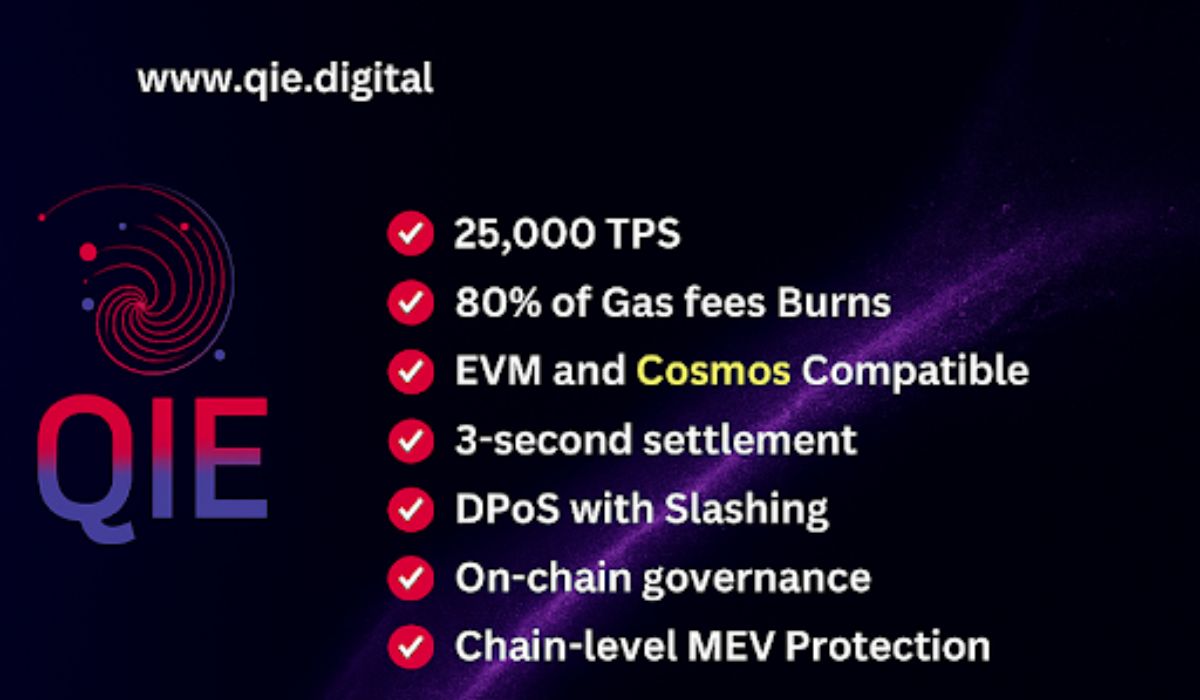 QIE: The Only Blockchain the World Will Ever Need
In a crypto landscape crowded with hype, broken promises, and legacy inefficiencies, QIE Blockchain is quietly building what most blockchains only claim to be — fast, secure, scalable, and truly practical for real-world adoption. Built for Speed and Security...
 Jiuzi Holdings, Inc. Partners with SOLV Foundation on $2.8B TVL Bitcoin Initiative to Advance Crypto Treasury Strategy
HANGZHOU, China, Oct. 27, 2025 /PRNewswire/ — Jiuzi Holdings, Inc. (NASDAQ: JZXN; “the Company”) today announced it has entered into a Strategic Cooperation Agreement with the SOLV Foundation, a cross-chain Bitcoin staking and structured finance platform boasting a total value locked (TVL) of US$2.8 billion. This collaboration underscores the Company’s ambition as a Nasdaq-listed leader focused on building its treasury around Bitcoin as its primary digital asset holding. JZXN will leverage SOLV’s platform to maximize the efficiency of its Bitcoin holdings. Bitcoin assets held by the Company or its subsidiaries will be deposited into the SOLV platform under custody by approved, regulated third parties designated by the Company, ensuring transparency, security, and institutional-grade auditability. Furthermore, senior representatives from both JZXN and SOLV will form a Steering Committee tasked with spearheading transformative initiatives to redefine Bitcoin-centric decentralized finance (DeFi). This committee will drive adoption of SolvBTC across networks including Solana, Base; facilitate market expansion; and pioneer innovative financial models such as tokenized real-world assets and structured yield products. This agreement reflects the shared vision of positioning the Company as a Bitcoin-focused crypto financial firm, integrating its reserves with cutting-edge digital asset strategies. By tapping into SOLV’s expertise in Bitcoin liquidity aggregation and staking, JZXN aims to provide shareholders with institutional exposure to Bitcoin while enhancing capital efficiency within a regulated framework. Both parties affirm that this partnership will operate under principles of transparency, sound governance, and compliance with U.S. Securities and Exchange Commission (SEC) regulations and Nasdaq listing requirements. Mr. Li Tao, Chief Executive Officer of Jiuzi Holdings, Inc., stated: “This partnership marks a transformative step forward, strengthening our Bitcoin vault strategy and aligning us with one of the most advanced platforms in the Bitcoin liquidity and staking ecosystem.” Ryan Chow, Co-Founder of Solv Protocol, said, “Our expertise in managing large-scale Bitcoin assets, combined with Jiuzi’s NASDAQ-listed status, builds a bridge of trust for traditional finance. Together, we’re enabling secure institutional capital flow into crypto.” About Jiuzi Holdings, Inc. Jiuzi Holdings, Inc. is a leading provider of NEV intelligent charging infrastructure in China’s lower-tier cities. The Company specializes in high-power DC fast charging stations integrated with energy storage systems and plans continued expansion through 2026 to support China’s carbon neutrality goals and sustainable transportation. For more information, visit jzxn.com.
 Strategy Slows Bitcoin Purchases to 2021 Levels: What’s Going on Behind the Scenes?
The company’s once-aggressive Bitcoin accumulation strategy appears to be losing momentum. After making headlines with massive weekly purchases, sometimes exceeding 10,000 BTC and even peaking at 55,500 BTC in late 2024, Strategy’s buying pace has now slowed drastically to around 200 BTC per week. The largest corporate Bitcoin holder’s deceleration is reflected in its spending as well. Slower Buys, Same Conviction In his latest analysis, Crypto analyst ‘Maartunn’ estimated that spending fell from billion-dollar allocations to just $22.1 million spent for 196 BTC last week. Despite the slowdown, 2025 still ranks as Strategy’s second-largest BTC investment year, with $19.53 billion deployed so far, trailing only 2024’s $21.76 billion. The firm now holds roughly 3.2% of all Bitcoin in circulation. However, tighter capital conditions have started to bite as equity issuance premiums have plummeted from 208% to just 4%, which has made fresh fundraising more challenging. Meanwhile, MSTR stock is down nearly 50% from its all-time high, while Bitcoin itself trades only 16% below its peak, which has further widened the performance gap between the two assets. Despite this, the company’s share price remains closely correlated with Bitcoin, and Maartunn noted that it often mirrors its moves. Interestingly, Strategy continues to buy near local price highs, most recently acquiring 196 BTC at an average price of $113,000. Even as the accumulation pace has slowed down, the firm’s unrealized Bitcoin profit still stands at a staggering $23.7 billion. As such, the analyst stated, “Strategy is no longer buying big – but they’re still buying. Long-term conviction remains, even as funding pressure grows.” Trillion-Dollar Bitcoin Dream Though purchases have eased, Strategy co-founder Michael Saylor remains adamant that Bitcoin is at the heart of the firm’s long-term corporate treasury strategy. Speaking at a conference in Prague, the former chief exec said that there is only one way to lose – and that’s not to play the (Bitcoin) game. In a separate interview last month, Saylor revealed an ambitious “endgame” to build a trillion-dollar Bitcoin balance sheet and use it to reinvent the global credit system. He said the goal is to accumulate $1 trillion in Bitcoin and grow it by 20-30% annually. The post Strategy Slows Bitcoin Purchases to 2021 Levels: What’s Going on Behind the Scenes? appeared first on CryptoPotato.
- Ethereum up 6% as Bull Flag Pattern Emerges, $5,000 Next?
Ethereum, the second-most-popular cryptocurrency, has outperformed with a 6% increase, driven by momentum, with analysts highlighting a bull flag formation on its charts.
- QIE: The Only Blockchain the World Will Ever Need
In a crypto landscape crowded with hype, broken promises, and legacy inefficiencies, QIE Blockchain is quietly building what most blockchains only claim to be — fast, secure, scalable, and truly practical for real-world adoption. Built for Speed and Security QIE is a next-generation Layer-1 blockchain delivering 3-second finality — a benchmark that puts it ahead […]
 How Much Did a Presidential Pardon Cost CZ? $700K if Binance Offers Any Clues
Over the weekend, Binance founder Changpeng “CZ” Zhao secured a Presidential pardon from Donald Trump following months of speculation and an extensive lobbying effort in Washington. The Binance-affiliated token, BNB, which is most commonly associated with CZ, has risen around 10% since the pardon was confirmed on October 23, increasing from $1,060 to $1,150 as it continues to solidify its position as the fourth-largest cryptocurrency by market capitalization, according to CoinGecko. This time last year, CZ had just finished serving a four-month prison sentence for violating US anti-money laundering laws and was supported by a campaign aimed at appealing to prominent figures within the Trump administration. Market Cap 24h 7d 30d 1y All Time Politico Report Finds that CZ and Binance Have Paid Out Millions in Lawyer Fees and Lobbying Efforts A Politico report alleges that Binance has been lobbying the White House and the Treasury Department for several months, seeking what they call “executive relief.” In September of this year, Binance reportedly hired Ches McDowell, a political operative with close ties to Donald Trump Jr. and his firm, Checkmate Government Relations, which billed them $450,000 for just one month of work, according to Politico. Binance and CZ also hired Teresa Goody Guillén, a lawyer with alleged close ties to the Trump administration, paying $290,000 to Guillén’s firm this year alone. It isn’t the first time Binance has gone on a spending spree in Washington, having previously spent over $1 million in the Capital in 2022, but paused its efforts after a plea deal with the US Department of Justice in 2023. Now, under the pro-crypto Trump administration, Binance has renewed lobbying efforts, reportedly spending $860,000 this year and expanding influence by partnering its USD1 stablecoin with ventures linked to Trump’s network, including World Liberty Financial. The lesson of CZ's pardon is clear: Justice is only as strong as your lobbying budget.$860,000 flowed to Trump-linked lobbyists to erase a guilty plea for money laundering. This was an expensive influence campaign, not an act of mercy. When money can buy executive relief after a… pic.twitter.com/C1KfZxSvFR — Winghaven (@WinghavenCrypto) October 26, 2025 Trump Doubles Down on CZ Pardon Decision Following Backlash from Democrats President Trump has gone on the defensive regarding his decision to pardon CZ, claiming that the Binance founder was “persecuted by the Biden administration” and that “what he did is not even a crime.” This statement was made during a White House press conference in response to the criticism he has received, mainly from Democratic Party politicians. Democratic Representative Maxine Waters condemned the pardon as “a massive favor for crypto criminals.” She argued that CZ’s guilty plea for anti-money laundering violations disqualified him from clemency and accused the administration of “selling justice to the highest bidder.” Waters also alleged that the pardon was influenced by months of lobbying and financial support to Trump’s personal crypto company, World Liberty Financial, though this claim lacks documentation. During the same press conference, Trump also highlighted cryptocurrency innovation as “the future of American finance”, further solidifying the US’s stance since the U-turn by Trump and his administration after Biden left office in January. BREAKING: President Trump speaks about the pardon for CZ. "They said, what he did is not even a crime, wasn't a crime… I gave him a pardon at the request of a lot of good people." pic.twitter.com/abvBTaxkxl — CoinDesk (@CoinDesk) October 23, 2025 DISCOVER: The 12+ Hottest Crypto Presales to Buy Right Now BNB Price Analysis: New All-Time High Following CZ Pardon and Binance’s Strengthening Ties to Washington? BNB remains one of the strongest-performing major-cap digital assets this year. Its fundamentals are rock-solid, as the native token of the BNB Smart Chain (BSC), which now holds over $8.8Bn in TVL (Total Value Locked), according to DeFiLlama. Within the BSC ecosystem is a vast array of protocols, including meme coins, DeFi platforms, and more recently, its Perp DEX, Aster. The recent Maxwell upgrade for BSC has made navigating the blockchain even quicker, halving block times to 0.75 seconds. It’s also worth noting that the BNB listing announcements by Robinhood and Coinbase both dropped last week, just days after BNB hit its all-time high of $1,375 on October 13. The listings came following BNB’s incredible rebound following October 10’s historic Black Swan market crash. On a short-term timeframe, BNB has two significant sell walls to overcome, at $1,190 and $1,210. However, if these two levels can be breached, it will be a relatively straightforward run to a new all-time high above $1,370. Looking at a higher timeframe, BNB could be set to break $2,000 by the end of 2025 if Bitcoin .cwp-coin-chart svg path { stroke-width: 0.65 !important; } .cwp-coin-widget-container .cwp-graph-container.positive svg path:nth-of-type(2) { stroke: #008868 !important; } .cwp-coin-widget-container .cwp-coin-trend.positive { color: #008868 !important; background-color: transparent !important; } .cwp-coin-widget-container .cwp-coin-popup-holder .cwp-coin-trend.positive { border: 1px solid #008868; border-radius: 3px; } .cwp-coin-widget-container .cwp-coin-trend.positive::before { border-bottom: 4px solid #008868 !important; } .cwp-coin-widget-container .cwp-coin-price-holder .cwp-coin-trend-holder .cwp-trend { background-color: transparent !important; } .cwp-coin-widget-container .cwp-graph-container.negative svg path:nth-of-type(2) { stroke: #A90C0C !important; } .cwp-coin-widget-container .cwp-coin-popup-holder .cwp-coin-trend.negative { border: 1px solid #A90C0C; border-radius: 3px; } .cwp-coin-widget-container .cwp-coin-trend.negative { color: #A90C0C !important; background-color: transparent !important; } .cwp-coin-widget-container .cwp-coin-trend.negative::before { border-top: 4px solid #A90C0C !important; } Bitcoin BTC $115,208.34 3.58% Bitcoin BTC Price $115,208.34 3.58% /24h Volume in 24h $64.05B ? --> Price 7d // Make SVG responsive jQuery(document).ready(function($) { var svg = $('.cwp-graph-container svg').last(); if (svg.length) { var originalWidth = svg.attr('width') || '160'; var originalHeight = svg.attr('height') || '40'; if (!svg.attr('viewBox')) { svg.attr('viewBox', '0 0 ' + originalWidth + ' ' + originalHeight); } svg.removeAttr('width').removeAttr('height'); svg.css({'width': '100%', 'height': '100%'}); svg.attr('preserveAspectRatio', 'xMidYMid meet'); } }); Learn more continues to hold above $105,000. Positive news surrounding China-US trade tensions offers a bullish platform for crypto to springboard into its next leg up. (SOURCE: TradingView) EXPLORE: Best Meme Coin ICOs to Invest in 2025 Join The 99Bitcoins News Discord Here For The Latest Market Updates The post How Much Did a Presidential Pardon Cost CZ? $700K if Binance Offers Any Clues appeared first on 99Bitcoins.
 The true power of a security-first culture | Opinion
As digital asset custodians become more central to the financial system, those with a strong security-first culture will be best positioned.
 PI Token Explodes by 25%, BTC Taps $116K as Crypto Markets Add $100B Daily: Market Watch
Bitcoin skyrocketed past $116,000 earlier today to set a multi-week high before it was stopped and pushed south by around a grand. Numerous altcoins have posted massive gains over the past day, led by ZEC and PI. Some of the larger caps are also well in the green. BTC Stopped at $116K Bitcoin surged at the beginning of the previous business week as well, when it added over six grand in hours and soared to $114,000. However, this rally was short-lived, and the asset slumped by eight grand almost immediately to almost $106,000. The following days were calmer, as BTC prepared for the Friday release of the CPI numbers for September. Before the announcement went live, the cryptocurrency had calmed at $111,000 but jumped to $112,000 once it became known that the inflation is not as high as experts believed. The following hours were less positive as BTC slipped to $110,000, but went on the offensive once again during the weekend and challenged $112,000 on Sunday. At first, this resistance held but gave in after the US Secretary hinted at a major trade deal between the US and China. Bitcoin broke past $113,000 on Sunday and kept climbing on Monday, surpassing $116,000 for the first time since the October 10 massacre. Although it has been pushed south by $1,000 since then, it’s still 2.4% up on the day. Its market cap has risen to almost $2.3 trillion, while its dominance over the alts is close to 58%. BTCUSD. Source: TradingView PI, ZEC on the Rise Pi Network’s native token became the top performer in the past 24 hours, skyrocketing by over 25% at one point to well over $0.28. ZEC follows suit as the privacy coin is up by 15% and tapped $350 for the first time this decade. The other notable gainers from the larger-cap alts include BCH (6.4%), ETH (4.2%), BNB (2.6%), and UNI (5%). SOL, DOGE, ADA, LINK, and HYPe are also in the green, albeit in a more modest manner. The total crypto market cap has added over $100 billion since yesterday and briefly tapped $4 trillion earlier today. Cryptocurrency Market Overview. Source: QuantifyCrypto The post PI Token Explodes by 25%, BTC Taps $116K as Crypto Markets Add $100B Daily: Market Watch appeared first on CryptoPotato.
- [LIVE] Crypto News Today, October 27 – BTC Price USD Reclaims $115K Ahead of FOMC Meeting, BNB Flips Again XRP: Best Crypto Presale to Buy?
Global crypto markets are in the green today, with total capitalization back above $3.9 trillion, up 3.3% in the past 24 hours. .cwp-coin-chart svg path { stroke-width: 0.65 !important; } .cwp-coin-widget-container .cwp-graph-container.positive svg path:nth-of-type(2) { stroke: #008868 !important; } .cwp-coin-widget-container .cwp-coin-trend.positive { color: #008868 !important; background-color: transparent !important; } .cwp-coin-widget-container .cwp-coin-popup-holder .cwp-coin-trend.positive { border: 1px solid #008868; border-radius: 3px; } .cwp-coin-widget-container .cwp-coin-trend.positive::before { border-bottom: 4px solid #008868 !important; } .cwp-coin-widget-container .cwp-coin-price-holder .cwp-coin-trend-holder .cwp-trend { background-color: transparent !important; } .cwp-coin-widget-container .cwp-graph-container.negative svg path:nth-of-type(2) { stroke: #A90C0C !important; } .cwp-coin-widget-container .cwp-coin-popup-holder .cwp-coin-trend.negative { border: 1px solid #A90C0C; border-radius: 3px; } .cwp-coin-widget-container .cwp-coin-trend.negative { color: #A90C0C !important; background-color: transparent !important; } .cwp-coin-widget-container .cwp-coin-trend.negative::before { border-top: 4px solid #A90C0C !important; } Bitcoin BTC $115,208.34 3.58% Bitcoin BTC Price $115,208.34 3.58% /24h Volume in 24h $64.05B ? --> Price 7d // Make SVG responsive jQuery(document).ready(function($) { var svg = $('.cwp-graph-container svg').last(); if (svg.length) { var originalWidth = svg.attr('width') || '160'; var originalHeight = svg.attr('height') || '40'; if (!svg.attr('viewBox')) { svg.attr('viewBox', '0 0 ' + originalWidth + ' ' + originalHeight); } svg.removeAttr('width').removeAttr('height'); svg.css({'width': '100%', 'height': '100%'}); svg.attr('preserveAspectRatio', 'xMidYMid meet'); } }); Learn more reclaimed the $115,000 level, while .cwp-coin-chart svg path { stroke-width: 0.65 !important; } .cwp-coin-widget-container .cwp-graph-container.positive svg path:nth-of-type(2) { stroke: #008868 !important; } .cwp-coin-widget-container .cwp-coin-trend.positive { color: #008868 !important; background-color: transparent !important; } .cwp-coin-widget-container .cwp-coin-popup-holder .cwp-coin-trend.positive { border: 1px solid #008868; border-radius: 3px; } .cwp-coin-widget-container .cwp-coin-trend.positive::before { border-bottom: 4px solid #008868 !important; } .cwp-coin-widget-container .cwp-coin-price-holder .cwp-coin-trend-holder .cwp-trend { background-color: transparent !important; } .cwp-coin-widget-container .cwp-graph-container.negative svg path:nth-of-type(2) { stroke: #A90C0C !important; } .cwp-coin-widget-container .cwp-coin-popup-holder .cwp-coin-trend.negative { border: 1px solid #A90C0C; border-radius: 3px; } .cwp-coin-widget-container .cwp-coin-trend.negative { color: #A90C0C !important; background-color: transparent !important; } .cwp-coin-widget-container .cwp-coin-trend.negative::before { border-top: 4px solid #A90C0C !important; } Ethereum ETH $4,189.83 4.76% Ethereum ETH Price $4,189.83 4.76% /24h Volume in 24h $31.35B ? --> Price 7d // Make SVG responsive jQuery(document).ready(function($) { var svg = $('.cwp-graph-container svg').last(); if (svg.length) { var originalWidth = svg.attr('width') || '160'; var originalHeight = svg.attr('height') || '40'; if (!svg.attr('viewBox')) { svg.attr('viewBox', '0 0 ' + originalWidth + ' ' + originalHeight); } svg.removeAttr('width').removeAttr('height'); svg.css({'width': '100%', 'height': '100%'}); svg.attr('preserveAspectRatio', 'xMidYMid meet'); } }); Learn more surged over 5.6% to cross $4,170. The rebound follows stronger risk sentiment across global markets, fueled by a U.S.–China trade framework that pauses tariff escalations and rare-earth export restrictions. The market’s strength has investors searching for the best crypto presale opportunities as macro and political developments align in crypto’s favor. Market Cap 24h 7d 30d 1y All Time Investors are also anticipating a Federal Reserve rate cut following softer inflation data, a move that could compress Treasury yields and improve the outlook for risk assets. The FOMC meeting on October 29 and U.S. GDP data on October 30 will likely confirm whether the Fed is adopting a softer stance. Meanwhile, FTX’s $1.6 billion creditor repayment and Bitcoin’s breakout above its 50-day EMA ($114,176) further boosted sentiment. Analysts are watching the $117,600 resistance level as a key short-term trigger. DISCOVER: The 12+ Hottest Crypto Presales to Buy Right Now BNB Flips XRP After Trump Pardons CZ One of today’s most notable developments is .cwp-coin-chart svg path { stroke-width: 0.65 !important; } .cwp-coin-widget-container .cwp-graph-container.positive svg path:nth-of-type(2) { stroke: #008868 !important; } .cwp-coin-widget-container .cwp-coin-trend.positive { color: #008868 !important; background-color: transparent !important; } .cwp-coin-widget-container .cwp-coin-popup-holder .cwp-coin-trend.positive { border: 1px solid #008868; border-radius: 3px; } .cwp-coin-widget-container .cwp-coin-trend.positive::before { border-bottom: 4px solid #008868 !important; } .cwp-coin-widget-container .cwp-coin-price-holder .cwp-coin-trend-holder .cwp-trend { background-color: transparent !important; } .cwp-coin-widget-container .cwp-graph-container.negative svg path:nth-of-type(2) { stroke: #A90C0C !important; } .cwp-coin-widget-container .cwp-coin-popup-holder .cwp-coin-trend.negative { border: 1px solid #A90C0C; border-radius: 3px; } .cwp-coin-widget-container .cwp-coin-trend.negative { color: #A90C0C !important; background-color: transparent !important; } .cwp-coin-widget-container .cwp-coin-trend.negative::before { border-top: 4px solid #A90C0C !important; } BNB BNB $1,146.34 2.71% BNB BNB Price $1,146.34 2.71% /24h Volume in 24h $4.99B ? --> Price 7d // Make SVG responsive jQuery(document).ready(function($) { var svg = $('.cwp-graph-container svg').last(); if (svg.length) { var originalWidth = svg.attr('width') || '160'; var originalHeight = svg.attr('height') || '40'; if (!svg.attr('viewBox')) { svg.attr('viewBox', '0 0 ' + originalWidth + ' ' + originalHeight); } svg.removeAttr('width').removeAttr('height'); svg.css({'width': '100%', 'height': '100%'}); svg.attr('preserveAspectRatio', 'xMidYMid meet'); } }); Learn more overtaking .cwp-coin-chart svg path { stroke-width: 0.65 !important; } .cwp-coin-widget-container .cwp-graph-container.positive svg path:nth-of-type(2) { stroke: #008868 !important; } .cwp-coin-widget-container .cwp-coin-trend.positive { color: #008868 !important; background-color: transparent !important; } .cwp-coin-widget-container .cwp-coin-popup-holder .cwp-coin-trend.positive { border: 1px solid #008868; border-radius: 3px; } .cwp-coin-widget-container .cwp-coin-trend.positive::before { border-bottom: 4px solid #008868 !important; } .cwp-coin-widget-container .cwp-coin-price-holder .cwp-coin-trend-holder .cwp-trend { background-color: transparent !important; } .cwp-coin-widget-container .cwp-graph-container.negative svg path:nth-of-type(2) { stroke: #A90C0C !important; } .cwp-coin-widget-container .cwp-coin-popup-holder .cwp-coin-trend.negative { border: 1px solid #A90C0C; border-radius: 3px; } .cwp-coin-widget-container .cwp-coin-trend.negative { color: #A90C0C !important; background-color: transparent !important; } .cwp-coin-widget-container .cwp-coin-trend.negative::before { border-top: 4px solid #A90C0C !important; } XRP XRP $2.67 0.59% XRP XRP Price $2.67 0.59% /24h Volume in 24h $4.30B ? --> Price 7d // Make SVG responsive jQuery(document).ready(function($) { var svg = $('.cwp-graph-container svg').last(); if (svg.length) { var originalWidth = svg.attr('width') || '160'; var originalHeight = svg.attr('height') || '40'; if (!svg.attr('viewBox')) { svg.attr('viewBox', '0 0 ' + originalWidth + ' ' + originalHeight); } svg.removeAttr('width').removeAttr('height'); svg.css({'width': '100%', 'height': '100%'}); svg.attr('preserveAspectRatio', 'xMidYMid meet'); } }); Learn more once again in market cap after a presidential pardon for Binance founder Changpeng “CZ” Zhao. The decision clears Zhao’s previous conviction, opening the door for him to return to a leadership role at Binance: the exchange he built into the world’s largest. BNB is currently consolidating above $1,100, and a decisive move above $1,195 could push the price toward $1,300 and beyond. XRP, on the other hand, continues to struggle to gain positive momentum, with the $3 level still appearing distant. (Source: Coingecko) The move could mark a new chapter for Binance’s U.S. operations, where Binance.US has struggled under regulatory pressure. With sentiment in Washington shifting more favorably toward digital assets, Zhao’s reinstatement is seen as a catalyst for Binance’s re-expansion. In a statement on X, Zhao thanked Trump and vowed to “make America the Capital of Crypto.” Legal experts confirm the pardon restores his full corporate rights, potentially allowing Binance to rebuild its presence in the U.S. market. EXPLORE: As Miners Flee to AI, Crypto Faces a Structural Test: Can Bitcoin Survive Its Own Golden Geese Leaving? Best Crypto Presale to Buy Now? Only 3 Days Left Before Snorter (SNORT) Launches One of the most notable new crypto launches this month is Snorter Bot (SNORT), a Solana-based trading sniper bot designed to give users faster, safer access to new tokens. The Telegram-native bot allows traders to buy and sell directly within the app, automatically scanning Solana transaction queues and liquidity pools to identify breakout tokens while filtering out risky contracts. SNORT holders receive early bot access and discounted 0.85% trading fees. With its presale nearing completion, raising over $5.5 million, Snorter Bot plans to burn 50% of its token supply and expand to multiple chains post-launch. The presale remains open at $0.1083 per token, positioning SNORT as a leading contender among the best crypto presales of 2025. Visit SNORT Here 2 hours ago MetaMask Registers Domain for Token Claiming, Hinting at Upcoming Airdrop By Fatima MetaMask has registered the domain name “claim.metamask.io”, fueling speculation about an impending airdrop. This move suggests that MetaMask may be preparing to distribute its native token, possibly $MASK, to users. While details remain unconfirmed, the registration of this domain indicates that the project is taking steps toward a potential token launch. Only use official channels and never connect your wallet to unverified links. 3 hours ago Bo Hines Says, “US Bitcoiners Are Becoming Engaged At Local Level Because Financial System Failed So Many For So Long” By Fatima While Bitcoin was designed to be apolitical, it is now deeply entwined with political institutions. On 25 October 2025, Bo Hines, who is the former head of US President Donald Trump’s Council of Advisers on Digital Assets, acknowledged that previously governments viewed cryptocurrency and Bitcoin as almost a criminal asset that was used for nefarious activity. “They’ve realized that that’s not the case. People want freedom, and they want the freedom to move money how they please. And so the demand that people have created for this commodity has changed the course of history, and governments are forced to address it,” said Hines, while talking at the PlanB Forum in Lugano, Switzerland. I think that you’re going to start seeing Bitcoiners in the US become more engaged at a local level as well. And this, honestly, is a result of the fact that the financial system has failed so many people for so long. Hines, who is now the Strategic Advisor for Digital Assets and US Strategy at Tether, said, “So in the US, obviously, we’ve created the Strategic Bitcoin Reserve in which the Treasury is responsible for being a custodian over. But that’s a direct result of the power and persistence that the people created, and I think that’s an incredible thing to recognize. And I think that it will change the really change the course of history forever. Read The Full Article Here 6 hours ago How Much Did a Presidential Pardon Cost CZ? $700K if Binance Offers Any Clues By Fatima Over the weekend, Binance founder Changpeng “CZ” Zhao secured a Presidential pardon from Donald Trump following months of speculation and an extensive lobbying effort in Washington. The Binance-affiliated token, BNB, which is most commonly associated with CZ, has risen around 10% since the pardon was confirmed on October 23, increasing from $1,060 to $1,150 as it continues to solidify its position as the fourth-largest cryptocurrency by market capitalization, according to CoinGecko. This time last year, CZ had just finished serving a four-month prison sentence for violating US anti-money laundering laws and was supported by a campaign aimed at appealing to prominent figures within the Trump administration. Market Cap 24h 7d 30d 1y All Time Read The Full Article Here 6 hours ago BNB Completes 33rd Quarterly Burn Worth $1.66 Billion By Fatima The BNB Foundation has completed its 33rd quarterly BNB burn, permanently removing 1,441,281.413 BNB, worth approximately $1.66 billion, from circulation. This reduces the total supply to 137,738,379.26 BNB, moving closer to the long-term target of 100 million BNB. The burn was conducted through the BNB Auto-Burn mechanism, an independently auditable and transparent system designed to maintain predictability in supply reduction. The latest burn occurred directly on BNB Smart Chain (BSC) as part of the ongoing BNB Chain Fusion. All burned tokens were sent to the official “blackhole” address, ensuring they are permanently removed from circulation. 7 hours ago HYPE USD Prints A +40% Weekly Candle: Is Alt Season Here? By Fatima HYPE USD is back, baby! What a stunning week for the new altcoin with a +40% gain weekly candle! Investors are probably back in bullish land and eyeing even higher prices. This week we are going to have a lot of big economy news coming out, which will be significant and effect the financial markets. Will Hyperliquid sustain the momentum? Follow along for further insight. Market Cap 24h 7d 30d 1y All Time $HYPE v $ASTER insane comparison atm, they look inverse to one another$HYPE -raising $1B, massive buyback announcement, best performer of the last week in top 100, already back above liquidation candle level, only 20% from ATH$ASTER – poor buyback announcement, worst… pic.twitter.com/pJKyam1KkS — $trong (@StrongHedge) October 26, 2025 There was this rumour going around that ASTER was going to be a big competitor to Hyperliquid. This analysis by StrongHedge shows the correlation between both and where buyers’ interest was in for the past 10-15 days – in HYPE. Before reading further, please get acquainted with last week’s analysis. Read The Full Article Here The post [LIVE] Crypto News Today, October 27 – BTC Price USD Reclaims $115K Ahead of FOMC Meeting, BNB Flips Again XRP: Best Crypto Presale to Buy? appeared first on 99Bitcoins.
- GCash Denies Alleged Data Breach, Says User Information and Funds Remain Secure
GCash assured users that no data breach occurred after reports surfaced of alleged user information being sold on the dark web, as the National Privacy Commission begins its probe.
 3 Major Events That Could Shake the Crypto Market This Week
Bitcoin enters this eventful and most likely volatile trading week on the right foot, with a price surge to $116,000 on Monday morning. The question now is whether this rally will endure in the coming days, as the US Federal Reserve is expected to lower key interest rates, alongside a major meeting between presidents Trump and Jinping, and companies publishing earnings reports. Key Events This Week: 1. Fed Interest Rate Decision – Wednesday 2. Fed Chair Powell Press Conference – Wednesday 3. Microsoft, Alphabet, Meta Earnings – Wednesday 4. President Trump Meets President Xi – Thursday 5. Apple and Amazon Earnings – Thursday 6. ~20% of S&P 500… — The Kobeissi Letter (@KobeissiLetter) October 26, 2025 Big Week Ahead Monday and Tuesday have no scheduled events from a macro perspective from the US and could be the calm before the storm, which is likely to begin on Wednesday. The US Federal Reserve Chair is scheduled to have a press conference right after the central bank announces its decision on the interest rates. Experts and Polymarket odds expect a 25 bps rate cut. The chances rose last week when the CPI numbers for September came out, which showed that inflation was not as high as many feared. “As the government shutdown nears day 30, the Fed will release their interest rate decision on Wednesday. We will then hear from Fed Chair Powell in a highly anticipated statement amid the data blackout,” said The Kobeissi Letter. President Donald Trump and President Xi Jinping are set to meet on Thursday in South Korea to discuss a potential trade deal between the two nations. Previous developments on the matter affected the cryptocurrency markets, including yesterday’s hint that a deal might be in the works. Additionally, some of the largest US companies, including Microsoft, Alphabet, Meta, Apple, and Amazon, will report earnings this week. Impact on Crypto Markets BTC began its ascent yesterday after the aforementioned hint by US Secretary Bessent as the asset jumped from under $112,000 to over $113,500 and up to $116,000 earlier this morning. The altcoins followed suit with some impressive gains. The question now is whether the market has priced in a potential Fed rate cut and a deal between the US and China, or the real impact of the two developments is yet to be felt. In any case, the week ahead appears to be highly eventful and possibly volatile. The post 3 Major Events That Could Shake the Crypto Market This Week appeared first on CryptoPotato.
- AltLayer Advances to SOC 2 Type II Audit Phase, Reinforcing Security and Reliability
AltLayer has begun the SOC 2 Type II audit phase, reinforcing its dedication to secure and reliable Web3 infrastructure. This move aims to assure users and partners of its systems' integrity and readiness to scale, supporting rollups and decentralized...
 Ethereum ETFs hit two-week outflow streak as $555m exits
U.S. spot Ethereum ETFs recorded their second consecutive week of outflows, with around $555 million exiting the funds over the two-week period. According to data from SoSoValue, the nine Ether ETFs experienced their second consecutive week of outflows in the…
 Relai Secures MiCA License From French AMF to Expand Across EU
Relai announced that it obtained a Markets in Crypto-Assets Regulation (MiCA) license from the French Financial Markets Authority (Autorité des marchés financiers, AMF), allowing Relai EU to begin offering services in France and across the European Union. The company,...
 VULT – Native Token of Vultisig Ecosystem Debuts on 28 October 2025
[PRESS RELEASE – Road Town, British Virgin Islands, October 26th, 2025] Vultisig, the developer of the revolutionary self-custody MPC (Multi-Party Computation) wallet, today announced the upcoming listing of its ecosystem token, $VULT, on Kraken, one of the world’s leading cryptocurrency exchanges. The listing will go live on October 28, 2025, marking a major milestone in Vultisig’s mission to redefine secure self-custody in the digital asset space. The launch will coincide with the start of a global marketing campaign to drive adoption of both the Vultisig wallet and the $VULT token, as part of a broader effort to make secure self-custody accessible to all. Furthermore, Kraken users will be eligible to participate in a $VULT airdrop in the future, rewarding early community members and new users who engage with the Vultisig ecosystem from the start. $VULT serves as the utility and governance token powering the Vultisig ecosystem — used to reduce in-app trading fees, access premium wallet features, participate in governance, and support future integrations and partnerships. “Security has always been the Achilles’ heel of digital asset ownership,” said Dorjee Sun, Advisor to Vultisig. “With Vultisig, we’ve built the most secure self-custody solution in the world, using MPC technology to eliminate single points of failure. Listing $VULT on Kraken brings this vision to millions of users globally.” Vultisig’s MPC architecture ensures that no private keys are ever exposed or stored in a single location, drastically reducing the risk of hacks or loss. Additionally, the wallet’s architecture eliminates the single point of failure by mirroring the multi-factor authentication process used for bank accounts and social platforms. Designed for both individuals and institutions, Vultisig empowers users to hold, manage, and transact digital assets with enterprise-grade security. The $VULT token listing on Kraken represents the next step in expanding Vultisig’s reach and community. By combining world-class exchange accessibility with the industry’s leading self-custody solution, the collaboration aims to accelerate the transition toward safer digital finance. About Vultisig Vultisig is a next-generation self-custody cryptocurrency wallet leveraging Multi-Party Computation (MPC) technology to deliver the highest level of digital asset security. By eliminating traditional private keys, Vultisig ensures that funds are always under user control — without compromise. The $VULT token powers the ecosystem, enabling access to premium features, governance, and community rewards. More information available at vultisig.com The post VULT – Native Token of Vultisig Ecosystem Debuts on 28 October 2025 appeared first on CryptoPotato.
 Crypto prices today (Oct. 27): BTC, ETH, XRP, BNB regain strength as market bounces 3.5%
Crypto prices today are on the green, rising for a second straight session as traders welcomed signs of easing U.S.–China trade tensions and growing expectations of a Fed rate cut. The total market value of all cryptocurrencies climbed 3.5% in…
 Bitcoin Smashes $115K: $370 Million in Shorts Crushed, Altcoins Finally Wake Up
Bitcoin’s rally that started on Sunday, following some promising news on the US-China trade deal front, has only intensified during the Monday morning Asian trading hours as the asset blasted to a two-week peak. Many altcoins have followed suit in an impressive manner, which has harmed over-leveraged short traders. BTCUSD. Source: TradingView Recall that the primary cryptocurrency had calmed on Saturday after a volatile week, in which it recorded a few $6,000 to $8,000 moves. By the start of the weekend, though, it had returned to its consolidation phase of around $111,000, but the first signs of a potential breakout started to show up. On Sunday, US Secretary Bessent hinted about a potential deal between his country and Beijing, which could be announced later this week after the presidents of the two superpowers meet in Asia. This had an immediate impact on BTC’s price, which surged past $112,000 and $113,000. Its gains paused for several hours, but the bulls returned as Asia woke up earlier today. Bitcoin went on the run again, reclaiming $114,000 and $115,000 in the process. Its peak, at least for now, is at $115,600, which is the highest it has traded since October 14. Most altcoins have joined the ride, including ETH, which has jumped by over 7% and now trades above $4,200. SOL has reclaimed the $200 line after a 5.5% daily surge, while ADA is close to $0.70 after a 4.7% increase. ZEC has rocketed by over 24%, followed by PI, IP, ENA, and HYPE. These impressive gains over the past day have had a profound effect on short futures traders, with more than $370 million in such positions wiped out each day. In total, nearly 110,000 traders have been wrecked since yesterday, according to data from CoinGlass. Liquidation Data From CoinGlass The post Bitcoin Smashes $115K: $370 Million in Shorts Crushed, Altcoins Finally Wake Up appeared first on CryptoPotato.
 Sharplink Gaming Boosts Ethereum (ETH) Holdings with $80M Investment
Sharplink Gaming has bolstered its Ethereum reserves by $80 million, elevating its total holdings to $3.6 billion, making it the second-largest corporate ETH holder. (Read More)
 Mt. Gox’s security flaws costed millions. Could AI have spotted them?
Could AI have prevented the collapse of Mt. Gox had it been around then? Mt. Gox’s former CEO's AI-powered post-mortem raises an interesting ‘what if.’
- Mt. Gox’s security flaws cost millions. Could AI have spotted them?
Could AI have prevented the collapse of Mt. Gox if it had existed back then? An AI-powered post-mortem by the exchange’s former CEO raises an intriguing “what if.”
- Buterin and Yakovenko Clash Over Ethereum Layer-2 Security
Vitalik Buterin and Anatoly Yakovenko present opposing views on Ethereum layer-2 security. While Buterin defends L2 protections against attacks, Yakovenko warns of centralization risks and audit challenges. The post Buterin and Yakovenko Clash Over Ethereum Layer-2 Security appeared first...
- CZ Pardon Secured: Binance’s Washington Influence Reshapes Crypto’s Regulatory Landscape
CZ receives pardon in Oct 2025 after Binance's extensive lobbying. Explore implications for crypto regulation and corporate influence in digital assets. The post CZ Pardon Secured: Binance’s Washington Influence Reshapes Crypto’s Regulatory Landscape appeared first on FXcrypto News.
- BIP-444: The Soft Fork Proposal Aiming to Restrict Arbitrary Data Sparks Fierce Debate in Bitcoin Community
A newly surfaced Bitcoin Improvement Proposal, BIP-444, has ignited one of the most intense governance debates in the Bitcoin ecosystem since the block size wars. The proposal, published late Friday, aims to temporarily restrict the inclusion of arbitrary data in Bitcoin transactions through a one-year soft fork, responding to concerns that the blockchain could host illegal content under changes introduced in the recent Bitcoin Core v30 update. Market Cap 24h 7d 30d 1y All Time Why is BIP-444 So Controversial? The controversy traces back to v30’s effective removal of data size caps on OP_RETURN outputs, a part of the Bitcoin script used to attach auxiliary data to transactions. While users have long embedded messages and small metadata on-chain, the new interpretation allows much larger data payloads, provided the sender pays the transaction fees. Critics say this opens the door to a catastrophic scenario: permanently stored illegal files, such as child sexual abuse material (CSAM), that could expose node operators to criminal liability simply for participating in the network. The BIP 444 proposal is incredibly bad A bad actor who wants to conduct a double spend attack, could put CSAM onchain to cause a re-org and succed with their attack The proposal therefore provides an economic incentive for onchain CSAM pic.twitter.com/7XZ6uocjMR — BitMEX Research (@BitMEXResearch) October 26, 2025 BIP-444 argues this poses a “direct existential threat” to Bitcoin’s decentralization model. If node operators choose between violating laws or shutting down infrastructure, the proposal warns, validation could consolidate into a small set of legally protected institutional nodes, undermining Bitcoin’s core trust assumptions. To prevent this, BIP-444 proposes several temporary technical measures, specifically: Limit OP_RETURN data to 83 bytes Cap most script outputs at 34 bytes Restrict data push sizes to 256 bytes Invalidate unused or undefined script versions Limit taproot control block size Disable OP_IF inside Tapscript, effectively breaking Ordinals-style inscriptions The last point is particularly explosive: Ordinals inscriptions, which store NFT-like digital artifacts directly on-chain, have driven significant block space usage and miner fee revenue over the past two years. The soft fork would temporarily shut down the Ordinals market, an action supporters view as necessary security triage, while detractors see it as protocol-level censorship. DISCOVER: 9+ Best High-Risk, High-Reward Crypto to Buy in 2025 Supporter vs Critics: Is BIP-444 Crisis Theatre and Emergency Politics? Supporters, including longtime developer Luke Dashjr, frame the move as an urgent “emergency response” rather than a philosophical shift, arguing the chain is already at risk due to large data transactions mined earlier this month. No. BIP 444 is already on track with no technical objections.https://t.co/sF7HUiGgRm — Luke Dashjr (@LukeDashjr) October 26, 2025 Critics counter that the “emergency” narrative is overblown, noting that Bitcoin has long been theoretically capable of storing harmful data and that no widely accepted legal precedent exists tying node operation to possession liability. Opponents, including Ordinals community figures and infrastructure providers, argue the proposal sets a dangerous precedent, blurring the line between network integrity protections and content policing. Some warn that if miners and users split over activation, the network could face a chain split reminiscent of the 2017 Bitcoin/Bitcoin Cash schism. Complicating matters further, the proposal was authored by a pseudonymous contributor with no prior public development history, heightening questions about coordination, intent, and legitimacy. BIP-444 has not yet been formally submitted to the Bitcoin Development Mailing List, the next step required before any serious path toward consensus. What happens next will test Bitcoin’s ability to adapt under pressure and its capacity to agree on what the network fundamentally is: a neutral settlement layer, or a system that must mitigate real-world legal exposure. DISCOVER: The 12+ Hottest Crypto Presales to Buy Right Now Join The 99Bitcoins News Discord Here For The Latest Market Updates The post BIP-444: The Soft Fork Proposal Aiming to Restrict Arbitrary Data Sparks Fierce Debate in Bitcoin Community appeared first on 99Bitcoins.
 Decentralized Startup Funding: Is Coinbase Set to Shake Up Entrepreneurship Forever?
Coinbase CEO Brian Armstrong aims to streamline the entire startup process, from formation to fundraising and public listing, onto the blockchain. In a recent appearance on the TBPN podcast, Armstrong elaborated on a future where founders can build their companies completely onchain. He said startups could register digitally, raise capital through smart contracts, and issue tokenized equity without depending on banks or law firms. He added that the current funding system is “pretty onerous,” arguing that blockchain finance could make capital raising “more efficient, more fair, more transparent.” Instead of waiting weeks for funds to clear, founders can receive instant capital in USDC, start operations, and accept crypto payments immediately. Over time, they could also trade their company shares publicly in tokenized form, all within one ecosystem. DISCOVER: Best Meme Coin ICOs to Invest in 2025 Why Is Coinbase’s x402 Protocol Seeing a 10,000% Surge in Transactions? Armstrong’s comments align with Coinbase’s growing focus on decentralized finance tools. The company has recently integrated Echo, a blockchain-based fundraising platform that was acquired earlier this year. Echo has helped more than 200 startups raise over $200 million to date, offering a glimpse of how an onchain startup economy might look. With Coinbase already running Base, its layer-2 network that supports decentralized apps, this expansion into startup funding signals a broader ambition: to make entrepreneurship as borderless and transparent as the blockchain itself. Echo has helped over 200 startups raise more than $200 million. While it will operate independently for now, Armstrong said Coinbase plans to fold it into its broader infrastructure over time. The move would give founders direct access to Coinbase’s $500 billion in custody assets and its global investor base. Armstrong also said Coinbase is speaking with U.S. regulators about updating fundraising rules that prevent non-accredited investors from participating in early-stage rounds. Opening that access, he argued, would help make startup ownership more inclusive a core part of Coinbase’s open finance vision. Analysts said the company is doubling down on Base, its layer-2 blockchain, to pull in more onchain activity. They added that if a Base token is launched, it could create a $12–$34 billion market, with Coinbase’s share estimated between $4-$12 billion. According to Dune Analytics, transaction activity on x402, an internet payments protocol launched by Coinbase in May, has jumped more than 10,000% in the past month. (Source: Dune) The protocol revives the old HTTP 402 “Payment Required” status code, transforming it into a tool for direct web payments in stablecoins, eliminating the need for credit cards or banks. Here’s how it works: when a user or AI agent requests a paid service online, x402 triggers a 402 response that asks for a stablecoin payment. DISCOVER: 9+ Best High-Risk, High-Reward Crypto to Buy in 2025 What’s Behind the 10,000% Surge in Coinbase’s Onchain Payment Activity? The transaction is signed, sent, and confirmed onchain within seconds. Coinbase’s team says the idea fixes what they call “the internet’s first mistake,” the absence of a built-in payment layer when the web was created. From October 14 to 20, the protocol processed nearly 500,000 transactions, representing a 10,780% increase from the previous month. On Friday alone, it processed 239,505 transactions, while Thursday’s volume reached $332,000, according to Dune data. (Source: Dune) The surge signals growing interest in frictionless, onchain payments that could change how money moves across the internet. The surge aligns with growing interest in agentic AI self-operating systems that can perform blockchain transactions without human control. CoinGecko has since added a tracker for the x402 ecosystem, which has rapidly expanded into a $180 million market, jumping 266% in the past 24 hours. (Source: Coingecko) Coinbase developers Kevin Leffew and Lincoln Murr wrote in August that these agentic systems can autonomously manage tasks such as API calls, data storage, and computation. They described a future where self-driving taxis could pay for fuel in stablecoins, and applications could automatically buy decentralized storage using onchain funds. Developers are already experimenting with Coinbase’s x402 protocol, using it to create new tokens and memecoin projects. KuCoin Ventures stated that this “x402-powered” movement is driving a new wave of token launches. DISCOVER: The 12+ Hottest Crypto Presales to Buy Right Now Join The 99Bitcoins News Discord Here For The Latest Market Updates The post Decentralized Startup Funding: Is Coinbase Set to Shake Up Entrepreneurship Forever? appeared first on 99Bitcoins.
 ‘The claim that L2s inherit ETH security is erroneous’ — Solana co-founder
Ethereum layer-2 networks have glaring security and centralization issues, according to Anatoly Yakovenko, co-founder of the Solana blockchain.
 India Extends Its Crypto Reign but US Isn’t Far Behind With Explosive 50% Volume Growth
India and the United States are leading global cryptocurrency adoption between January and July 2025. According to the TRM Labs’ Country Crypto Adoption Index 2025, India retained its top position for the third consecutive year, while the United States held its second-place ranking. Both countries have demonstrated significant momentum so far this year, driven by expanding retail participation, institutional engagement, and evolving regulatory environments. Who’s Winning the Adoption Game TRM Labs found that India’s continued lead reflects its expanding base of crypto users and developers, as well as its rising interest among both retail and institutional investors. Between January and July 2025, India’s position at the top of the index remained unchanged from 2024. Its analysis attributes this to India’s large and youthful population, increasing crypto literacy, and growing engagement from middle-class investors seeking alternative assets. The country’s crypto ecosystem has also benefited from an expanding developer community and broader digital payments infrastructure, which have supported transaction activity tied to remittances, payments, and value preservation. Alongside India, the United States continued to show strong growth in transaction activity. The blockchain intelligence platform reported that between January and July 2025, crypto transaction volume in the US increased by approximately 50% compared with the same period in 2024, surpassing $1 trillion. This growth builds on a similar 50% year-over-year increase recorded in 2024, which confirms that the expansion represents a steady, multi-year trend. The United States remained the largest crypto market in absolute terms, which is measured by transaction volume, as both institutional and retail adoption advanced through 2025. The report also observed that this acceleration in US crypto activity occurred amid an evolving political and regulatory backdrop. A series of legislative and administrative developments has shaped the landscape since late 2024. Following President Donald Trump’s election in November 2024, crypto-related engagement in the country rose markedly, and TRM data showed a 30% increase in web traffic to virtual asset service providers during the six months after the election. 99% of Stablecoin Activity Is Legit Stablecoins are playing an expanding role in global crypto adoption. In fact, the firm reported that stablecoins accounted for 30% of global crypto transaction volume between the same period. Data indicates that over 90% of fiat-backed stablecoins are pegged to the US dollar, while Tether (USDT) and Circle (USDC) together represent 93% of the total stablecoin market capitalization. TRM Labs further found that stablecoin transaction volumes reached a record high in 2025, as the figure increased 83% year-over-year between July 2024 and July 2025 to exceed $4 trillion from January through July 2025. Over the same period, leading stablecoins increased their overall market share by 52%. While TRM assesses that 99% of stablecoin activity is legitimate, the report noted that 60% of all illicit crypto transactions in Q1 2025 involved stablecoins, which may have been due to their low fees, transaction speed, and wide availability on open blockchains such as Tron and Ethereum. Investment fraud accounted for the largest share of illicit volume growth across the broader ecosystem, while sanctions-related activity declined within major stablecoins by $5.2 billion, even as extortion and blackmail-related transactions surged 380% year-over-year between January and July 2025. The post India Extends Its Crypto Reign but US Isn’t Far Behind With Explosive 50% Volume Growth appeared first on CryptoPotato.
 XRP Crypto Reclaims #3 Spot, Overtakes BNB: Institutional XRP News on Verge of Going Parabolic
XRP crypto has roared back into the spotlight this weekend, surging past Binance Coin (BNB) to reclaim its position as the third-largest cryptocurrency by market capitalization, a ranking it hasn’t held consistently in years. (Source – CoinGecko) The token climbed to $2.63 with a market cap of approximately $158Bn, edging above BNB’s $156Bn as capital flows shifted sharply in XRP’s favor. The move caps a +12.8% weekly rally, outpacing every other top-five digital asset and reigniting debate over whether XRP is entering a long-awaited institutional cycle. Market Cap 24h 7d 30d 1y All Time BNB, despite modest gains of +0.55% on the day and +4.35% on the week, appears to be losing momentum after an October rebound driven largely by regulatory relief and new U.S. exchange support, highlighted by former president Donald Trump’s pardon of Changpeng Zhao and secondary market listings on Coinbase and Robinhood. Market Cap 24h 7d 30d 1y All Time But the drivers behind XRP’s surge run deeper than simple market rotation. Institutional XRP News Could Trigger Parabolic XRP Price Breakout The standout catalyst is the emergence of Evernorth, a digital asset treasury (DAT) initiative aiming to accumulate and deploy XRP at scale. Funded partly by Ripple co-founder Chris Larsen, who strategically liquidated a portion of his personal holdings to seed the venture, Evernorth is structured to tighten the circulating supply rather than flood it. Backed by Japan’s SBI Group, the project is preparing a $1B+ SPAC raise to establish an institutional-grade XRP reserve, with planned activities spanning liquidity provisioning, on-chain treasury management, and lending markets across the XRP Ledger. This supply-constraining dynamic emerges simultaneously as Ripple aggressively expands into enterprise payments, RLUSD stablecoin growth approaches $1Bn in on-ledger assets, and Ripple Prime launches as a brokerage-style institutional access hub. Meanwhile, the XRP ETF race is accelerating. Grayscale, Bitwise, CoinShares, Franklin, WisdomTree, 21Shares, and Canary all submitted coordinated amended S-1 filings a move analysts interpret as direct response to SEC feedback, signaling regulatory alignment and clearing a major bottleneck. (Source – CME Group) CME futures open interest has surged as well, hitting $9.9B, while spot XRP ETFs have quietly gathered over $100M in AUM within weeks of launch. Interestingly, sentiment among retail traders remains historically low, with small wallets selling into the rally, creating a classic contrarian setup as institutional accumulation deepens. EXPLORE: XRP Futures – Ripple Trading Guide XRP Price Analysis: Will Price Action Erupt to $2.9 After 20DMA Reclaim? As XRP price pushes into technical strength, XRP is currently trading at a market price of $2.61 (representing a 24-hour change of +0.74%) at press time. This comes as a bullish push to the upside saw XRP USD reclaim a foothold above the 20DMA support at $2.49 on Saturday, October 25, marking a pivotal moment as the price smashed a ceiling of resistance that had dominated the trend since October 7. Now consolidating its foothold, box trading clearly depicts an upside trajectory in the coming week for XRP (FOMC permitting), with immediate targets at $ 2.90 and $ 3.40. (Source – TradingView, XRP USDT) The RSI indicator, meanwhile, continues to bolster XRP price outlook, with a neutral reading at 51 highlighting that the move hasn’t over-extended momentum just yet – something that puts the +11% jump to $2.9 firmly on the cards. DISCOVER: 16+ New and Upcoming Binance Listings in 2025 The post XRP Crypto Reclaims #3 Spot, Overtakes BNB: Institutional XRP News on Verge of Going Parabolic appeared first on 99Bitcoins.
 Alibaba’s Qwen Deep Research Creates Live Webpages, Podcasts in Seconds
Alibaba's Qwen Deep Research now converts reports into live webpages and podcasts with one click. Here's how the free service compares to Gemini, ChatGPT, and Grok.
 Ripple (XRP) News Today: October 26
Ripple finally closed the Hidden Road deal, which became big news at the end of the week as the prime broker now goes under a different name. This and more interesting news from the past week or so will be detailed in the following article. Hidden Road and Other Big Ripple Deals Although the Hidden Road purchase, worth $1.25 billion, was initially announced in April, the actual conclusion was highlighted on Friday. In a statement on X, the Brad Garlinghouse-led company noted that the brokerage platform will now be known as Ripple Prime. This means that the company is now the first in the crypto industry to “own and operate a global, multi-asset prime broker – bringing the promise of digital assets to institutional customers at scale.” Teuncrium’s CEO weighed in on the matter, indicating that Ripple is “building the new Wall Street with XRP and Hidden Road.” Garlinghouse took it to X to highlight the company’s five big moves since 2023. Despite the ongoing pressure from the SEC lawsuit at the time, Ripple made two significant purchases in 2023 and 2024: namely, the acquisitions of Metaco (a Swiss-based crypto custody provider) and Standard Custody & Trust Company, an enterprise-grade, regulated platform for cryptocurrencies. 2025 became an even more impactful year for Ripple as, aside from Hidden Road, it also announced deals to acquire Rail for $200 million and GTreasury for $1 billion. Additionally, Evennorth Holdings, a newly formed Nevada corporation, launched and entered a business combination agreement with Armada Acquisition Corp II to enable institutional adoption of Ripple’s XRP. XRP Back to 4th In line with the aforementioned announcements from Ripple, the project’s native token is about to close with a substantial 11.5% weekly surge that has driven its price to a multi-week peak of $2.65. This has helped its market cap soar to almost $159 billion, which makes XRP the fourth-largest cryptocurrency by surpassing BNB. What’s particularly interesting about this price surge is that it comes at a time when whales have been seemingly taking profits off the table with sizeable sell-offs. In contrast, the popular meme coin and futures trader going by the X handle James Wynn said he was joining the XRP Army with a significant investment. Wynn noted that he went “down the rabbit hole of XRP” and determined it could “revolutionize the banking systems.” Popular analyst Ali Martinez picked up today’s price move from XRP and outlined the next critical resistance on its way toward $3.00. He also brought up the first line of defense in case this rally is another fakeout. Two key levels for $XRP: – Support at $2.15 – Resistance at $2.80 pic.twitter.com/HbfNSNGZFs — Ali (@ali_charts) October 26, 2025 The post Ripple (XRP) News Today: October 26 appeared first on CryptoPotato.
 Bitcoin Soars Above $113K as US Secretary Hints at China Trade Deal
Bitcoin’s unexpected Sunday pump continues as the asset surged past $113,000 minutes ago for the first time since Tuesday. This comes following positive news from US Secretary Bessent, who noted that China is ready to make a deal that will remove the 100% tariff imposed by the POTUS. BREAKING: US Treasury Secretary Bessent says China is “ready” to make a trade deal with the US after 2 days of negotiations. Bessent says the agreement will remove President Trump’s 100% tariff set to go live November 1st. — The Kobeissi Letter (@KobeissiLetter) October 26, 2025 Recall that Donald Trump shocked the financial markets on October 10 when he claimed that China was deceitful in some sensitive economic areas and warned that the US would impose a 100% tariff against several products. Later, he confirmed the new taxation, which was supposed to become official on November 1. However, the leaders of the two superpowers have scheduled a meeting this week in Asia. In the meantime, both parties’ delegations have met on a couple of occasions to discuss the terms. According to a Reuters report from earlier today, the POTUS said he was confident of striking a deal with President Xi Jinping, after top economic officials reached a preliminary consensus in the trade talks. The Kobeissi Letter noted that this is the 10th and final step of Trump’s tariff plan, which includes announcing a new deal and a subsequent surge in the financial markets. Since most of them are closed on Sunday, the only beneficiary for now is the crypto industry. The leader, bitcoin, has rocketed to a multi-day peak of almost $113,500 after breaking past $112,000 and $113,000 earlier today. The asset plunged hard during the October 10 massacre, dropping to as low as $101,000 on some exchanges. BTCUSD. Source: TradingView The post Bitcoin Soars Above $113K as US Secretary Hints at China Trade Deal appeared first on CryptoPotato.
 Crypto News Updates: BTC Claws Back And Holds Above $111k, Is $115k Retest On The Cards?
Throughout October, Bitcoin’s (BTC) price action has seen a constant tug of war between bullish sentiments on the back of institutional interest and cautious profit-taking. Earlier this month, BTC made its all time high (ATH) at $126,198, driven by a strong demand for BTC ETFs and a weakening dollar. In latest crypto news updates, its price action is consolidating jut above $112,400. Can it retest its ATH? Let’s find out. Looking back, mid-October, BTC’s price action saw a strong pullback, slipping below $105,000. Emotions were running high, with some traders thinking of this as a potential bottoming of its price. But as we have witnessed time and time again, BTC is resilient. Market Cap 24h 7d 30d 1y All Time Since the major liquidation event on 10 October, BTC has clawed its way back. Currently trading at , it has held steady above $111,000, slightly below its monthly average of $115,000. For now, all eyes are on its price action as traders wait for a decisive breakout for BTC to continue its upward momentum. Now that BTC has breached $112,000 holding above it would clear its path to test $115,000. $BTC BULLISH BETS SURGE! $7.8 BILLION in #Bitcoin LONG positions are now stacked and ready to squeeze shorts. pic.twitter.com/ZQ1P9xcvqm — Coin Bureau (@coinbureau) October 26, 2025 However, a slide down from its current position will test the support at $107,535. If this level fails to hold, the next level to watch out for is at $105,600. (Source: CoinMarketCap) At the same time, major BTC proponents have maintained their bullish outlook on the crypto king. In a recent interview with Anthony Pompliano, BitMine’s CEO, Tom Lee said that the long term value of BTC could hit $2 million per coin if it can achieve parity with Gold’s market capitalization. Meanwhile, Strategy CEO Michael Saylor has projected BTC to reach $21 million per coin in the next 21 years. EXPLORE: Top Solana Meme Coins to Buy in 2025 Crypto News Updates: BTC Price Action At Daily Resistance, $115K Retest On The Cards? For now, BTC is consolidating in a symmetrical triangle, a signal that a big power move is on the horizon. On the 4-hour chart, its price action is tightening between its support at $107,535 and a resistance at $114,094. (Source: TradingView) At the same time, its price action has re-captured its 50-day EMA at $111,523 and the Relative Strength Index (RSI) reads at 59, indicating an improving bullish sentiment without entering the overbought territory. If the BTC closes above $114,000, $117,000 and $120,000 won’t be too far away, along with a potential move till $125,000. $BTC UPDATE Plan’s simple We’re currently right at the daily resistance.If $BTC pumps above it and builds support, the next target is around $113.6K–$114.4K.However, that zone will also act as a strong resistance.If it breaks and holds above, we could be heading toward… pic.twitter.com/4f2G0WFnzJ — Crypto Spotter (@CryptoSpotter05) October 26, 2025 However, it is all contingent on BTC holding firm above $111,000. Despite $40 million in liquidations that flushed out leveraged traders, BTC’s bigger picture, based on fundamentals including, clearer regulations, growing institutional lending and easing inflation support its near term recovery. EXPLORE: The 12+ Hottest Crypto Presales to Buy Right Now 1 day ago ISM Data Suggests That Bitcoin’s Market Cycle Might Outlast Expectations By Arijit Mukherjee Bitcoin’s current market cycle could be longer than expected and the US manufacturing data might be the reason. An analyst named Colin Talks Crypto, in his analysis pointed out to the ISM Manufacturing PMI. This indicator measures how well the US factories are doing. Historically speaking, BTC has usually peaked when this index has risen above 50, signaling growth in manufacturing. Meaning, BTC’s peak and the ISM Manufacturing PMI have moved in tandem. This time however, the PMI has stayed below 50 for seven straight months, meaning the sector is still shrinking. If history was to repeat, BTC will not hit its peak till manufacturing starts to recover. Is the ISM (aka "business cycle") going to be correlated with the next $BTC top? If so, it would indicate a considerably longer cycle than bitcoin cycles typically run for. Such an extension would be an outlier amongst traditional measurements of bitcoin cycles. Because of this… https://t.co/DJ0MAFO52y pic.twitter.com/OFFa35wxVb — Colin Talks Crypto (@ColinTCrypto) October 24, 2025 Why this matters? Well, because when the economy picks up and factories are busy, investors usually take on more risks, which often leads to more money flowing into assets like crypto. But because of weak demand and high costs, the recovery signal hasn’t shown up yet. That being said, manufacturing in the US isn’t as big as it used to be, therefore this indicator might not be as reliable as before. A low PMI doesn’t guarantee a recession or a longer bull run, but it’s still worth watching. EXPLORE: 16+ New and Upcoming Binance Listings in 2025 1 day ago Crypto Trader Nets $17M on BTC & ETH Rebound By Arijit Mukherjee A crypto trader known as 0xc2a earned $17million in profit by going long on BTC and ETH during October’s dip and rebound. When BTC dropped below $105,000 mid-October, the trader accumulated long positions anticipating a recovery, that soon followed with BTC and ETH rising 4% and 2% respectively. According to Arkham Intelligence and Lookonchains’s data, the trader’s wallet (0xc2a) now holds 1,483 BTC ($165 million approximately) and 33,270 ETH ($131.3 M), totaling nearly $300 million in active long positions. THIS GUY IS UP $17 MILLION IN 2 WEEKS Trader 0xc2a opened his Hyperliquid account only two weeks ago and he is already up $17 MILLION. His current positions? Long $131M $ETH and $155M $BTC. pic.twitter.com/IUQr6hLgkn — Arkham (@arkham) October 25, 2025 Notably, the account has maintained a 100% win rate with no recorded losses. EXPLORE: Next 1000X Crypto – Here’s 10+ Crypto Tokens That Can Hit 1000x This Year 1 day ago Whale Alert: $356M In BTC Accumulated Under Five Hours By Arijit Mukherjee A whale bc1qd3, just bought more than $356.6 million in BTC within five hours in one of the biggest single-address buys in recent months. The massive purchase fits a broader narrative of whales moving BTC off exchanges and into private wallets, strategically accumulating in this current phase of market uncertainty. Whale bc1qd3 has accumulated 3,195 $BTC($356.6M) in the past 3 hours.https://t.co/huOxKK9ANP pic.twitter.com/H5nNUyumm3 — Lookonchain (@lookonchain) October 26, 2025 In the meantime, mid0sized whales are also buying aggressively, showing growing positive sentiment of a potential price rebound. EXPLORE: Best New Cryptocurrencies to Invest in 2025 The post Crypto News Updates: BTC Claws Back And Holds Above $111k, Is $115k Retest On The Cards? appeared first on 99Bitcoins.
 Ripple’s XRP Breaks 2-Week High: Here’s Santiment’s Ideal Buy and Sell Timing
Ripple’s cross-border token has defied expectations once again by posting another 4% increase during a relatively calm weekend and surging past $2.6 for the first time in weeks. The popular analytics platform Santiment highlighted the price increase, which comes after some social media FUD regarding a substantial whale sell-off. XRP is at ~$2.60 after a +4% day. We’ve seen some retail FUD across social media, indicating small wallets are selling off. During this $2-$3 price stretch, high crowd predictions of $XRP under $2 is a buy signal and above $3 is a sell signal. Link: https://t.co/aUGQ5jYWJK pic.twitter.com/q6yqtLpO11 — Santiment (@santimentfeed) October 25, 2025 XRP Whales Are Selling, What’s the Impact? In two consecutive Fridays – on October 10 and 17 – XRP, alongside the rest of the market, plunged hard. On some exchanges, Ripple’s token dumped below $1, a level not seen in roughly a year. Analysts tried to explain this massive leg down, and many cited on-chain data to indicate that whales had reduced their XRP holdings by selling massive quantities. Similar reports continued in the following weeks, and almost every XRP correction was attributed to large investors getting out. More recently, data from Ali Martinez showed that whales had disposed of another 70 million tokens in the span of just 48 hours. Nevertheless, Santiment called this a social media FUD, which hasn’t prevented the underlying asset from posting some impressive gains over the past week, as it’s up by 13% since last Sunday. When to Buy or Sell? Santiment has been a long-time proponent of Warren Buffett’s narrative that people should buy when others are fearful and sell when they are greedy. Consequently, the analytics resource indicated that investors should look for an XRP entry when the crowd starts to speculate about a potential drop below $2. In contrast, they might want to look for a reduction of the investment when the crowd’s expectations do a 180-degree turn and they start to envision a massive surge past $3. Santiment’s picture from above demonstrates that the overall belief is that XRP might be heading for a substantial correction now. The post Ripple’s XRP Breaks 2-Week High: Here’s Santiment’s Ideal Buy and Sell Timing appeared first on CryptoPotato.
 This Week In Crypto Asia: WazirX Resumes Operations, Asian Exchanges Push Back On BTC Hoarding, Cambodian Crypto Overlord Gets Sanctioned
In 2025, the Asian crypto landscape has evolved. Till last year, it could have been said that the Asian crypto landscape in general was in its experimenting phase, a side project almost. However, since 2025, crypto in the Asia has seen a massive uptick in adoption on the back of clearer policy frameworks. Countries like India, South Korea, Japan and Vietnam are leading the charge, in their own way, contributing to trading volumes, institutional investments and retail participation. This past week, there have been more developments in this region. Here’s the rundown. Indian Exchange WazirX To Resume Operations From 24 October 2025 WazirX, the Indian exchange is all set to resume its operations in India starting 24 October 2025. The High Court of Singapore granted it permission to commence its operations after successfully completing its restructuring process. To begin with, WazirX is offering zero trading fees across all pairs. This aims to boost platform usage and to make trading easier for users without having to pay a bunch of charges. As a start, WazirX will offer select few crypto-to-crypto pairs and the USDT/INR pair. More pairings will be rolled out gradually as the exchange finds its its groove again. Wazirx Crypto withdrawals start today. INR withdrawals are already live pic.twitter.com/9Giac7Imns — BITCOIN EXPERT INDIA (@Btcexpertindia) October 24, 2025 In the meantime, WazirX has gone all out and partnered with BitGo, an industry leader in crypto custody. After its lengthy restructuring process post hack in 2024, it is only natural to step up security. WazirX’s partnership with BitGo will ensure that funds are protected with insured, institutional grade safeguards in place. A local publication quoted founder Nischal Shetty saying, “At the heart of everything we do is our mission to make crypto accessible to every Indian… This isn’t just a return to operations, it’s a reinforcement of our integrity which we’ve always strived for.” Ahead of its launch, the Indian crypto exchange has managed to complete token swaps, mergers, de-listings and rebranding. Also, it plans to start distributing tokens to creditors within 10 business days and will also issue Recovery Tokens to help settle outstanding claims. EXPLORE: Next 1000X Crypto – Here’s 10+ Crypto Tokens That Can Hit 1000x This Year Asian Exchanges Push Back On Corporate Crypto Hoarding Some of Asia’s biggest stock exchanges are beginning to push back against crypto treasury companies that are publicly listed. Hong Kong Exchanges and Clearing (HKEX) has recently blocked five companies from becoming Digital Asset Treasuries (DATs) based on earlier rulings on how much liquid assets a listed company can hold. Strategy Inc., led by Michael Saylor, popularized the trend of shifting a company’s business model to that of DATs, inspiring many companies to follow in his footsteps. Your BTC proxies may be about to break.Asia is slamming the door on crypto-treasury stocks (HK/India/Australia) while Japan stays open—but MSCI might cut them from indexes Where discounts, liquidity and forced selling hit next—read the full breakdown. … pic.twitter.com/tzIGiAzvVv — Biturai | Krypto Trading (@biturai_trading) October 22, 2025 However, the momentum is now slowing down. A report from Singapore-based 10X Research estimated that retail investors have lost about $17 billion in DATs companies. Shares of Boyaa Interactive, a Hong-Kong based DATs company, dropped nearly 4%, underperforming the broader market. Other crypto-native companies such as DL Holdings and Ourgame also saw declines. After the Magic: How Bitcoin Treasury Firms Must Evolve Beyond NAV Illusions Why this report matters The age of financial magic is ending for Bitcoin treasury companies. They conjured billions in paper wealth by issuing shares far above their real Bitcoin value—until the… pic.twitter.com/mS34Wqhzmm — 10x Research (@10x_Research) October 17, 2025 The Bombay Stock Exchange (BSE), last month, turned down Jetking Infotrain’s request to list shares from a preferential allotment, which Jetking is now challenging. The company had planned to use part of the raised funds for cryptocurrency investments. Meanwhile, Australian Stock Exchange’s (ASX) rules make it nearly impossible for listed firms to hold more than half their assets in cash or crypto. This has caused investors in the country to look elsewhere. For instance, Steve Orenstein, CEO of Locate Technologies, said his company is moving its listing to New Zealand, where the rules are more crypto-friendly. In the meantime, ASX has recommended companies aiming to invest in crypto to set up exchange-traded funds (ETFs) instead. Japan however, going against the grain, allows companies to hold large amounts of cash. Crypto treasury models face little resistance, case in point, the country has 14 listed Bitcoin (BTC) holding companies, the most in Asia. EXPLORE: Best New Cryptocurrencies to Invest in 2025 US Sanctions Chen Zhi, Founder Of Prince Group Chen Zhi, once seen as a rising business man in the Asian crypto landscape is currently at the center of a global scandal involving a $14 billion crypto scam. Originally from China, Zhi moved to Cambodia and quickly rose through the ranks of the business elite in the country. He founded Prince Group and expanded into sectors including banking, media and aviation. The U.S. Treasury has designated Chen Zhi and the Prince Group as a transnational criminal organization, alleging they ran global sc-m and money-laundering operations out of Cambodia. Dozens of companies and individuals linked to Prince, including real estate and banking arms,… pic.twitter.com/HRrduFJ6RZ — Jacob in Cambodia (@jacobincambodia) October 15, 2025 But all of that was based on proceedings from his underground cybercrime network. Investigators in the US and the UK have linked him to over 100 shell companies and crypto wallets used to launder billions in stolen funds. These operations relied on trafficked workers from neighbouring countries, forced to carry out online scams from guarded compounds. ALERT: CHEN ZHI, BILLIONAIRE SANCTIONED BY US & LEADER OF PRINCE GROUP MOVING FUNDS Chen Zhi – billionaire international criminal, leader of multi-billion dollar Prince Group, and global fraudster sanctioned by the US Government has just moved $1.72 Billion of $BTC. This may… pic.twitter.com/FT6SCTW5zh — Arkham (@arkham) October 22, 2025 Regulators in the US and the UK have sanctioned 128 companies linked to Zhi and 17 individuals tied to his scam network, and both these countries have frozen his assets. He himself has not been located as of yet and hasn’t made any public appearance since his indictment was unsealed. EXPLORE: 9+ Best High-Risk, High-Reward Crypto to Buy in 2025 Key Takeaways WazirX to relaunch operations in India with zero trading fees and institutional-grade crypto custody via BitGo Asian exchanges crack down on listed firms hoarding crypto as core business Chen Zhi vanishes after U.S. sanctions expose his $14B crypto scam empire The post This Week In Crypto Asia: WazirX Resumes Operations, Asian Exchanges Push Back On BTC Hoarding, Cambodian Crypto Overlord Gets Sanctioned appeared first on 99Bitcoins.
 Africa Crypto News Week in Review: Tether Invests In Kotani Pay, Nigeria Central Bank Embraces Stablecoins, Nvidia Top Stock On Luno
In Africa crypto news this week, the Kenyan crypto startup Kotani Pay has secured a landmark investment from Tether. The USDT issuer is banking on Kotani’s ethos of financial inclusion to boost its reach in the region. In Nigeria, the central bank is creating a working group to adopt stablecoins. This announcement comes as regulators in Africa’s largest market work on a raft of measures to further regulate platforms and issuers, enabling everyone to get exposure to some of the best cryptos to buy. Meanwhile, across Africa, preliminary data shows that Nvidia is the most popular stock on Luno Exchange’s tokenized stock options. Increasingly, more investors in Africa are exploring alternatives, banking on fast-growing tokenized stocks offered on Nasdaq. DISCOVER: Best Meme Coin ICOs to Invest in 2025 Let’s look at these stories making continental headlines this week: Kenya Crypto News: Tether Invests in Kotani Pay Tether, the issuer of the largest USD stablecoin by market cap, is making a strategic investment in Kotani Pay, which is an increasingly popular startup in the continental crypto space. The global crypto firm aims to promote financial inclusion and allow Kotani Pay to expand considerably across the continent. Tether CEO Paolo Ardoino outlined the investment rationale as follows: “At Tether, we believe that blockchain technology plays a critical role in unlocking financial freedom…Kotani Pay’s vision and strong regional presence make it the right fit to drive our shared goals in Africa and beyond. We aim to empower enterprises and individuals to access digital assets for their global operations, reduce friction in cross-border transactions, and build a more inclusive financial future while promoting the informed use of digital assets.” Kotani Pay provides on-ramp/off-ramp infrastructure that connects blockchain users to local payment channels on the continent. Fixing payments across Africa, one stablecoin at a time. Why the adoption? Beyond being cheaper, convenient, and available 24/7, Stablecoins fix the payment fragmentation. From mobile money in to card payments in , stablecoins make money move freely. pic.twitter.com/vtoyqxot4M — Kotani Pay (@kotanipay) September 19, 2025 This service ensures crypto can be used even in the remotest areas and on multiple payment systems. Such broad access improves financial inclusion, informing Tether’s investment backing. DISCOVER: 16+ New and Upcoming Binance Listings in 2025 Nigeria Crypto News: Central Bank forms stablecoin working group Nigeria’s central bank Governor Olayemi Cardoso has announced that the regulator, in collaboration with the Ministry of Finance, is creating a working group to explore a framework for stablecoins in Nigeria. This move is potentially a historic moment for the country, following a love-hate relationship with the sector in recent years. The Naira is one of the most volatile currencies relative to GDP size globally. Still, this move will be fascinating for many reasons. One critical issue to consider is what asset the working group will determine should underpin the stablecoin in question. According to @artemis + P2P Army data, stablecoin usage is rising fast across non-USD markets. Nigeria is on pace to flip the CNY in P2P volume. Nearly every country is showing growth. Stablecoins are increasingly used around the world. pic.twitter.com/NmX7N2wod0 — Tamar 天马 (@tamarincrypto) September 10, 2025 Regardless, crypto enthusiasts in the country will welcome the announcement as a likely indicator of regulators embracing crypto for good. DISCOVER: 9+ Best High-Risk, High-Reward Crypto to Buy in 2025 South Africa Crypto News: Nvidia Tops Luno’s Tokenized Stocks Data from Luno exchange on its tokenized U.S. stocks shows that leading tech stocks are the most popular with South Africans. The exchange introduced tokenized stocks in August, and the product is proving successful. 1/6 Tokenised stocks land in SA! Crypto platforms Luno and VALR have launched ‘xStocks’, allowing South Africans to buy exposure to U.S. equities—like Tesla and Nvidia—without dipping into their foreign allowances. — Alex Fugazi (@AlexFugazi) August 26, 2025 Christo De Wit, Luno’s country manager for South Africa, broke down the uptake as follows: “19,000 South African customers have so far invested in xStocks with Nvidia (NVDAx), the clear favourite, with over 3,000 customers currently holding the stock. Meta (METAx), the S&P 500 ETF (SPYx), and Apple (AAPLx) are also popular.” These assets are some of the most popular stocks globally. Luno continues to track usage as it assesses the success of this product in South Africa and beyond. DISCOVER: 10+ Next Crypto to 100X In 2025 Africa Crypto News: Nigeria Stablecoins, Tether Kotani Pay Kenya crypto news: Tether investing in Kotani Pay for adoption Nigeria crypto news: Central bank plans to regulate stablecoins South Africa News: Nvidia stock taking off on Luno The post Africa Crypto News Week in Review: Tether Invests In Kotani Pay, Nigeria Central Bank Embraces Stablecoins, Nvidia Top Stock On Luno appeared first on 99Bitcoins.
- New CFTC Chair Nominee Is XRP Supporter
Mike Selig was vocal about his support for the XRP token during the legal battle between Ripple and the SEC.
 Binance Just Got Serious: BNB Set To Form Basis For Kyrgyzstan CBDC Stablecoin — BNB Price to Hit $1,200?
Did Binance just get serious? BNB chain selected by Kyrgyzstan to deploy new CBDC stablecoin – but how will BNB price respond? In a significant move for crypto adoption, the Central Asian nation of Kyrgyzstan has taken a decisive step into state-backed digital finance, confirming the launch of a national stablecoin on BNB Chain and outlining the path toward a central bank digital currency (CBDC) supported by a crypto reserve, likely to include BNB. The move follows months of direct strategic involvement from former Binance CEO Changpeng Zhao, who was formally appointed as a financial adviser to the Kyrgyz government earlier this year. Updates from Kyrgyzstan– The National Stablecoin launched, on @BNBChain– The CBDC is ready for rollout. Yes, both. CBDC will be used for gov related payments, etc– The National Cryptocurrency Reserve set up, #BNB included– LE training– Binance Academy with 10 top… https://t.co/KPrL0pnsWG pic.twitter.com/SInh5aCPMZ — CZ BNB (@cz_binance) October 25, 2025 The newly issued KGST stablecoin, pegged to the Kyrgyzstani som fiat currency, will operate on BNB Chain, the blockchain infrastructure initially developed under the Binance ecosystem. Kyrgyzstan’s Choice Marks Major Step: Is Binance Becoming a Geopolitical Actor? During the second meeting of Kyrgyzstan’s National Council for the Development of Virtual Assets and Blockchain Technologies, President Sadyr Japarov confirmed that preparations for a digital som CBDC pilot are now underway. Government ministries have been instructed to finalize the legal and banking framework, while national banks begin technical onboarding. This is not a standalone experiment. It builds directly on the meetings held in April and May in which Zhao proposed that BNB and Bitcoin form the base assets of Kyrgyzstan’s national crypto reserve. During two eventful days on the shores of the azure lake Issyk-Kul, we had the opportunity to discuss the prospects for the development of digital assets in our country with one of the most influential figures in the crypto industry — the founder of the world’s largest… pic.twitter.com/eb1Nx96Pdb — Sadyr Zhaparov (@sadyrzhaparovkg) May 4, 2025 That proposal is now moving into the implementation phase. Japarov has given the crypto council two months to draft the reserve plan and ensure KGST receives exchange listings, enabling cross-border settlement flows. For Binance, this is the clearest example yet of a nation-state integrating BNB into sovereign digital infrastructure. For Kyrgyzstan, this positions the country as a regional crypto hub at a moment when Central Asia is competing for digital payments modernization and foreign capital inflows. The National Bank’s CBDC pilot will roll out in phases, starting with commercial bank transfers, followed by government payments, and then offline and low-connectivity support, before being deployed nationwide. Market Cap 24h 7d 30d 1y All Time Ostensibly, BNB price action responded with steady gains, currently trading in the $1,110 to $1,150 range. Market participants are now weighing whether formal reserve adoption from a sovereign government could be the catalyst that pushes BNB toward the $1,200 level and potentially beyond. Let’s take a look. DISCOVER: 16+ New and Upcoming Binance Listings in 2025 BNB Price Analysis: How is BNB USD Price Responding to Kyrgyzstan News? The boost in fundamentals from the news couldn’t land at a better time for BNB price, which is currently consolidating a foothold above the 20DMA, at a current market price of $1,119 (representing a 24-hour change of +0.42%). This comes after BNB USD wrestled above the key moving average on Thursday Evening, now in consolidation, the technical structure is improving with BNB appearing poised for an upside bounce. (Source – TradingView, BNB USDT) Initial resistance will land between $1,160 and $1,200, with BNB bulls targeting a break-high to $1,225 to cement the trend. The RSI remains at a relatively neutral signal at 54, suggesting limited upside capacity remains in the chart at the present moment. This could suggest further consolidation until Monday, October 27, or a premature bounce to lower support at $1,135 over the course of Sunday. DISCOVER: Best Meme Coin ICOs to Invest in 2025 Join The 99Bitcoins News Discord Here For The Latest Market Updates The post Binance Just Got Serious: BNB Set To Form Basis For Kyrgyzstan CBDC Stablecoin — BNB Price to Hit $1,200? appeared first on 99Bitcoins.
 North Korea’s Crypto Theft Reaches $2.83B Since 2024
A new report by the Multilateral Sanctions Monitoring Team (MSMT) shows that North Korean hackers stole $2.83 billion in cryptocurrency between January 2024 and September 2025. This figure accounts for nearly one-third of the country’s total foreign currency income in 2024. Bybit Exploit Was the Largest Contributor The MSMT, a coalition of 11 countries formed in October 2024, was created to track how North Korea evades international sanctions through cybercrime. Its latest findings reveal that the scale of crypto theft rose in 2025, with hackers stealing $1.64 billion in the first nine months alone, marking a 50% increase from the $1.19 billion stolen last year. Most of this year’s total came from a February attack on Bybit, which was linked to the TraderTraitor group, also known as Jade Sleet or UNC4899. The hackers targeted SafeWallet, a multi-signature wallet provider for Bybit, using phishing emails and malware to gain access to internal systems. They then disguised external transfers to appear as internal ones, allowing them to take control of the cold wallet’s smart contract and move the funds undetected. According to the MSMT, North Korean hackers often avoid attacking exchanges directly, instead targeting third-party service providers. Groups such as TraderTraitor, CryptoCore, and Citrine Sleet have used fake developer profiles, stolen identities, and detailed knowledge of software supply chains to carry out their attacks. In one notable case, the Web3 project Munchables lost $63 million in a hack, although the funds were later returned after they reportedly faced problems during laundering. How the Laundering Works The analysis reveals a nine-step process used to clean and convert stolen crypto into cash. Hackers begin by swapping stolen assets for Ethereum (ETH) on decentralized exchanges, then use mixing services such as Tornado Cash and Wasabi Wallet to hide transaction trails. The ETH is then converted to Bitcoin (BTC) through bridge platforms, mixed again, stored in cold wallets, and then traded for Tron (TRX) before being converted to USDT. The final step involves sending USDT to over-the-counter brokers who exchange it for cash. Brokers and companies in China, Russia, and Cambodia were identified as key players in this process. In China, nationals Ye Dinrong and Tan Yongzhi of Shenzhen Chain Element Network Technology, along with trader Wang Yicong, helped move funds and create fake IDs. Russian intermediaries converted about $60 million from the Bybit hack through OTC brokers, while Cambodia’s Huione Pay was used to transfer stolen funds despite its license not being renewed by the central bank. The MSMT also said that North Korean hackers have worked with Russian-speaking cybercriminals since the 2010s. In 2025, actors linked to Moonstone Sleet leased ransomware tools from the Russia-based group Qilin. In response, the 11 jurisdictions making up the MSMT issued a joint statement urging UN member countries to raise awareness on these cyber activities and called on the UN Security Council to restore its Panel of Experts “in the same strength and structure it had prior to its disbandment.” The post North Korea’s Crypto Theft Reaches $2.83B Since 2024 appeared first on CryptoPotato.
- Bitcoin Core Drops Four New Security Alerts, What’s at Risk?
The Bitcoin core team has revealed four new advisories for the Bitcoin network, but the issues have now been fixed in the most recent Bitcoin upgrade.
 What’s Behind the Record-Breaking 270K BTC Movement This Year?
2025 is shaping up as a record-breaking year for the movement of long-dormant Bitcoin. New data revealed BTC inactive for seven or more years, showing significant activity. So far this year, 270,000 BTC have been transformed, which is a new all-time high. This figure has already surpassed 2024’s 255,000 BTC and far exceeded 2023’s 59,000 BTC, with two months still remaining. 2025 Becomes Year of the Awakening CryptoQuant explained that Bitcoin’s surge in long-dormant coin movements may stem from several factors, such as old miners relocating long-held reserves, transferring funds to fresh cold wallets for enhanced security, and partial liquidations as elevated prices present lucrative opportunities. At the current pace, 2025 could see more than 300,000 BTC with 7+ years of dormancy being moved. Adding to the trend, a tweet from on-chain analytics platform Lookonchain highlighted a miner wallet 18eY9o, which has been dormant for 14 years and holding 4,000 BTC mined in 2009 and consolidated in 2011, recently became active. The wallet holder transferred 150 BTC, which is worth roughly $16.59 million. This move is part of the broader pattern of early-era coins resurfacing, suggesting both strategic repositioning by miners and renewed liquidity from historically inactive addresses. Bitcoin noted a modest 2.1% surge in the past day as it trades at $111,178. With more long-held coins potentially entering circulation, it would be interesting to see how these dormant Bitcoin awakenings could influence price trends and investor behavior in the final months of the year. Dormant Bitcoins Awakening In September, a 12-year-old miner-era wallet transferred 400.08 BTC, valued at roughly $44 million, to multiple new addresses. The coins were originally mined 15 years ago. A humorous X post even noted the generational wealth unlocked by awakening a decade-old wallet. Earlier, in July, a 14-year-dormant wallet containing over 80,000 BTC moved 20,000 BTC worth $2.4 billion, with billions more sent to institutional custodian Galaxy Digital. The reactivation of multiple wallets, some funneling funds to exchanges like Binance and Bybit, drew immediate comparisons to the Mt. Gox trustee sell-offs of 2024 and raised fears of a market correction. The post What’s Behind the Record-Breaking 270K BTC Movement This Year? appeared first on CryptoPotato.
 SpaceX Transfers Another $134 Million Worth Of Bitcoin To Unknown Wallets
Elon Musk’s space exploration company, SpaceX, shifted $133.7 million worth of Bitcoin on Friday, marking the second major transaction in less than a week
 Trump Picks SEC Crypto Task Force’s Mike Selig to Run CFTC: Report
Selig, chief counsel for the SEC’s pro-crypto task force, is the president’s latest choice to run the CFTC, according to a Bloomberg report.
 Trump taps Michael Selig to lead CFTC: Bloomberg
Trump appoints Michael Selig as CFTC chair, elevating an SEC veteran to lead US crypto regulation and industry coordination. The post Trump taps Michael Selig to lead CFTC: Bloomberg appeared first on Crypto Briefing.
- Binance's CZ Finally Pardoned, $506 Million in XRP Moved in One Go, Satoshi-Era Bitcoin Whale Awake After 14 Years — Crypto News Digest
Crypto market today: Binance's CZ has secured a presidential pardon; $506M XRP transfer sparks speculation amid crypto market rebound;Dormant BTC wallet awakens after 14 years, moves $440M.
- XRP Ledger Secures $40 Million Tokenization in Brazil With 500% Upside Potential
Ripple and XRP Ledger gained new ground in Brazil as VERT Capital tokenizes $40 million in pension-backed credit, a deal regulators approved with room to scale 500% higher.
 Polymarket plans to roll out POLY token and user airdrop amid surging trading activity
Polymarket's token launch and airdrop could enhance user engagement and solidify its position in the rapidly growing prediction market sector. The post Polymarket plans to roll out POLY token and user airdrop amid surging trading activity appeared first on Crypto Briefing.
 Crypto.com joins Ripple and Coinbase in bid to secure US banking license
Crypto firms seeking federal charters may accelerate integration with traditional banking, potentially reshaping financial services landscape. The post Crypto.com joins Ripple and Coinbase in bid to secure US banking license appeared first on Crypto Briefing.
 The MegaETH interview (w/ Bread)
Crypto bounces as BTC dominance rises to 60%. The SEC and CFTC aim for crypto regulation by the end of 2025. Democrats and crypto executives meet to discuss a crypto bill. Over 150 crypto ETF filings await review. HYPE leads altcoins after its co-founder appeared on TBPN. Hyperliquid Strategies plans to raise $1b to buy HYPE. Aave DAO proposes a $50m annual token buyback. Robinhood officially lists BNB. FalconX acquires 21Shares. T. Rowe Price files for its first crypto ETF. Coinbase unveils a tool for AI agents to access wallets. HTX is sued by the UK for unlawful crypto promotion. Canada’s Cryptomus exchange is fined CAD 177m. Hackers move $1.8b BTC stolen from LuBian. Farage says he is willing to go to prison to stop the UK CBDC. Russia plans to legalise crypto use in foreign trade.
 Alps Blockchain Announces Corporate Rebranding to Alps
Reflecting its evolution into a global builder of next-generation data center infrastructure powering Bitcoin and, in the future, AI computation TRENTO, Italy, Oct. 22, 2025 /PRNewswire/ — Alps Blockchain, a European leader in digital infrastructure and Bitcoin mining, today announced its forthcoming corporate rebranding to Alps, marking a new chapter in its growth as a fully integrated infrastructure company. The rebranding underscores Alps’ transformation from a pioneering Bitcoin mining operator into a vertically integrated builder and manager of advanced data centers, capable of converting energy into digital computation – from Bitcoin mining with ASIC systems to, in the future, high-performance computing (HPC) for artificial intelligence. “This rebrand reflects what Alps has become,” said Francesco Buffa, CEO and Co-Founder of Alps. “We are no longer only a blockchain company – we are an infrastructure company. We design, build, and operate high-efficiency data centers from the ground up, turning energy into the computational power that fuels the digital economy.” “From a financial perspective, producing computational power for the Bitcoin network has always provided – and continues to provide – a constant and unprecedented cash flow in the digital infrastructure industry,” added Francesca Failoni, CFO and Co-Founder of Alps. “This solid foundation allows us to plan with a long-term view and to strategically integrate new applications such as AI computing within our existing infrastructure.” Since its founding in 2018, Alps has developed and managed modular, energy-efficient data centers in Italy, Paraguay, Ecuador, Oman, and the United States, with infrastructure and energy contracts already in place to reach 15 EH/s of computing power in the near future, equivalent to roughly 1.5% of the global Bitcoin hash rate. Alps controls and operates over 250 MW of installed or ready-to-deploy capacity, boasting an industry-leading energy efficiency of 15.4 J/TH, among the best worldwide. The company continues to pursue an ambitious expansion plan toward 2029. The transition to Alps better represents this expanded mission and positions the company as a key player in the emerging intersection between energy and digital infrastructure. Alps integrates the full value chain – from site development and electrical engineering to containerized data center fabrication and on-site operations – enabling scalable and sustainable deployment worldwide. The company’s legal structure, shareholder composition, and ongoing projects remain unchanged. About Alps Alps is a digital infrastructure company that designs, builds, and manages modular, energy-efficient data centers that transform energy into computation. Through its global network of sites, Alps produces computing power for Bitcoin mining and is preparing to expand into high-performance computing applications. Founded in Trento in 2018, Alps operates across Europe, the Middle East, and the Americas. You can find the official media kit, including the new visual identity and the mining farms here. SOURCE ALPS
 Nearly Half of US Retail Crypto Holders Haven’t Earned Yield: MoreMarkets
Nearly half of U.S. retail crypto holders have never earned yield on their assets, according to MoreMarkets’ 2025 Crypto Yield Retail Consumer Report.The report, which surveyed U.S. retail consumers and analyzed on-chain data, estimates that roughly 20-36 million users earn yield through centralized exchanges (CEXs) like Binance and Coinbase, while only 500,000-700,000 use decentralized finance (DeFi) protocols. That equates to around 97% of yield earners preferring to earn on CEXs rather than decentralized alternatives. Of those not earning yield at all, 68% cited concerns about liquidity, 45% cited security risks, and 28% said they didn’t understand how to participate in DeFi.To continue reading this as well as other DeFi and Web3 news, visit us at thedefiant.io
 Crypto Markets Recover Slightly as Fed Signals Rate Cut, End of QT
Crypto markets climbed slightly higher to start the week, with total market cap up 2%, and almost all of the top-10 assets in the green on Monday, Oct. 20. The moderate recovery comes after Fed Chair Jerome Powell hinted that the Fed might soon stop reducing its balance sheet, signaling a possible end to its quantitative tightening program.Bitcoin (BTC) bounced back from last Friday’s brief dip below $105,000, and is now trading around $111,500, up nearly 3% on the day — the second-biggest daily gainer among the top-10 large caps. To continue reading this as well as other DeFi and Web3 news, visit us at thedefiant.io
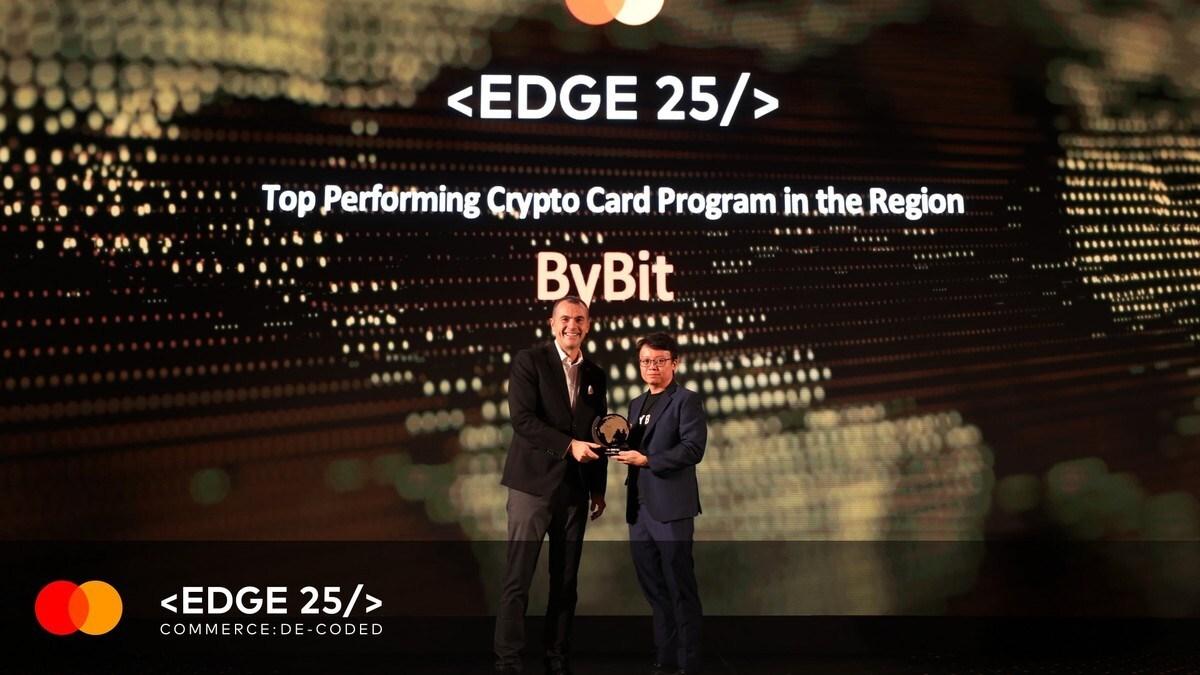 Bybit Card Honored as “the Best Performing Crypto Card” by Mastercard at EDGE 2025
DUBAI, UAE, Oct. 20, 2025 /PRNewswire/ — Bybit, the world’s second-largest cryptocurrency exchange by trading volume, is excited to announce that the Bybit Card has been recognized by Mastercard, the global leader in payment technology, as the Best Performing Crypto Card at EDGE 2025. Mastercard hosted the fourth edition of EDGE, its flagship forum shaping the future of payments across EEMEA. The event convened senior global executives from diverse industries to examine emerging opportunities across payments, digital infrastructure, and consumer trends. Under the theme ‘Commerce: De-Coded’, EDGE 2025 explored how innovations like agentic AI, embedded finance, tokenization, and stablecoins transformed global commerce and accelerated fintech evolution. Bybit Card: A Fast Pass to the Future of Crypto Payment Since its launch in 2024, the Bybit Card has accumulated over two million cardholders worldwide. Distinguishing itself by seamlessly integrating cryptocurrencies with traditional payment rails, the Bybit Card supports digital asset holders’ everyday needs and prioritizes a rewarding experience for its community. Through generous rewards tracks, exclusive partnerships across utility to culture, and innovative solutions, the Bybit Card enables users to convert and spend their digital assets at millions of merchants worldwide in the Mastercard network. “We are honored to receive this award from Mastercard, a global leader in financial innovation and a trusted partner in payment technology. The recognition validates Bybit’s vision to make crypto freedom a reality and digital assets more accessible for everyday users,” said Sophie Chen, Head of Marketing at Bybit Card and Pay. “The Bybit Card demonstrates the potential of digital assets in a connected world. EDGE 2025 brought together the companies actively building this infrastructure, and we’re focused on ensuring crypto users have the same seamless payment experience as traditional cardholders.” This recognition comes as the payments industry undergoes rapid transformation through embedded finance, tokenization, and AI-driven commerce solutions. Mastercard’s own innovation demonstrates this accelerating shift. Nearly half of all Mastercard online transactions in Europe are now tokenized, on track towards its goal of 100% by 2030. In the AI-commerce space, industry reports suggest AI assistants may handle 20% of eCommerce activities in 2025, underscoring the critical importance of secure, intelligent payment infrastructure like that recognized in the Bybit Card. Best Performing, Most Loved The Bybit Card enables cryptocurrency holders to spend their digital assets in real-world scenarios with ease, offering instant conversion, competitive rates, unique user benefits, and acceptance at millions of Mastercard merchants globally. Key Features of the Bybit Card: Crypto convenience: seamless fiat-to-crypto spending, and cash withdrawals from supported ATMs around the world with the physical card available to Mastercard holders. No annual fees and up to 8% APR on balances. Year-round perks: 100% rebates on subscriptions including Netflix, Spotify, and selected AI tools, airport lounge access, and other benefits refreshed seasonally. Multi-asset transactions and cashback: supporting transactions in BTC, ETH, XRP, TON, USDT, USDC, MNT, and BNB; cashback options in USDC, USDT, BTC, and AVAX, with more options on the way. #Bybit / #CryptoArk / #BybitCard /#IMakeIt About Bybit Bybit is the world’s second-largest cryptocurrency exchange by trading volume, serving a global community of over 70 million users. Founded in 2018, Bybit is redefining openness in the decentralized world by creating a simpler, open and equal ecosystem for everyone. With a strong focus on Web3, Bybit partners strategically with leading blockchain protocols to provide robust infrastructure and drive on-chain innovation. Renowned for its secure custody, diverse marketplaces, intuitive user experience, and advanced blockchain tools, Bybit bridges the gap between TradFi and DeFi, empowering builders, creators, and enthusiasts to unlock the full potential of Web3. Discover the future of decentralized finance at Bybit.com. For more details about Bybit, please visit Bybit Press For media inquiries, please contact: [email protected] For updates, please follow: Bybit’s Communities and Social Media Discord | Facebook | Instagram | LinkedIn | Reddit | Telegram | TikTok | X | Youtube
 Jiuzi Holdings, Inc Enters Strategic Partnership with BitFi to Advance Bitcoin-Centric Finance
HANGZHOU, China, Oct. 20, 2025 /PRNewswire/ — Jiuzi Holdings, Inc. (NASDAQ: JZXN; the “Company”) today formally announced it has signed a Strategic Cooperation Agreement with leading Bitcoin fintech platform BitFi. Specializing in multi-chain staking and yield generation for BTC, BitFi delivers targeted, auditable Bitcoin income solutions for institutions and high-net-worth investors through integrated asset wrapping (wrapped BTC), cross-chain arbitrage, and hybrid strategy portfolios. Currently managing approximately US$2.75 billion in total value locked (TVL) across major chains including BSC (BTCB) and Ethereum (WBTC), BitFi continues expanding its ecosystem of wrapped BTC assets and interoperability protocols. This collaboration marks deep synergy between both parties within the Bitcoin ecosystem, aiming to propel digital asset financial innovation into a new phase. Key Provisions of the Agreement Phased Capital Injection & Scalable Synergy: Per the framework agreement, the Company will initiate cooperation by investing initial crypto assets, followed by planned progressive scaling of funds. It will gain full access to BitFi’s US$2.75B asset pool. This mechanism optimizes capital allocation efficiency while enabling robust growth under dynamic risk-balancing strategies. Joint Governance & Product Innovation Committee: A special task force comprising executives and technical experts from both sides will focus on integrating cross-chain liquidity, developing structured yield products, and advancing compliant tokenization initiatives—such as derivative designs based on wrapped BTC and use cases combining real-world assets with on-chain financial instruments. This strategic alignment underscores JZXN’s commitment to transforming into an integrated Bitcoin financial services provider. Leveraging BitFi’s proven expertise in multi-chain asset management and yield optimization, the Company plans to establish transparent, auditable, and SEC-compliant BTC exposure channels that empower shareholders to capture on-chain financial opportunities. Both parties emphasize strict adherence to Nasdaq listing rules and U.S. securities regulations to ensure governance compliance and operational security. Li Tao, CEO of JZXN, stated: “Partnering with BitFi represents a critical step in our Web3 infrastructure deployment. By tapping into their global BTC liquidity network, we bridge traditional finance rigor with blockchain innovation vitality to create differentiated value for clients.” About Jiuzi Holdings, Inc. Jiuzi Holdings, Inc. is a leading provider of intelligent charging infrastructure for new energy vehicles in China’s third- and fourth-tier cities. The company focuses on high-power DC fast charging stations integrated with energy storage capabilities. For more information, please visit jzxn.com.
 Ondo Finance Urges SEC to Delay Nasdaq Tokenization Plan Over Transparency Concerns
Ondo Finance has published an open letter to the U.S. Securities and Exchange Commission (SEC) asking it to delay approval of Nasdaq’s plan to trade tokenized securities until more details are revealed.The team behind the decentralized finance protocol, which has $1.7 billion in total value locked (TVL), said Nasdaq’s proposal depends on the Depository Trust Company (DTC) figuring out a new system for tokenized settlement – information that has not yet been made public.If approved, Nasdaq’s proposal (filed on Sept. 8) would mark the first time tokenized securities are listed on a major U.S. exchange. However, Ondo warned that moving forward without transparency could give larger financial institutions an unfair edge or make it harder for newer firms to compete. To continue reading this as well as other DeFi and Web3 news, visit us at thedefiant.io
 Is Institutional Adoption Ethereum’s ‘Worst Enemy’?
Ethereum’s biggest threat might actually be what most see as its next milestone — institutional adoption. At least that’s what pcaversaccio, a pseudonymous analyst at blockchain security firm Seal 911, suggested recently on X, warning that traditional finance could tame the network’s open, cypherpunk spirit.In a late September post, pcaversaccio argued that as bigger finance players enter the ecosystem, the more “influence they wanna have on future hard fork decisions,” treating compliance as a feature rather than a constraint.“Look, you can go all mainstream, but we should actually celebrate it when Ethereum isn't chosen by tradfi clowns. That means we're doing something right. I won't let Ethereum be tamed, neutered, or turned into just another corporate playground. Never,” pcaversaccio wrote.To continue reading this as well as other DeFi and Web3 news, visit us at thedefiant.io
 Lighter Distributes Points to Users Affected by Platform Outage
Lighter, the second-largest decentralized perpetuals exchange, was one of many platforms that experienced platform outages during the crypto market’s flash crash on Oct. 10. To compensate affected users, Lighter has distributed points that will translate to a future token airdrop.Lighter announced its reimbursement plan on Oct. 14, dropping 250,000 points to traders affected by the platform's technical issues during and after the crash.While points may seem like nebulous compensation for lost funds, Lighter points are in high demand, reaching as high as $100 per point on OTC markets before Friday’s events. As of Oct. 16, the highest bid sits at $81.To continue reading this as well as other DeFi and Web3 news, visit us at thedefiant.io
 Sony Enters US Crypto Banking Race Amid Growing Institutional Interest
The U.S. crypto banking sector is heating up as Japan-based Sony Bank, a subsidiary of the Sony Financial Group, recently filed with the Office of the Comptroller of the Currency (OCC) for a national trust charter, signaling a growing race among institutions to offer regulated digital asset services.Dubbed Connectia Trust, N.A., the bank would operate as a trust company in the U.S. and offer cryptocurrency services, including issuing dollar-backed stablecoins, holding digital assets for clients, and managing assets for affiliated companies. If approved, Sony Bank would be one of the first major global technology companies to run a federally regulated crypto bank in the U.S. The filing also reflects a broader trend of both traditional financial (TradFi) firms and crypto-native companies seeking federal oversight to offer digital asset products.To continue reading this as well as other DeFi and Web3 news, visit us at thedefiant.io
 Coinbase Says It Plans to List BNB amid Binance Listing Fee Saga
Less than 24 hours after a Base builder publicly slammed Binance’s alleged listing policy on X, sparking a heated debate in the crypto community, Coinbase yesterday unexpectedly announced plans to list BNB. Though it’s no longer Binance’s official platform token, BNB — originally Binance Coin — was developed by the exchange, and remains a key asset in its ecosystem. The drama began on Tuesday, Oct. 14, when CJ Hetherington, the co-founder and CEO of Base prediction market Limitless, shared what he said were Binance listing terms in an X post. The post alleges that Binance — the world’s largest centralized exchange (CEX) by trading volume — asked for roughly 8% of his project’s token supply, broken into allocations for airdrops, liquidity and other marketing activations, for listing on Binance’s Alpha platform, as well as a $2 million security deposit in BNB for spot listing. Legal Action ThreatsTo continue reading this as well as other DeFi and Web3 news, visit us at thedefiant.io
 Crypto Markets Slip For Third Day Amid Geopolitical Tensions and Fed Uncertainty
The cryptocurrency market fell on Thursday, extending losses for a third consecutive day as investors remained cautious amid escalating geopolitical tensions and speculation over a Federal Reserve rate cut later this month.Bitcoin (BTC) is changing hands at $108,500, down 2% on the day, while Ethereum (ETH) trades around $3,903, also down 2% in the same period.To continue reading this as well as other DeFi and Web3 news, visit us at thedefiant.io
 Solana Could Hit $6,000 as Tokenized Finance Booms: RockawayX
Solana’s SOL token could reach $6,000 in the long term, according to a new report from investment firm RockawayX, which says the blockchain is becoming a leading platform for digital finance and tokenized assets.Solana is currently the second-largest blockchain, with over $13 billion in total value locked (TVL), according to DeFiLlama. Its native token, SOL, is currently priced at $195.70, up 25% over the past year – making it the sixth largest digital asset with a market capitalization of over $107 billion, per CoinGecko. RockawayX, which manages about $2 billion and was an early investor in Solana, says SOL could hit $900 in the short term (aligning with Ethereum’s ~$0.5 trillion market cap), $2,000 in the mid-term (supported by $2 trillion in tokenized assets or $30–50 billion of protocol revenue), and $6,000 in the long term (fueled by $10–15 trillion in tokenized assets or $100–150 billion in protocol revenue). To continue reading this as well as other DeFi and Web3 news, visit us at thedefiant.io
 The Digital Backbone of Modern Casino Games: How Tech Shapes Gameplay
When you open a digital casino game, it looks simple. A spin button, a few reels, a burst of color. But behind that clean surface is a quiet world of code and coordination working to make everything feel effortless. Modern casino games rely on more than chance or design. They depend on servers, secure systems, and finely tuned timing that keep the whole experience running without interruption. You can see how this comes together on Casino Games, where every spin, shuffle, and click feels smooth and natural. Each action sets off a chain of signals that travel across servers, verifying results and syncing animations with sound in real time. The player never sees the background work. They just feel how fluid and steady it all is. That sense of ease is not luck. It is engineering, built on years of refinement. Platforms like Betway have made this invisible precision part of their identity, turning digital play into something that feels as natural as a live game. The Systems Behind the Screen At the center of every casino platform is a network of servers that handle massive amounts of activity every second. They process spins, bets, and payouts instantly, keeping every result accurate and secure. These same systems balance performance, ensuring that the Casino Games open quickly and run the same way whether a player logs in from a phone, tablet, or desktop. Stability is what separates a great experience from a frustrating one, and in online gaming, that stability depends entirely on back-end performance. The random number generator, or RNG, sits at the core of fairness. It decides every outcome, creating the illusion of luck through pure calculation. These algorithms are tested again and again to make sure every player has the same chance at each result. The fairness and unpredictability that come from that testing are what keep players coming back. Design That Feels Alive Technology also shapes how casino games look and move. Developers build their games with tools that bring the reels to life. The motion has weight, the colors feel rich, and the response to touch is immediate. The lighting and movement blend so smoothly that everything seems to breathe on its own. After a while, you stop noticing the screen altogether and fall into its rhythm. Each sound and click lands exactly where it should, leading your attention gently without you ever realizing it. Betway and other leading platforms have refined this balance between design and performance. A game should look cinematic but load fast. It should feel interactive yet effortless. Achieving that combination takes thousands of hours of testing and small, precise changes. When it is done right, the player forgets about technology altogether. The interface disappears, leaving only the excitement of play. The Human Side of Code Even with all the technology working underneath, the best games still depend on human intuition. The small pause before a reel stops, the rising sound after a win, the glow that lingers for half a second longer than you expect. Those details come from people who understand emotion as much as design. They build rhythm into every sound and movement so that the player feels the story without ever being told it. Players rarely think about how much work happens behind each click. The modern casino feels alive in its own quiet way. It is built from lines of code, but also from imagination and design. Every spin, every sound, every small pause is part of a larger rhythm that holds the whole thing together. The technology stays out of sight, steady and precise, while the experience itself feels human and real.
 Crypto Market Slides for Second Day as Bitcoin Dips Amid Geopolitical Tensions
The cryptocurrency market slipped on Wednesday for a second consecutive day, following Monday’s brief rebound, as investors remain cautious after a tumultuous weekend and recent geopolitical developments.Bitcoin (BTC) is changing hands at $111,000, down 1.5% on the day, while Ethereum (ETH) is trading at $3,987, down 3.3%. Other top tokens also recorded declines: BNB dropped 3.7% to $1,172 after hitting a recent high of around $1,370 on Monday. Solana (SOL) fell 2.6% to $197, and XRP declined 2.6% to $2.44. To continue reading this as well as other DeFi and Web3 news, visit us at thedefiant.io
 Backpack Launches SEC-Registered Tokenized Shares amid Liquidation Controversy
Backpack, a centralized crypto exchange (CEX) and self-custody wallet app founded by former FTX and Alameda employees, has partnered with Robert Leshner’s fintech firm Superstate to let users trade on-chain versions of U.S. Securities and Exchange Commission (SEC)-registered stocks.According to a press release shared with The Defiant, the collaboration integrates Superstate’s Opening Bell platform into Backpack, allowing eligible non-U.S. users to buy, sell, and margin trade tokenized versions of real stocks — not synthetic alternatives, the release specifies — while retaining the same dividend rights and voting privileges as shares listed on stock exchanges.Backpack has yet to reveal which tokenized stocks will be available at launch, saying that more details will come in the next few weeks.To continue reading this as well as other DeFi and Web3 news, visit us at thedefiant.io
 ZETA NETWORK GROUP (NASDAQ: ZNB) STRENGTHENS BALANCE SHEET WITH USD 231 MILLION BITCOIN-BACKED INVESTMENT AMID MARKET TURBULENCE
Strategic PIPE transaction enhances Zeta Network Group’s digital treasury with fully collateralized SolvBTC assets NEW YORK, Oct. 15, 2025 /PRNewswire/ — Zeta Network Group (Nasdaq: ZNB) today announced that it has entered into a securities purchase agreement in a private placement for an aggregate of US$230,837,060.2 of (1) its Class A ordinary shares; (2) warrants entitling the Purchaser to purchase one Class A ordinary share for one warrant, exercisable at a price of $2.55 per Class A ordinary share, at a combined offering price of $1.7 per Class A ordinary share and warrant to purchase one Class A ordinary share. The aggregate gross proceeds of US$230,837,060.2 are payable in BTC or SolvBTC, which is a 1:1 wrapped Bitcoin-backed token issued by Solv Protocol, an on-chain Bitcoin reserve providing institutional mechanisms for the productive use of Bitcoin holdings. The private placement is expected to close on October 16, 2025, subject to customary closing conditions. This private placement strengthens Zeta Network Group’s balance sheet and enhances its net-asset value with a Bitcoin-backed, yield-generating instrument designed for institutional adoption. Entered into during a period of market turbulence, the transaction underscores Zeta Network Group’s confidence in Bitcoin’s fundamentals and its commitment to disciplined, counter-cyclical treasury management, reflecting similar strategies seen among other Bitcoin treasuries accumulating Bitcoin during market downturns. Entered into during a period of market turbulence, the transaction highlights Zeta Network Group’s conviction in Bitcoin’s long-term fundamentals and its disciplined, counter-cyclical approach to treasury management, mirroring strategies adopted by leading Bitcoin treasuries that accumulate during market downturns. SolvBTC is a 1:1 wrapped Bitcoin-backed token issued by Solv Protocol, an on-chain Bitcoin reserve providing institutional mechanisms for the productive use of Bitcoin holdings. Within Solv Protocol’s wide suite of products, SolvBTC serves as its institutional Bitcoin-backed asset, designed for treasury and capital-market applications. Each SolvBTC is fully collateralized 1:1 with Bitcoin, held under regulated custody, and verified through on-chain proof-of-reserves, offering companies a transparent and compliant way to generate yield on Bitcoin exposure. “This is a strategic balance-sheet allocation that reinforces Zeta Network Group’s long-term financial position,” said Patrick Ngan, Chief Investment Officer at Zeta Network Group. “By integrating SolvBTC into our treasury, we’re enhancing financial resilience with an instrument that combines Bitcoin’s scarcity with sustainable yield. It’s a measured, institutional approach to growth.” By adding SolvBTC, Zeta Network Group joins a growing cohort of Nasdaq-listed companies rethinking how digital assets fit within corporate finance frameworks. Rather than holding Bitcoin passively, listed companies are now exploring structured, yield-generating instruments that contribute to returns and liquidity while maintaining regulatory standards. “Listed entities are redefining what it means to hold Bitcoin productively,” said Ryan Chow, CEO of Solv Protocol. “With SolvBTC, we’re offering the structure required for treasury-grade adoption, bridging institutional finance with on-chain infrastructure. Beyond its balance-sheet impact, this transaction marks Zeta Network Group’s first step in a broader collaboration with Solv Protocol, establishing a framework for how tokenized Bitcoin instruments can participate in regulated capital markets. Conducted through a structured private placement, the investment demonstrates that digital financing can align with public-market governance while maintaining on-chain verification and transparency. About Zeta Network Group (Nasdaq: ZNB) Zeta Network Group (Nasdaq: ZNB) is a U.S.-listed digital infrastructure and financial technology company pioneering the convergence of traditional finance and the digital asset economy. The Group is developing a Bitcoin-centric institutional finance platform that integrates digital asset treasury management, Bitcoin liquidity aggregation, and sustainable Bitcoin mining operations, all within a regulated Nasdaq framework. Led by a global team of finance and technology experts, Zeta Network is redefining institutional digital finance by merging the governance and transparency of a public company with the innovation and scalability of blockchain to create a trusted bridge between capital markets and decentralized finance. For more information, visit ir.thezetanetwork.com. About Solv Protocol Solv Protocol is the on-chain Bitcoin Reserve bridging TradFi, CeFi, and DeFi to power the $1 trillion Bitcoin finance economy. Through its flagship product, SolvBTC, it enables retail and institutional investors to earn sustainable yields on their Bitcoin holdings, transforming the world’s hardest money from a passive store of value into a productive, globally accessible financial asset. Solv Protocol is backed by leading investors, including Binance Labs, Blockchain Capital, Laser Digital, and OKX Ventures. For more information, visit solv.finance For Media Enquiries Alex Revutsky [email protected] Forward-Looking Statements This press release contains forward-looking statements within the meaning of the Private Securities Litigation Reform Act of 1995. These statements are based on current expectations and involve risks and uncertainties that could cause actual results to differ materially from those projected. Forward-looking statements include, among other things, statements regarding anticipated financial performance, strategy, and the potential impact of the transaction described herein. Readers are cautioned not to place undue reliance on these forward-looking statements, which speak only as of the date hereof. Zeta Network Group undertakes no obligation to update or revise any forward-looking statements, whether as a result of new information, future events, or otherwise. For Media Enquiries Aroma Kumar [email protected]
 Nansen and Sanctum Launch Solana Liquid Staking Token
Blockchain analytics firm Nansen on Wednesday announced a partnership with Sanctum to launch nxSOL, a liquid staking token (LST) built on Solana – the second-largest blockchain with a total value locked (TVL) of over $13 billion.The token lets users earn staking rewards while retaining liquidity, allowing them to withdraw or use funds across Solana’s decentralized finance (DeFi) ecosystem at any time. Nansen said the project aims to make staking on Solana more liquid and easy to use.Sanctum – which has a TVL of $2.5 billion, up significantly from $900 million in April – is the fourth largest protocol on Solana and helps to enhance the utility of staked SOL. Currently, around 68% of SOL’s total supply is staked – that’s about 372 million tokens worth $74.5 billion. Staked SOL earns on average an estimated 4.38% annual yield, according to Coinbase data.To continue reading this as well as other DeFi and Web3 news, visit us at thedefiant.io
 OhBaby Games NFT Mint Offers GameFi Bulls a Glimmer of Hope
The past few years have not been kind to crypto gaming and GameFi investors, with most tokens and NFTs struggling to take off and other companies shutting down. However, the sector is showing some signs of life.OhBaby Games’ flagship NFT collection, the OhBaby Pass, launched at 0.1 ETH ($410) on Oct. 8 before quickly surging as high as 0.5 ETH ($2000) shortly after the mint concluded. The collection currently changes hands at 0.42 ETH.To continue reading this as well as other DeFi and Web3 news, visit us at thedefiant.io
 Jiuzi Holdings, Inc. (JZXN) Secures 100 Bitcoin via Private Placement, Signaling New Phase in Crypto Treasury Deployment
HANGZHOU, China, Oct. 13, 2025 /PRNewswire/ — Jiuzi Holdings, Inc. (NASDAQ: JZXN, hereinafter referred to as the “Company”) today elaborated on the progress of its cryptocurrency-denominated private placement transaction. The total consideration for this transaction was settled using 100 Bitcoin. This capital operation pioneers a new paradigm combining traditional equity financing with digital assets, fully demonstrating market recognition of JZXN’s strategic layout in the cryptocurrency sector. The raised funds will be exclusively allocated to two strategic directions: constructing an intelligent digital asset custody platform, and developing cutting-edge technology-based encrypted storage systems. These initiatives aim to strengthen the Company’s infrastructure service capabilities in the digital economy era. Since the disclosure of the transaction framework, market response has been positive, with the Company’s stock price showing a steady upward trend and maintaining a sustained premium over its closing price prior to the announcement. This trend not only reflects investor endorsement of the innovative transaction structure but also highlights strong interest from capital markets in emerging digital financial instruments. “From signing the agreement on October 7th to its current implementation phase, we have consistently prioritized balancing compliance and innovation,” stated Tao Li, CEO of JZXN. “These Bitcoin-denominated funds will be primarily invested in R&D for underlying blockchain technologies, particularly in key areas like secure multiparty computation and zero-knowledge proofs, laying the foundation for building next-generation digital financial service platforms.” About JZXN As a leading domestic provider of new energy infrastructure services, Jiuzi Holdings specializes in developing charging networks across third- and fourth-tier cities. Its high-power DC fast charging stations, integrated with energy storage systems, have achieved significant scaled operational advantages. Concurrently, the Company is advancing its “Smart Energy Cloud Platform” project, planning to enable intelligent interaction between charging facilities and power grid systems via Internet of Things (IoT) technology. Leveraging proceeds from this private placement, it will also initiate R&D testing for cross-border digital payment solutions, further expanding its business horizons. For more information, please visit jzxn.com.
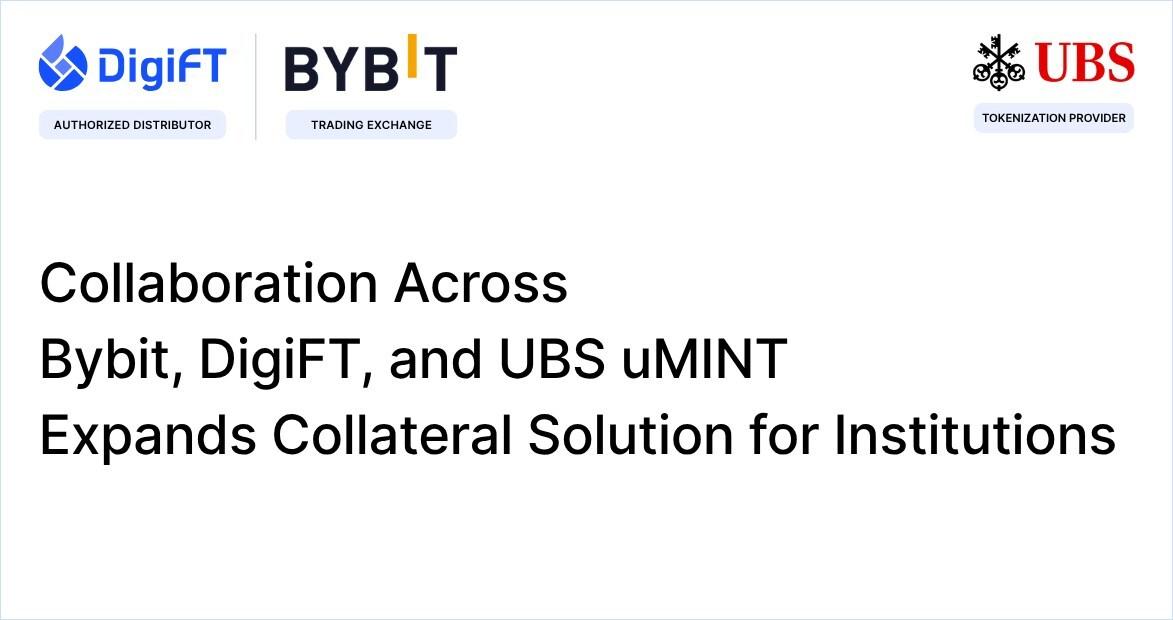 Collaboration across Bybit, DigiFT and UBS uMINT expands Collateral Solution for Institutions
DUBAI, UAE, Oct. 13, 2025 /PRNewswire/ — Bybit, the world’s second-largest cryptocurrency exchange by trading volume, announced a strategic collaboration with DigiFT to support UBS’s USD Money Market Investment Fund Token (UBS uMINT), a token corresponding to the first tokenized investment fund launched by UBS Asset Management. Through this collaboration, Bybit will enable the shares of UBS’s tokenized money market investment fund, which are distributed via DigiFT, to be used as collateral on its platform for trading. This initiative marks a significant milestone in Bybit’s mission to connect traditional finance (TradFi) with the digital asset economy. Issued by UBS Asset Management, the UBS uMINT is a money market investment built on the Ethereum public blockchain. Opened to external investors in November 2024, the UBS tokenized money market investment fund is distributed through authorized distribution partners. DigiFT, a licensed real-world assets (RWA) smart contract-based platform regulated by the Monetary Authority of Singapore and the Hong Kong Securities and Futures Commission, is at present the largest distributor by volume of the UBS tokenized money market investment fund. “DigiFT is an innovator in regulated blockchain distribution,” said Ben Zhou, Co-Founder and CEO of Bybit. “By working together, we are opening the door for more traditional institutions to unlock further utility from their tokenized money market products. Through the collaboration with Bybit, investors of the UBS tokenized money market investment fund will be able to use their holdings as collateral for trading in a secure and cost-efficient way. This partnership is another important step in bridging Web2 finance and Web3 innovation.” Yoyee Wang, Head of Bybit’s B2B Business Unit at Bybit, added: “Our B2B team is dedicated to leading key initiatives in loans, custody, and strategic partnerships that enable institutions to safely and seamlessly integrate digital assets into their operations. Collaborating with DigiFT gives our institutional clients access to a high-quality, regulated product backed by one of the world’s most trusted financial brands, while benefiting from Bybit’s robust settlement and liquidity infrastructure.” “As a regulated, smart contract-based, non-custodial RWA distributor, DigiFT’s vision has always been to make high-quality investment products accessible on-chain without compromising compliance. Through this collaboration, DigiFT exemplifies how regulated RWA infrastructure can deliver both capital efficiency and transparency to the financial markets of the future,” added Henry Zhang, Founder & Group CEO of DigiFT. This collaboration strengthens Bybit’s B2B and institutional service portfolio, supporting its strategy to onboard more traditional financial institutions into the digital asset space. By supporting regulated tokenized products such as UBS Asset Management’s tokenized money market investment fund and integrating the UBS uMINT token via DigiFT, Bybit continues to set new benchmarks for trust, transparency, and innovation in Crypto-TradFi integration. #Bybit / #TheCryptoArk About Bybit Bybit is the world’s second-largest cryptocurrency exchange by trading volume, serving a global community of over 70 million users. Founded in 2018, Bybit is redefining openness in the decentralized world by creating a simpler, open and equal ecosystem for everyone. With a strong focus on Web3, Bybit partners strategically with leading blockchain protocols to provide robust infrastructure and drive on-chain innovation. Renowned for its secure custody, diverse marketplaces, intuitive user experience, and advanced blockchain tools, Bybit bridges the gap between TradFi and DeFi, empowering builders, creators, and enthusiasts to unlock the full potential of Web3. Discover the future of decentralized finance at Bybit.com. For more details about Bybit, please visit Bybit Press For media inquiries, please contact: [email protected] For updates, please follow: Bybit’s Communities and Social Media Discord | Facebook | Instagram | LinkedIn | Reddit | Telegram | TikTok | X | Youtube DigiFT and/or its affiliates endeavor to ensure the accuracy and reliability of the information provided, but do not guarantee its accuracy and reliability and accept no liability (whether in tort or contract or otherwise) for any loss or damage arising from any inaccuracy or omission or from any decision, action or non-action based on or in reliance upon information contained in this article. This announcement does not constitute an invitation, recommendation or offer to subscribe for, purchase or enter into any transaction involving the above-mentioned product/service or any other services mentioned. The above-mentioned product/service is only available to accredited investors, professional investors and institutional investors through authorized regulated intermediaries. Before making any investment decision, please seek independent legal and financial advice. Clients intending to trade this product are reminded of the risks associated with such products and should carefully assess their investment objectives, risk appetite, financial situation and particular needs before making any investment decision. This material is provided exclusively for Accredited Investors, Professional Investors and Institutional Investors and it is not designed for Retail Customers, nor intended to address their investment objective.
 BitMine Immersion (BMNR) Announces ETH Holdings Exceeding 3.03 Million Tokens and Total Crypto and Cash Holdings of $12.9 Billion
BitMine now owns greater than 2.5% of the ETH token supply, now at halfway point as it moves towards the ‘Alchemy of 5%’ BitMine releases October Chairman’s Message discussing Ethereum Supercycle BitMine leads Crypto treasury peers by both the velocity of raising crypto NAV per share and by the high trading liquidity of BMNR stock BitMine Crypto + Cash Holdings + “Moonshots” total $12.9 billion, including 3.03 million ETH Tokens, unencumbered cash of $104 million, and other crypto holdings BitMine is the 22nd most traded stock in the US, trading $3.5 billion per day (5-day avg) BitMine remains supported by a premier group of institutional investors including ARK’s Cathie Wood, MOZAYYX, Founders Fund, Bill Miller III, Pantera, Kraken, DCG, Galaxy Digital and personal investor Thomas “Tom” Lee to support BitMine’s goal of acquiring 5% of ETH LAS VEGAS, Oct. 13, 2025 /PRNewswire/ — (NYSE AMERICAN: BMNR) BitMine Immersion Technologies (“BitMine” or the “Company”) a Bitcoin and Ethereum Network Company with a focus on the accumulation of Crypto for long term investment, today announced crypto BitMine crypto + cash + “moonshots” holdings totalling $13.4 billion. As of October 12th at 6:00pm ET, the Company’s crypto holdings are comprised of 3,032,188 ETH at $4,154 per ETH (Bloomberg), 192 Bitcoin (BTC), $135 million stake in Eightco Holdings (NASDAQ: ORBS) (“moonshots”) and unencumbered cash of $104 million. BitMine crypto holdings reigns as the #1 Ethereum treasury and #2 global treasury, behind Strategy Inc (MSTR), which owns 640,031 BTC valued at $73 billion. BitMine remains the largest ETH treasury in the world. “The crypto liquidation over the past few days created a price decline in ETH, which BitMine took advantage of. We acquired 202,037 ETH tokens over the past few days pushing our ETH holdings to over 3 million, or 2.5% of the supply of ETH,” said Thomas “Tom” Lee of Fundstrat, Chairman of BitMine. “We are now more than halfway towards our initial pursuit of the ‘alchemy of 5%’ of ETH.” The GENIUS Act and SEC’s Project Crypto are as transformational to financial services in 2025 as US action on August 15, 1971 ending Bretton Woods and the USD on the gold standard 54 years ago. This 1971 event was the catalyst for the modernization of Wall Street, creating the iconic Wall Street titans and financial and payment rails of today. These proved to be better investments than gold. Bitmine also published the October Chairman’s Message. This month, we are posting Chairman Lee’s keynote at Token2049 held in Singapore, where Lee discusses the Ethereum Supercycle. The related presentation is also posted on the BitMine website. “Volatility creates deleveraging and this can cause assets to trade at substantial discounts to fundamentals, or as we say, ‘substantial discount to the future’ and this creates advantages for investors, at the expense of traders,” continued Lee. “This Chairman’s Message explains our framework for why we see Ethereum in a Supercycle driven by the AI and Wall Street moving into the blockchain.” BitMine is now one of the most widely traded stocks in the US. According to data from Fundstrat, the stock has traded average daily dollar volume of $3.5 billion (5-day average, as of October 10, 2025), ranking #22 in the US, behind Coinbase (rank #21) and ahead of UnitedHealth (rank #23) among 5,704 US-listed stocks (statista.com and Fundstrat research). “BitMine continues to attract institutional investor capital as our high liquidity is appealing. The combined trading volume share of BitMine and MSTR is now 88% of all global DAT trading volume. We continue to lead our crypto treasury peers by both the velocity of raising crypto NAV per share and by the high trading liquidity of our stock,” said Lee. The company recently released a corporate presentation, which can be found here: https://bitminetech.io/investor-relations/ The Chairman’s message can be found here: https://www.bitminetech.io/chairmans-message To stay informed, please sign up at: https://bitminetech.io/contact-us/ About BitMine BitMine is a Bitcoin and Ethereum Network Company with a focus on the accumulation of Crypto for long term investment, whether acquired by our Bitcoin mining operations or from the proceeds of capital raising transactions. Company business lines include Bitcoin Mining, synthetic Bitcoin mining through involvement in Bitcoin mining, hashrate as a financial product, offering advisory and mining services to companies interested in earning Bitcoin denominated revenues, and general Bitcoin advisory to public companies. BitMine’s operations are located in low-cost energy regions in Trinidad; Pecos, Texas; and Silverton, Texas. For additional details, follow on X: https://x.com/bitmnr https://x.com/fundstrat https://x.com/bmnrintern Forward Looking Statements This press release contains statements that constitute “forward-looking statements.” The statements in this press release that are not purely historical are forward-looking statements which involve risks and uncertainties. This document specifically contains forward-looking statements regarding progress and achievement of the Company’s goals regarding ETH acquisition and staking, the long-term value of Ethereum, continued growth and advancement of the Company’s Ethereum treasury strategy and the applicable benefits to the Company. In evaluating these forward-looking statements, you should consider various factors, including BitMine’s ability to keep pace with new technology and changing market needs; BitMine’s ability to finance its current business, Ethereum treasury operations and proposed future business; the competitive environment of BitMine’s business; and the future value of Bitcoin and Ethereum. Actual future performance outcomes and results may differ materially from those expressed in forward-looking statements. Forward-looking statements are subject to numerous conditions, many of which are beyond BitMine’s control, including those set forth in the Risk Factors section of BitMine’s Form 10-K filed with the Securities and Exchange Commission (the “SEC”) on April 3, 2025, as well as all other SEC filings, as amended or updated from time to time. Copies of BitMine’s filings with the SEC are available on the SEC’s website at www.sec.gov. BitMine undertakes no obligation to update these statements for revisions or changes after the date of this release, except as required by law.
 Eightco Holdings Inc. ($ORBS) Makes Strategic Investment into Mythical Games to Accelerate Human Verification and Digital Identity in Gaming
Joining strategic round alongside Cathie Wood’s ARK Invest and World Proving gamers are playing against verified humans across gaming universes Investment represents Eightco’s position as the authentication and trust layer for the post-AGI world The Company is supported by a select group of strategic and institutional investors including: BitMine (BMNR), MOZAYYX, World Foundation, Wedbush, Coinfund, Discovery Capital Management, FalconX, Kraken, Pantera, GSR, Brevan Howard and more EASTON, Pa., Oct. 13, 2025 /PRNewswire/ — Eightco Holdings Inc. (NASDAQ: ORBS) (“Eightco” or the “Company”) today announced a strategic investment into Mythical Games (“Mythical” or “Mythical Games”) Series D financing, participating in a deal led by Cathie Wood’s ARK Invest and World Foundation. The transaction is expected to close the week of October 20. Eightco ($ORBS) is the authentication and trust layer for the post-AGI world, working in coordination with the Worldcoin ecosystem. This strategic investment reinforces Eightco’s ($ORBS) central role in shaping the future of digital identity and verification. It also aligns with Eightco’s current corporate roadmap to allocate up to 1% of its treasury assets toward venture-style investments that advance breakthrough authentication technologies. “This investment marks another key step in our mission to become the authentication layer of the post-AGI economy,” said Dan Ives, Chairman of Eightco ($ORBS). “Eightco’s vision extends across critical fronts including enterprise and gaming authentication. By partnering with visionary leaders such as John Linden and Mythical Games, we’re bridging digital identity and entertainment, creating a trust framework that scales globally. Worldchain’s Proof of Human and single sign-on capabilities make it the ideal foundation for the next era of gaming and AI integration.” Led by former Call of Duty studio head John Linden, Mythical Games is a pioneer in Web3 gaming and digital ownership, with a growing portfolio of leading franchises including NFL Rivals, Pudgy Penguins’ Pudgy Party, and FIFA Rivals. The company plans to expand its marketplace product to integrate with Worldchain, an ERC-20-compatible blockchain built for Proof of Human (PoH) verification and single sign-on, marking a major step forward in secure, verifiable gaming infrastructure. Mythical Games’ expansion with Worldchain and World ID will enable seamless interoperability between gaming assets, wallets, and identity, giving players verified ownership of digital assets while reducing fraud and improving user onboarding. Together, Eightco, Mythical Games, and World are pioneering what comes next for AI-driven identity and digital economies. The strategic alignment ensures Mythical’s gaming ecosystem will be native to the same trust and identity stack that Eightco is building for the broader AI economy. Mythical has three games live already with over 1 million installs each: Pudgy Party (in partnership with Pudgy Penguins), NFL Rivals (in partnership with NFL and NFLPA), and FIFA Rivals (in partnership with FIFA and FIFPRO). These games have over 10 million installs combined and have been featured numerous times by both Apple App Store and Google Play. The Mythical Marketplace have over 9.6 million funded wallets and handles over $400 million a year in NFT sales volume. “Mythical is integrating with Worldchain to bring identity and trust into the next era of gaming,” said John Linden, CEO of Mythical Games. “Our vision is to make every player, whether in FIFA Rivals, Pudgy Party, or NFL Rivals, part of a verified, global economy where digital ownership and fair play are guaranteed. By partnering with Worldcoin, we can connect billions of players through secure, human-verified accounts that work seamlessly across games, marketplaces, and rewards. It’s about scaling real-world identity and on-chain utility together, turning gaming into the largest, most inclusive digital economy on the planet.” “Mythical’s 9.6 million wallets represent an installed base of users that can build on World ID’s over 17 million verified user count,” continued Ives. “We expect this partnership and future deals to drive positive step-change functions in the World verified customer base.” ABOUT EIGHTCO HOLDINGS INC. Eightco Holdings Inc. (NASDAQ: ORBS) is building the authentication and trust layer for the post-AGI world. Its mission centers on strategic pillars including consumer authentication, enterprise authentication, and gaming authentication. Through its pioneering digital asset strategies, including the first-of-its-kind Worldcoin treasury, and partnerships with leading technology innovators, Eightco is establishing a universal foundation for digital identity and Proof of Human (PoH) verification. For additional details, follow on X: https://x.com/iamhuman_orbs https://x.com/divestech ABOUT MYTHICAL GAMES Acknowledged by Fast Company’s World Changing Ideas 2021 and Forbes’ Best Startup Employers (2024), Mythical Games is a next-generation game company creating world-class games and empowering players to take ownership of their in-game assets through the use of blockchain technology. The team has helped develop major franchises, including Call of Duty, Call of Duty Mobile, World of Warcraft, Diablo, Overwatch, Magic: The Gathering, EA Madden, Harry Potter Hogwarts Mystery, Marvel Strike Force, Modern Warfare, and Skylanders. Mythical’s games, Blankos Block Party, NFL Rivals, Pudgy Party, and FIFA Rivals, are already played by millions of consumers worldwide and create a new economy for players, allowing them to engage in a new way with games but also directly trade and transact safely with other players worldwide. Forward-Looking Statements This press release contains forward-looking statements within the meaning of the Private Securities Litigation Reform Act of 1995. All statements in this press release other than statements of historical fact could be deemed forward looking. Words such as “plans,” “expects,” “will,” “anticipates,” “continue,” “expand,” “advance,” “develop” “believes,” “guidance,” “target,” “may,” “remain,” “project,” “outlook,” “intend,” “estimate,” “could,” “should,” and other words and terms of similar meaning and expression are intended to identify forward-looking statements, although not all forward-looking statements contain such terms. Forward-looking statements are based on management’s current beliefs and assumptions that are subject to risks and uncertainties and are not guarantees of future performance. Actual results could differ materially from those contained in any forward-looking statement as a result of various factors, including, without limitation: Eightco’s ability to maintain compliance with the Nasdaq’s continued listing requirements; unexpected costs, charges or expenses that reduce Eightco’s capital resources; Eightco’s inability to raise adequate capital to fund its business; Eightco’s inability to innovate and attract users for Eightco’s products; future legislation and rulemaking negatively impacting digital assets; and shifting public and governmental positions on digital asset mining activity. Given these risks and uncertainties, you are cautioned not to place undue reliance on such forward-looking statements. For a discussion of other risks and uncertainties, and other important factors, any of which could cause Eightco’s actual results to differ from those contained in forward-looking statements, see Eightco’s filings with the Securities and Exchange Commission (the “SEC”), including in its Annual Report on Form 10-K filed with the SEC on April 15, 2025. All information in this press release is as of the date of the release, and Eightco undertakes no duty to update this information or to publicly announce the results of any revisions to any of such statements to reflect future events or developments, except as required by law.
 Phemex Announces Halloween Futures Trading Festival With 200,000 USDT Prize Pool
APIA, Samoa, Oct. 13, 2025 /PRNewswire/ — Phemex, the most efficient crypto exchange, announced its Halloween Futures Trading Festival, offering 200,000 USDT in rewards for traders participating between October 10 and October 31, 2025. The campaign is open to both first-time and experienced futures traders. The festival includes:First Futures Trade Reward — Users completing their first futures trade of 100 USDT or more receive a 200 USDT futures position voucher.Volume-Based Milestone Pool — A 70,000 USDT reward structure distributed across five trading volume tiers. Registration is open through October 31 at 10:00 UTC. Full details are available at the event landing page. The festival is part of Phemex’s seasonal trading initiatives for October 2025. About Phemex Founded in 2019, Phemex is the most efficient crypto exchange trusted by over 6 million traders worldwide. The platform offers spot and derivatives trading, copy trading, and wealth management products that combine seamless functionality with institutional-grade security. Known for its reliability and innovative edge, Phemex stands out for prioritizing user experience and transparency in an industry where trust is essential. For more information, please visit: https://phemex.com/
 Touareg Group Expands Global Presence with Establishment of U.S. Technology Subsidiary
NEW YORK, Oct. 13, 2025 /PRNewswire/ — Touareg Group, an international leader in finance, digital assets, and technology innovation, has announced the establishment of its U.S.-based subsidiary, Touareg Group Technologies Co. This strategic expansion represents a major step in the Group’s long-term growth strategy and demonstrates its commitment to building world-class infrastructure at the convergence of finance and emerging technologies. The new subsidiary will focus on artificial intelligence (AI), blockchain infrastructure, and digital asset exchange platforms, with a strong emphasis on the development of a next-generation cryptocurrency exchange. This exchange is designed to provide institutional-grade security, regulatory alignment, and advanced trading capabilities that will serve both retail and institutional participants. By placing compliance, transparency, and technological scalability at its core, the exchange aims to establish itself as a trusted platform in the global digital economy. Operating from the United States, Touareg Group Technologies Co. benefits from proximity to one of the most advanced ecosystems for financial innovation and regulatory oversight. This strategic positioning allows the company to balance cutting-edge development with rigorous governance, ensuring long-term sustainability and market trust. “The creation of Touareg Group Technologies Co. is a pivotal milestone in our global expansion,” said a spokesperson for Touareg Group. “Our focus is on creating sustainable shareholder value by combining technology, governance, and innovation. The upcoming cryptocurrency exchange will stand as a cornerstone of this strategy, offering a secure, compliant, and efficient marketplace that supports the growth of the digital asset industry.” In addition to the exchange initiative, the subsidiary will pursue the development of advanced AI applications and institutional-grade blockchain systems. These efforts will be supported by strategic collaborations with leading technology companies, financial institutions, and regulatory authorities, ensuring alignment with global best practices and enhancing adoption across markets. The launch of Touareg Group Technologies Co. highlights the Group’s broader mission to expand its international footprint, diversify its portfolio, and strengthen its position as a trusted partner at the intersection of finance and technology. By prioritizing resilience, compliance, and corporate responsibility, Touareg Group continues to build a forward-looking ecosystem that empowers businesses, communities, and shareholders worldwide. This expansion further establishes Touareg Group as a catalyst for innovation, shaping the future of finance and technology through advanced infrastructure, shareholder value creation, and sustainable growth.
 Phemex Launches Market Confidence Campaign to Support Traders Through Volatility
APIA, Samoa, Oct. 11, 2025 /PRNewswire/ — Phemex, the most efficient crypto exchange, today announced the launch of its Market Confidence Campaign, a global initiative designed to support traders during the current market downturn. Crypto markets have experienced broad declines across major assets in the past week, driven by macroeconomic uncertainty, deleveraging pressures, and weakening risk appetite. In response, Phemex is introducing practical incentives and cost-saving measures to help users maintain disciplined strategies and long-term confidence amid volatility. Running from October 11 to October 31, 2025, the campaign supports both new and existing users through incentives that promote disciplined participation rather than emotional reactions to market conditions. The initiative is part of Phemex’s broader commitment to providing confidence in every market through practical tools, transparent processes, and responsible trading support. The campaign includes: Zero-Fee Trading Slots — 5,000 limited spots available, covering trading fees for eligible users during the campaign period. 20% Deposit Cashback — Up to 200 USDT in bonus rewards for new users making qualifying deposits, available to the first 1,000 participants. Referral Rewards — Users can earn up to 50 USDT per valid referee by sharing the campaign with friends, encouraging community engagement and broader access. “Market downturns can be defining moments for disciplined traders,” said Federico Variola, CEO of Phemex. “This campaign embodies our belief that true confidence comes from preparation and access — not speculation. Alongside trading incentives, we remain focused on empowering users with knowledge and perspective, helping them navigate volatility with clarity and discipline. Phemex builds tools for resilience — not just when markets rise, but especially when they are tested.” This campaign follows a series of recent product enhancements from Phemex like Multi-Assets Mode, all designed to give users greater capital control. As market sentiment recalibrates, Phemex continues to reinforce its mission of building a future where crypto trading remains accessible, efficient, and grounded in trust. About Phemex Founded in 2019, Phemex is the most efficient crypto exchange trusted by over 6 million traders worldwide. The platform offers spot and derivatives trading, copy trading, and wealth management products that combine seamless functionality with institutional-grade security. Known for its reliability and innovative edge, Phemex stands out for prioritizing user experience and transparency in an industry where trust is essential. For more information, please visit: https://phemex.com/
 Railgun Token Soars as Vitalik Calls Privacy a ‘First-Class Priority’ for Ethereum
Privacy is back in focus for the Ethereum ecosystem, with the Ethereum Foundation introducing a new toolkit designed to give wallets stronger protection and more autonomy.In a Thursday post on X, the foundation wrote that the ‘Kohaku’ toolkit is a set of primitives that enables wallets to be “secure and to process private transactions while minimizing dependencies on trusted third parties.”In a separate X post, Ethereum co-founder Vitalik Buterin also mentioned Kohaku, adding that full-stack privacy and security “are first-class priorities in Ethereum.”To continue reading this as well as other DeFi and Web3 news, visit us at thedefiant.io
 Sorare Migrates to Solana, Abandoning Ethereum L2 StarkEx
Sorare, a blockchain-based fantasy sports game where fans can collect NFT player cards, is once again changing its home, this time migrating from StarkEx to Layer 1 chain Solana.In an announcement on Oct. 8, Sorare described the migration from StarkEx, an Ethereum Layer 2 scaling solution, as “more than a technical upgrade,” calling it a “step forward in our vision to become the most open and flexible platform for digital sports collectibles.”In its FAQ section for the migration, Sorare explained that it’s moving to Solana to connect Sorare cards “to a broader ecosystem,” including the ability to manage the NFTs on popular Solana wallets like Phantom. The team also hinted at a possible Sorare ecosystem token in the future, as part of its long-term vision:To continue reading this as well as other DeFi and Web3 news, visit us at thedefiant.io
 Eightco Holdings Inc. ($ORBS) Expands its Strategic Vision into the Enterprise
Company announces new initiative to bring authentication to the enterprise, solving trust and verification at scale Eightco will serve as the global authentication and trust layer that corporations rely on The Company is supported by a select group of strategic and institutional investors including: BitMine (BMNR), MOZAYYX, World Foundation, Wedbush, Coinfund, Discovery Capital Management, FalconX, Kraken, Pantera, GSR, Brevan Howard and more EASTON, Pa., Oct. 10, 2025 /PRNewswire/ — Eightco Holdings Inc. (NASDAQ: ORBS) today announced the launch of a new pilot program focused on advancing AI authentication for the enterprise. The initiative will identify and develop innovative approaches to address emerging identity and verification challenges as enterprises scale their use of AI. Through strategic investments and partnerships, in addition to a first-of-its-kind Worldcoin treasury, Eightco is driving the development of a universal framework for digital identity and authentication. “With trillions of dollars being invested in AI, the lack of scalable human-proof authentication has become a critical enterprise challenge,” said Dan Ives, Chairman of Eightco Holdings Inc. ($ORBS). “Over the last month, we’ve heard from many enterprise technology vendors that are seeking secure, verifiable identity solutions as they scale AI workloads and applications. Our new program will help companies analyze single sign-on capabilities and verification pathways across this expanding digital landscape. We’re excited to collaborate with tech partners tackling these challenges, as authentication and trust are the foundation of Eightco’s long-term strategic vision.” ABOUT EIGHTCO HOLDINGS INC. Eightco Holdings Inc. (NASDAQ: ORBS) supports and develops technology that is integral to the future of authentication, verification and Proof of Human (PoH) through its strategic investments and partnerships, including a first-of-its-kind Worldcoin treasury strategy. In an increasingly agentic world, Eightco aims to achieve a universal foundation for digital identity. For additional details, follow on X: https://x.com/iamhuman_orbs https://x.com/divestech Forward-Looking Statements This press release contains forward-looking statements within the meaning of the Private Securities Litigation Reform Act of 1995. All statements in this press release other than statements of historical fact could be deemed forward looking. Words such as “plans,” “expects,” “will,” “anticipates,” “continue,” “expand,” “advance,” “develop” “believes,” “guidance,” “target,” “may,” “remain,” “project,” “outlook,” “intend,” “estimate,” “could,” “should,” and other words and terms of similar meaning and expression are intended to identify forward-looking statements, although not all forward-looking statements contain such terms. Forward-looking statements are based on management’s current beliefs and assumptions that are subject to risks and uncertainties and are not guarantees of future performance. Actual results could differ materially from those contained in any forward-looking statement as a result of various factors, including, without limitation: Eightco’s ability to maintain compliance with the Nasdaq’s continued listing requirements; unexpected costs, charges or expenses that reduce Eightco’s capital resources; Eightco’s inability to raise adequate capital to fund its business; Eightco’s inability to innovate and attract users for Eightco’s products; future legislation and rulemaking negatively impacting digital assets; and shifting public and governmental positions on digital asset mining activity. Given these risks and uncertainties, you are cautioned not to place undue reliance on such forward-looking statements. For a discussion of other risks and uncertainties, and other important factors, any of which could cause Eightco’s actual results to differ from those contained in forward-looking statements, see Eightco’s filings with the Securities and Exchange Commission (the “SEC”), including in its Annual Report on Form 10-K filed with the SEC on April 15, 2025. All information in this press release is as of the date of the release, and Eightco undertakes no duty to update this information or to publicly announce the results of any revisions to any of such statements to reflect future events or developments, except as required by law.
 Lighter Points Hit $100 on OTC Markets
As traders flock to tokenless perpetuals exchanges in pursuit of “the next Hyperliquid airdrop,” trading volumes hit a record $1 trillion in September, and as the sector heats up, the Lighter exchange’s activity-based points have hit an all-time high on over-the-counter (OTC) markets.The Lighter points system has been live since its closed beta launched in February, but valuations have skyrocketed over the last month.The leading Lighter OTC market, SOTC, cleared its first seven-figure transaction on Oct. 7, which also marked the first sale at $100 per point. Lighter points were trading for as little as $30 just weeks ago. To continue reading this as well as other DeFi and Web3 news, visit us at thedefiant.io
 Bybit Secures UAE’s First Virtual Asset Platform Operator License from Securities and Commodities Authority
Bybit, the world’s second-largest cryptocurrency exchange by trading volume, today announced that it has officially secured the Virtual Asset Platform Operator License from the Securities and Commodities Authority (SCA) of the United Arab Emirates (UAE). Bybit becomes the first crypto exchange to obtain this full license from the SCA, marking a historic milestone in the nation’s vision to establish itself as a global digital asset hub. This licensing brings along with the full product capability of Bybit’s existing global products and services into compliance. This symbolic milestone demonstrates Bybit’s assurance to users that it is committed to high standards of quality, product and service arising from rigorous compliance frameworks found not just in UAE but also globally. It also demonstrates Bybit’s long term global strategy of being locally enshrined and its commitment to bringing crypto to local markets. Bybit initially received its In-Principle Approval (IPA) from the SCA in February 2025 with the help of the Blockchain Centre, Abu Dhabi, in navigating SCA’s robust framework. The full license demonstrates the regulator’s trust in Bybit’s robust security infrastructure, operational transparency, and rigorous compliance standards. This achievement follows a series of regulatory milestones for Bybit in 2025 — including securing its MiCAR license in May and resuming full trading operations in India in September — as the exchange continues to expand its presence under a compliance-first roadmap across key global jurisdictions. Ben Zhou, Co-founder and CEO of Bybit, said: “Receiving the full Virtual Asset Platform Operator License from the SCA is a testament to Bybit’s unwavering commitment to building trust through compliance and transparency. The UAE has emerged as a global leader in digital asset regulation, and this recognition underscores the strength of our security and governance standards. At Bybit, we see regulation as the foundation for sustainable growth. This milestone marks another step forward in our global regulatory roadmap — from MiCAR in Europe to India and now the UAE — as we continue to set new benchmarks for a secure and responsible digital asset ecosystem.” Helen Liu, Co-CEO of Bybit, added: “We sincerely thank the Securities and Commodities Authority for their trust and support throughout the licensing process. The SCA’s clear, robust, and well-structured regulatory framework provides a strong foundation for global exchanges like Bybit to operate with confidence and clarity. This achievement would not have been possible without the SCA’s forward-thinking approach to fostering innovation and compliance in the digital asset space. We look forward to deepening our collaboration as we bring more resources, products, and expertise to the UAE market.” Bybit’s Upcoming Plan in UAE Under the SCA’s Virtual Asset Platform Operator License, Bybit will offer regulated virtual asset trading, brokerage, custody, and fiat conversion services to both retail and institutional clients across the UAE. The exchange plans to expand its local footprint by establishing a larger regional operations center in Abu Dhabi with over 500 employees across Abu Dhabi and Dubai, accelerating local hiring across compliance, operations, and customer service, and introducing new education and Web3 innovation programs in collaboration with local partners. Bybit’s continued investment in talent, technology, and infrastructure reaffirms its long-term commitment to supporting the UAE’s ambition to become a global hub for digital assets and financial innovation. #Bybit / #TheCryptoArk About Bybit Bybit is the world’s second-largest cryptocurrency exchange by trading volume, serving a global community of over 60 million users. Founded in 2018, Bybit is redefining openness in the decentralized world by creating a simpler, open and equal ecosystem for everyone. With a strong focus on Web3, Bybit partners strategically with leading blockchain protocols to provide robust infrastructure and drive on-chain innovation. Renowned for its secure custody, diverse marketplaces, intuitive user experience, and advanced blockchain tools, Bybit bridges the gap between TradFi and DeFi, empowering builders, creators, and enthusiasts to unlock the full potential of Web3. Discover the future of decentralized finance at Bybit.com. For more details about Bybit, please visit Bybit Press For media inquiries, please contact: [email protected] For updates, please follow: Bybit’s Communities and Social Media Discord | Facebook | Instagram | LinkedIn | Reddit | Telegram | TikTok | X | Youtube
 NuevaWealth for Altcoin CFD Trading – Pros, Cons & Tips
Introduction to Altcoin Trading Altcoins are any cryptocurrencies besides Bitcoin. Over the past decade the crypto ecosystem has exploded from a handful of coins to thousands, each trying to solve a specific problem—whether it’s enabling smart contracts (Ethereum), providing fast, low‑fee payments (Solana, Litecoin), powering decentralized finance (Uniswap, Aave), supporting NFTs and gaming (Axie Infinity, Decentraland), or offering privacy (Monero, Zcash). Because many of these projects are still early in their development cycles, their market prices tend to be more volatile than Bitcoin. That volatility creates opportunities for traders who can correctly anticipate short‑term price moves, but it also brings heightened risk of rapid losses. Key concepts to grasp before diving in: Market Capitalization & Liquidity – Larger caps (top 20) usually have tighter spreads and deeper order books, making it easier to enter and exit positions without slippage. Smaller caps can move dramatically on modest trade volumes, which can be attractive for speculative gains but also risky. Tokenomics – Understand the supply model (fixed vs. inflationary), distribution schedule (vesting, staking rewards) and utility of the token. Sudden token releases or protocol upgrades often trigger price spikes or drops. Fundamental Drivers – Project roadmaps, partnership announcements, regulatory news, and community sentiment (Twitter, Reddit, Discord) heavily influence altcoin price dynamics. Technical Analysis Basics – Trend lines, support/resistance zones, moving averages, RSI and MACD are commonly applied to altcoin charts. Given the higher noise, combining several indicators and confirming with volume can improve signal reliability. Risk Management – Set stop‑loss levels, limit leverage, and allocate only a small portion of your portfolio to any single altcoin. Diversification across several projects can smooth out the impact of a single coin’s failure. Regulatory Landscape – Some jurisdictions treat certain altcoins as securities, which can affect exchange listings and legal exposure. Stay informed about the regulatory status of the tokens you trade. By mastering these fundamentals—understanding what each altcoin aims to achieve, how its market behaves, and how to protect capital—you’ll be better equipped to navigate the fast‑paced world of altcoin trading. 1. Why Altcoins Matter Altcoins—cryptocurrencies other than Bitcoin—represent the bulk of the crypto ecosystem. They range from established projects like Ethereum, Solana and Cardano to newer tokens that aim to solve niche problems such as decentralized finance, gaming, or supply‑chain tracking. For many traders, altcoins offer higher volatility than Bitcoin, which can translate into larger short‑term price swings and, consequently, bigger profit opportunities—provided the trader understands the added risk. 2. How Nueva Wealth Handles Altcoins Nueva Wealth treats every cryptocurrency it lists as a CFD (contract‑for‑difference). When you open an altcoin position, you are not buying the token itself; you are speculating on its price movement relative to a fiat or stablecoin denominator. The platform currently offers a curated selection of altcoins, typically the top‑20 by market capitalization, plus a few emerging projects that meet its internal liquidity standards. Key characteristics of the altcoin CFD offering: Fixed spreads – The bid‑ask spread is set in advance and does not change with order size. During periods of extreme market stress, the spread may widen, which can affect entry and exit prices. Leverage options – Most altcoins are available with up to 1:10 leverage. This means a $100 margin can control a $1,000 notional position, magnifying both gains and losses. No token custody – Because the contracts are settled in fiat or a stablecoin, you never receive the underlying altcoin in a wallet. This eliminates concerns about private‑key management but also means you cannot use the token for staking, governance voting, or other on‑chain utilities. Overnight financing – Holding a leveraged altcoin position past the daily settlement window incurs a financing charge calculated on the notional value of the contract. 3. Advantages for Altcoin Traders Speed of Execution – Order latency is measured in sub‑seconds, which is valuable when trading fast‑moving altcoins where price changes can happen in milliseconds. Unified Dashboard – Altcoins sit alongside forex, stocks and commodities, allowing you to shift capital between asset classes without leaving the app. Risk Management Tools – Stop‑loss and trailing‑stop orders are available for each altcoin CFD, giving you a way to limit downside exposure. No Custodial Hassles – Since you never hold the actual token, you avoid the complexities of securing private keys, managing wallets, or dealing with network congestion when transferring coins. 4. Limitations and Risks Lack of Ownership – Without holding the real token, you cannot benefit from airdrops, staking rewards, or governance participation that many altcoin projects offer. Leverage‑Induced Volatility – Altcoins already exhibit high price swings; adding leverage can quickly erode a margin balance if the market moves against you. Liquidity Constraints – While Nueva Wealth selects altcoins with sufficient liquidity, the CFD market depth can be thinner than the spot market on major exchanges. Slippage may occur on large orders. Regulatory Ambiguity – Operating under an offshore licence, the platform does not fall under EU or UK investor‑protection regimes. In the event of insolvency, there is no statutory compensation for deposited funds. Limited Educational Content – The platform’s built‑in learning resources cover basic CFD concepts but do not delve deeply into altcoin fundamentals, tokenomics, or project‑specific risk factors. Traders need to conduct independent research. 5. Practical Tips for Using Nueva Wealth with Altcoins Start Small – Allocate only a modest portion of your capital (e.g., ≤ 10 %) to leveraged altcoin positions until you become comfortable with the platform’s execution and fee structure. Set Protective Stops – Use stop‑loss orders at a level that reflects the altcoin’s typical volatility; consider a trailing‑stop to lock in gains if the price moves favorably. Monitor Financing Costs – If you plan to hold a position overnight, calculate the daily financing charge and factor it into your profitability analysis. Cross‑Check Liquidity – Before entering a sizable trade, compare the quoted spread on Nueva Wealth with spot market spreads on major exchanges (e.g., Binance, Coinbase). A significantly wider spread may indicate lower CFD liquidity. Do Independent Research – Review the altcoin’s whitepaper, roadmap, developer activity, and community sentiment. CFD exposure does not replace the need for fundamental analysis. 6. Frequently Asked Questions Specific to Altcoins Do I earn staking rewards on altcoins traded through Nueva Wealth?No. Because the contracts are settled in fiat or stablecoins, you do not hold the actual token and therefore cannot participate in staking or delegation programs. Can I trade any altcoin I want?Only the altcoins that Nueva Wealth lists are available as CFDs. The selection is limited to assets that meet the platform’s liquidity and compliance criteria. What happens if an altcoin gets delisted on the spot market?If the underlying token is removed from major exchanges, Nueva Wealth may suspend CFD trading for that asset. Existing positions could be closed automatically, and any resulting profit or loss would be settled in fiat. Are there any tax implications specific to CFD altcoin trading?Tax treatment varies by jurisdiction. Generally, CFD profits are considered capital gains or income, depending on local law. Because you never own the token, you do not report a “crypto acquisition” event, but you do need to declare realized gains or losses from CFD closures. Consult a tax professional for guidance. 7. Verdict – Is Nueva Wealth Good for Altcoin Trading? Nueva Wealth offers a fast, mobile‑friendly environment that makes it easy to speculate on a curated list of altcoins. Its strengths lie in rapid order execution, built‑in risk‑management tools and the convenience of handling multiple asset classes from a single interface. For experienced traders who are comfortable with leveraged speculation, understand the risks of CFD products, and are primarily interested in short‑term price movements, Nueva Wealth can be a suitable venue for altcoin exposure. For newcomers or those who wish to hold altcoins long‑term, earn staking rewards, or rely on regulatory protections, a traditional spot exchange or a regulated broker that offers direct token custody may be a better fit. Ultimately, the decision hinges on your trading objectives, risk tolerance, and willingness to supplement the platform’s limited educational content with independent research. If you choose to proceed, start with a small allocation, use protective stops, and keep a close eye on financing costs and liquidity conditions.
 ‘Golden Age’ of Prediction Markets Dawns as Activity Reaches New Highs
After a slow ramp-up throughout 2025, the rivalry between Kalshi and Polymarket is intensifying, pushing cumulative prediction market activity to new highs, while volumes reach their highest levels since the 2024 presidential election.September marked Polymarket’s highest volume month this year with $1.43 billion in volume, according to DeFiLlama. Meanwhile, Kalshi closed its best month yet, processing just over $3 billion in volume in September. According to Dune Analytics, the week ending September 29 marked the prediction market sector’s highest seven-day volume stretch since the 2024 presidential election, with total volume of $1.45 billion, compared to $1.98 billion during election week.To continue reading this as well as other DeFi and Web3 news, visit us at thedefiant.io
 ICE Invests $2 Billion in Polymarket To Expand Into Prediction Markets
Intercontinental Exchange (NYSE: ICE), the owner of the New York Stock Exchange, announced on Tuesday a strategic investment in Polymarket, a decentralized prediction market platform.ICE will invest up to $2 billion, valuing Polymarket at roughly $8 billion pre-investment, according to a press release. As part of the deal, ICE will become a global distributor of Polymarket’s data, providing institutional investors with access to insights on market sentiment. The two companies also plan to work together on tokenization projects in the future, the release noted. This comes at a time when the real-world asset sector continues to expand, having recently surpassed $33 billion in total on-chain value. To continue reading this as well as other DeFi and Web3 news, visit us at thedefiant.io
 S& P Global to Launch New Index That Combines Cryptocurrencies and Crypto Stocks
S&P Global (NYSE: SPGI) announced on Tuesday, Oct. 7 that it is expanding its crypto index offerings with the launch of a new benchmark that tracks both cryptocurrencies and traditional stocks tied to the crypto industry.Called the S&P Digital Markets 50 Index, the benchmark will include 35 publicly traded companies involved in blockchain, digital asset operations and infrastructure, and fintech, along with 15 major cryptocurrencies, according to a press release. The index was developed by S&P Dow Jones Indices in partnership with Dinari, a company that specializes in tokenized U.S. securities with a total value locked (TVL) of $45 million. Dinari – which earlier this year was granted a U.S. broker-dealer license, and partnered with Gemini to offer tokenized Strategy (MSTR) stock to EU users – will also create a tokenized version of the index, allowing investors to access it directly on-chain.To continue reading this as well as other DeFi and Web3 news, visit us at thedefiant.io
 Eightco Holdings Inc. ($ORBS) Digital Asset Treasury Launches “Chairman’s Message” Video Series
Reinforces “Power of Eight” Initiative, targeting 800M Worldcoin (WLD) tokens and verify 8B humans Currently over 17 million verified World humans, with goal of verifying 100 million in the next twelve months World is the single sign-on and Proof-of-Human verification for the AI era The Company is supported by a select group of strategic and institutional investors including: BitMine (BMNR), MOZAYYX, World Foundation, Wedbush, Coinfund, Discovery Capital Management, FalconX, Kraken, Pantera, GSR, Brevan Howard and more EASTON, Pa., Oct. 7, 2025 /PRNewswire/ — Eightco Holdings Inc. (NASDAQ: ORBS) today announced the launch of its “Chairman’s Message” video series and corporate presentation. This Chairman’s message is expected to be produced monthly. The company closed on its $270 million PIPE (private investment into a public equity) financing on September 9th. It was recently announced that the World network has surpassed 17 million verified humans. “We’ve seen tremendous interest and enthusiasm around Worldcoin and our treasury since launching ORBS,” said Dan Ives, Chairman of Eightco Holdings Inc. ($ORBS). “The ‘Chairman’s Message’ shares my perspective on why WLD is leading the charge into our AI-driven future. We see substantial value creation ahead, with a target of acquiring 800 million WLD tokens and a projected value of $10 per token, representing an $8 billion potential valuation for ORBS.” As part of his mission to raise global awareness for $ORBS and Worldcoin, Chairman Ives will embark on the ORBS World Tour, visiting several of the cities where World stores are located, including: October 7: San Francisco October 18-21: Bangkok October 22-23: Kuala Lumpur October 24-25: Singapore October 27-28: Seoul October 29-30: Tokyo December 8-10: London “As AI-generated content continues to surge, the need for Proof of Human will only grow. We believe World ID will emerge as the universal single sign-on of the future, integrating across governments, enterprises, fintech, dating, gaming, and beyond,” added Ives. Both the “Chairman’s Message” and corporate presentation are available on the website: www.8co.holdings/chairmans-message ABOUT EIGHTCO HOLDINGS INC. Eightco Holdings Inc. (NASDAQ: ORBS) is delivering a first-of-its-kind Worldcoin (WLD) treasury strategy. With this digital asset treasury (DAT), Eightco is advancing the AI revolution, implementing a technology infrastructure layer that is integral to the future of authentication, verification and Proof of Human (PoH). World is the single sign-on and Proof-of-Human verification for the AI era. In an increasingly agentic world, Eightco aims to achieve a universal foundation for digital identity. For additional details, follow on X: https://x.com/iamhuman_orbs https://x.com/divestech Forward-Looking Statements This press release contains forward-looking statements within the meaning of the Private Securities Litigation Reform Act of 1995. All statements in this press release other than statements of historical fact could be deemed forward looking. Words such as “plans,” “expects,” “will,” “anticipates,” “continue,” “expand,” “advance,” “develop” “believes,” “guidance,” “target,” “may,” “remain,” “project,” “outlook,” “intend,” “estimate,” “could,” “should,” and other words and terms of similar meaning and expression are intended to identify forward-looking statements, although not all forward-looking statements contain such terms. Forward-looking statements are based on management’s current beliefs and assumptions that are subject to risks and uncertainties and are not guarantees of future performance. Actual results could differ materially from those contained in any forward-looking statement as a result of various factors, including, without limitation: Eightco’s ability to maintain compliance with the Nasdaq’s continued listing requirements; unexpected costs, charges or expenses that reduce Eightco’s capital resources; Eightco’s inability to raise adequate capital to fund its business; Eightco’s inability to innovate and attract users for Eightco’s products; future legislation and rulemaking negatively impacting digital assets; and shifting public and governmental positions on digital asset mining activity. Given these risks and uncertainties, you are cautioned not to place undue reliance on such forward-looking statements. For a discussion of other risks and uncertainties, and other important factors, any of which could cause Eightco’s actual results to differ from those contained in forward-looking statements, see Eightco’s filings with the Securities and Exchange Commission (the “SEC”), including in its Annual Report on Form 10-K filed with the SEC on April 15, 2025. All information in this press release is as of the date of the release, and Eightco undertakes no duty to update this information or to publicly announce the results of any revisions to any of such statements to reflect future events or developments, except as required by law.
 Zeta Network Group Enters Strategic Partnership with SOLV Foundation to Advance Bitcoin-Centric Finance
NEW YORK, Oct. 7, 2025 /PRNewswire/ — Zeta Network Group (Nasdaq: ZNB) (the “Company“) today announced it has entered into a Strategic Partnership Agreement (the “Agreement“) with SOLV Foundation (“SOLV“), a multi-chain Bitcoin liquid staking and institutional-grade structured finance platform with $2.5 billion in TVL, powering SolvBTC across Binance, Base and Solana. The partnership underscores the Company’s ambition to establish itself as a Nasdaq-listed leader in Bitcoin-centric digital asset finance. Key Highlights of the Agreement Bitcoin Treasury Strategy. The Company will leverage SOLV’s platform to maximize the efficiency of its Bitcoin holdings. Bitcoin assets held by the Company or its subsidiaries will be deposited on SOLV’s platform under the custody of a regulated third-party custodian approved by the Company, ensuring transparency security and institutional-grade auditability. Joint Steering Committee. Senior representatives from the Company and SOLV will form a steering committee which will spearhead transformative initiatives to redefine Bitcoin-centric decentralized finance. The committee will drive SolvBTC’s adoption across Solana, Base and Ton, fostering market expansion and pioneering innovative finance models like tokenized real-world assets and structured yield products. Research & Innovation. The partnership includes plans for joint white papers, market insights and research initiatives on corporate Bitcoin utilization, staking strategies, structured finance products and real-world asset tokenization. The Agreement reflects a shared vision of positioning the Company as a Bitcoin-centric finance company that combines its Bitcoin treasury with innovative digital asset strategies. By leveraging SOLV’s expertise in Bitcoin liquidity aggregation and staking, the Company seeks to provide shareholders with institutional-grade exposure to Bitcoin while delivering enhanced capital efficiency within a regulated framework. Both parties affirmed that the collaboration will be guided by transparency, governance and compliance with SEC and Nasdaq requirements. Samantha Huang, CEO of the Company, commented, “This partnership marks a transformative step for the Company, strengthening our Bitcoin treasury strategy and aligning us with one of the most advanced platforms in the Bitcoin liquidity and staking ecosystem.” Ryan Chow, CEO of SOLV, stated, “Our partnership with the Company catapults SOLV onto the international stage as an institutional gateway to on-chain finance. With our $2.5 billion TVL platform powering SolvBTC across multiple chains, we are revolutionizing Bitcoin management with optimized yields and Shariah-compliant transparency in cross-chain liquidity. This collaboration addresses traditional exchange concerns on compliance and market depth, paving the way for global institutions to seamlessly embrace digital asset finance.” Forward-Looking Statements This press release contains forward-looking statements as defined by the Private Securities Litigation Reform Act of 1995. Forward-looking statements include statements concerning plans, objectives, goals, strategies, future events or performance, and underlying assumptions and other statements that are other than statements of historical facts. When the Company uses words such as “may,” “will,” “intend,” “should,” “believe,” “expect,” “anticipate,” “project,” “estimate” or similar expressions that do not relate solely to historical matters, it is making forward-looking statements. Forward-looking statements are not guarantee of future performance and involve risks and uncertainties that may cause the actual results to differ materially from the Company’s expectations discussed in the forward-looking statements. These statements are subject to uncertainties and risks including, but not limited to, the following: the Company’s goals and strategies; the Company’s future business development; changes in technology; economic conditions; reputation and brand; the impact of competition and pricing; government regulations; the ability of Zeta Network Group to meet NASDAQ listing standards in connection with the consummation of the transaction contemplated therein; and other risks and uncertainties described herein, as well as those risks and uncertainties discussed from time to time in other reports and other public filings with the Securities and Exchange Commission by Zeta Network Group. For these reasons, among others, investors are cautioned not to place undue reliance upon any forward-looking statements in this press release. Additional factors are discussed in the Company’s filings with the U.S. Securities and Exchange Commission, which are available for review at www.sec.gov. The Company undertakes no obligation to publicly revise these forward–looking statements to reflect events or circumstances that arise after the date hereof unless required by applicable laws, regulations or rules.
 BitMine Immersion (BMNR) Announces ETH Holdings Exceeding 2.83 Million Tokens and Total Crypto and Cash Holdings of $13.4 Billion
BitMine now owns greater than 2% of the ETH token supply as it moves towards the ‘Alchemy of 5%’ BitMine leads Crypto treasury peers by both the velocity of raising crypto NAV per share and by the high trading liquidity of BMNR stock BitMine Crypto + Cash Holdings + “Moonshots” total $13.4 billion, including 2.83 million ETH Tokens, unencumbered cash of $456 million, and other crypto holdings BitMine is the 28th most traded stock in the US, trading $2.5 billion per day (5-day avg) BitMine remains supported by a premier group of institutional investors including ARK’s Cathie Wood, MOZAYYX, Founders Fund, Bill Miller III, Pantera, Kraken, DCG, Galaxy Digital and personal investor Thomas “Tom” Lee to support BitMine’s goal of acquiring 5% of ETH LAS VEGAS, Oct. 6, 2025 /PRNewswire/ — (NYSE AMERICAN: BMNR) BitMine Immersion Technologies (“BitMine” or the “Company”) a Bitcoin and Ethereum Network Company with a focus on the accumulation of Crypto for long term investment, today announced crypto BitMine crypto + cash + “moonshots” holdings totalling $13.4 billion. As of October 5th at 1:00pm ET, the Company’s crypto holdings are comprised of 2,830,151 ETH at $4,535 per ETH (Bloomberg), 192 Bitcoin (BTC), $113 million stake in Eightco Holdings (NASDAQ: ORBS) (“moonshots”) and unencumbered cash of $456 million. BitMine crypto holdings reigns as the #1 Ethereum treasury and #2 global treasury, behind Strategy Inc (MSTR), which owns 640,031 BTC valued at $79 billion. BitMine remains the largest ETH treasury in the world. “We spent the past week in Singapore at Token2049 meeting with many leaders in the crypto and blockchain industry. The BitMine team sat down with Ethereum core developers and key ecosystem players and it is clear the community is focused on enabling Wall Street and AI to build the future on Ethereum. We remain confident that the two Supercycle investing narratives remain AI and crypto. Naturally, Ethereum remains the premier choice given its high reliability and 100% uptime. These two powerful macro cycles will play out over decades. Since ETH’s price is a discount to the future, this bodes well for the token and is the reason BitMine’s primary treasury asset is ETH,” said Thomas “Tom” Lee of Fundstrat, Chairman of BitMine. “As we mentioned in our August Chairman’s message, the power law benefits large holders of ETH, hence, we pursue the ‘alchemy of 5%’ of ETH.” The GENIUS Act and SEC’s Project Crypto are as transformational to financial services in 2025 as US action on August 15, 1971 ending Bretton Woods and the USD on the gold standard 54 years ago. This 1971 event was the catalyst for the modernization of Wall Street, creating the iconic Wall Street titans and financial and payment rails of today. These proved to be better investments than gold. “We continue to believe Ethereum is one of the biggest macro trades over the next 10-15 years,” continued Lee. “Wall Street and AI moving onto the blockchain should lead to a greater transformation of today’s financial system. And the majority of this is taking place on Ethereum.” BitMine is now one of the most widely traded stocks in the US. According to data from Fundstrat, the stock has traded average daily dollar volume of $2.5 billion (5-day average, as of October 3, 2025), ranking #28 in the US, behind JPMorgan (rank #27) and ahead of Nike (rank #29) among 5,704 US-listed stocks (statista.com and Fundstrat research). “At BitMine, we are leading our crypto treasury peers by both the velocity of raising crypto NAV per share and by the high trading liquidity of our stock,” said Lee. The company recently released a corporate presentation, which can be found here: https://bitminetech.io/investor-relations/ The Chairman’s message can be found here: https://www.bitminetech.io/chairmans-message To stay informed, please sign up at: https://bitminetech.io/contact-us/ About BitMine BitMine is a Bitcoin and Ethereum Network Company with a focus on the accumulation of Crypto for long term investment, whether acquired by our Bitcoin mining operations or from the proceeds of capital raising transactions. Company business lines include Bitcoin Mining, synthetic Bitcoin mining through involvement in Bitcoin mining, hashrate as a financial product, offering advisory and mining services to companies interested in earning Bitcoin denominated revenues, and general Bitcoin advisory to public companies. BitMine’s operations are located in low-cost energy regions in Trinidad; Pecos, Texas; and Silverton, Texas. For additional details, follow on X: https://x.com/bitmnr https://x.com/fundstrat https://x.com/bmnrintern Forward Looking Statements This press release contains statements that constitute “forward-looking statements.” The statements in this press release that are not purely historical are forward-looking statements which involve risks and uncertainties. This document specifically contains forward-looking statements regarding progress and achievement of the Company’s goals regarding ETH acquisition and staking, the long-term value of Ethereum, continued growth and advancement of the Company’s Ethereum treasury strategy and the applicable benefits to the Company. In evaluating these forward-looking statements, you should consider various factors, including BitMine’s ability to keep pace with new technology and changing market needs; BitMine’s ability to finance its current business, Ethereum treasury operations and proposed future business; the competitive environment of BitMine’s business; and the future value of Bitcoin and Ethereum. Actual future performance outcomes and results may differ materially from those expressed in forward-looking statements. Forward-looking statements are subject to numerous conditions, many of which are beyond BitMine’s control, including those set forth in the Risk Factors section of BitMine’s Form 10-K filed with the Securities and Exchange Commission (the “SEC”) on April 3, 2025, as well as all other SEC filings, as amended or updated from time to time. Copies of BitMine’s filings with the SEC are available on the SEC’s website at www.sec.gov. BitMine undertakes no obligation to update these statements for revisions or changes after the date of this release, except as required by law.
 Navigating Markets at 'The Top'
With BTC underperforming over most of September, talk of a cycle top was naturally amplified on social media, which shouldn’t come as a surprise considering Crypto Twitter has been obsessed with trying to call the top since Bitcoin ETFs launched in January 2024.However, confluence is starting to stack up a little bit for the bears. From a traditional four-year cycle perspective, the “end” is near, there is slightly increased fear and uncertainty driven by the SEC’s investigations into DATs, altcoins are struggling and there doesn’t seem to be enough liquidity in the system to pump more than one at a time, and trench traders are still PVP-ing each on memecoins, which are performing worse than they did when BTC was at $30K in 2023.Each rejection on BTC feels a little heavier than the last, especially with stocks and gold ripping to all-time highs every day.To continue reading this as well as other DeFi and Web3 news, visit us at thedefiant.io
 Eightco Holdings Inc. ($ORBS) Expands Investor Access with Options Trading
Over 17 Million Verified World Humans, Adding More Than 2 Million Since Launching Worldcoin Treasury Just 3 Weeks Ago $ORBS’ bold ‘Power of 8’ initiative aims to accumulate 800M Worldcoin (WLD) tokens and verify 8B humans Dan Ives, renowned technology and AI expert and Wall Street analyst, serves as Chairman of the Board World is the single sign-on and Proof-of-Human verification for the AI era “If we succeed on our mission, World might become the largest network of real people online, fundamentally changing how we interact and transact throughout the Internet,” says Sam Altman Investors include MOZAYYX, BitMine Immersion (BMNR), World Foundation, Wedbush, Coinfund, Discovery Capital Management, FalconX, Kraken, Pantera, GSR, Brevan Howard and more EASTON, Pa., Oct. 2, 2025 /PRNewswire/ — Eightco Holdings Inc. (NASDAQ: ORBS) today announced that the World network has surpassed 17 million verified humans, an increase of over 2 million since $ORBS launched just three weeks ago. The company recently unveiled its ‘Power of 8’ initiative, targeting 800 million Worldcoin (WLD) and 8 billion verified humans. Additionally, the company announced that options trading is now available, offering new opportunities for investors to engage with $ORBS as the company continues its rapid growth and expansion. “We are making rapid progress on the ‘Power of 8,’ and reaching 17 million verified humans marks a pivotal step toward a world where digital trust is seamless and universal,” said Dan Ives, Chairman of Eightco Holdings Inc. ($ORBS). “World is powering the single sign-on future, enabling secure, anonymous interactions online for millions of people worldwide.” “17 million is also an important number for our ‘Power of 8’ story because 8 raised to the 8th power is 17 million,” says Kevin O’Donnell, CEO of Eightco. “I look forward to joining Chairman Ives at the World stores in Singapore and Seoul, where we can meet and interact with fellow ORBS-ians” Separately, Eightco today announced that standardized options on its common stock are now available for trading on the Nasdaq Options Market under the ticker symbol “ORBS.” The options include a range of standard expiration dates and strike prices. This listing enhances investor accessibility, provides tools for risk management, and improves overall liquidity in the company’s shares. “Now, with options trading available, investors have new ways to engage with our growth and momentum,” continued Ives. As part of his mission to raise global awareness for $ORBS and Worldcoin, Chairman Ives will embark on the ORBS World Tour, visiting several of the cities where World stores are located, including: October 6: Los Angeles October 7: San Francisco October 18-21: Bangkok October 22-23: Kuala Lumpur October 24-25: Singapore October 27-28: Seoul October 29-30: Tokyo December 8-10: London Eightco Holdings Inc. (ORBS) is committed to establishing a universal foundation for digital identity. World’s proprietary verification Orb technology is designed to meet the security and identity challenges of the future, offering a path to a universally trusted digital identity and the foundation for the next generation of online trust, verification and economic exchange. The Orbs are the hardware backbone of Worldcoin, verifying unique humans, distributing tokens fairly, and creating a trusted digital identity system. World will be the leading verification platform for consumers around the world. ABOUT EIGHTCO HOLDINGS INC. Eightco Holdings Inc. (NASDAQ: ORBS) is delivering a first-of-its-kind Worldcoin (WLD) treasury strategy. With this digital asset treasury (DAT), Eightco is advancing the AI revolution, implementing a technology infrastructure layer that is integral to the future of authentication, verification and Proof of Human (PoH). World is the single sign-on and Proof-of-Human verification for the AI era. In an increasingly agentic world, Eightco aims to achieve a universal foundation for digital identity. For additional details, follow on X: https://x.com/iamhuman_orbs https://x.com/divestech Forward-Looking Statements This press release contains forward-looking statements within the meaning of the Private Securities Litigation Reform Act of 1995. All statements in this press release other than statements of historical fact could be deemed forward looking. Words such as “plans,” “expects,” “will,” “anticipates,” “continue,” “expand,” “advance,” “develop” “believes,” “guidance,” “target,” “may,” “remain,” “project,” “outlook,” “intend,” “estimate,” “could,” “should,” and other words and terms of similar meaning and expression are intended to identify forward-looking statements, although not all forward-looking statements contain such terms. Forward-looking statements are based on management’s current beliefs and assumptions that are subject to risks and uncertainties and are not guarantees of future performance. Actual results could differ materially from those contained in any forward-looking statement as a result of various factors, including, without limitation: Eightco’s ability to maintain compliance with the Nasdaq’s continued listing requirements; unexpected costs, charges or expenses that reduce Eightco’s capital resources; Eightco’s inability to raise adequate capital to fund its business; Eightco’s inability to innovate and attract users for Eightco’s products; future legislation and rulemaking negatively impacting digital assets; and shifting public and governmental positions on digital asset mining activity. Given these risks and uncertainties, you are cautioned not to place undue reliance on such forward-looking statements. For a discussion of other risks and uncertainties, and other important factors, any of which could cause Eightco’s actual results to differ from those contained in forward-looking statements, see Eightco’s filings with the Securities and Exchange Commission (the “SEC”), including in its Annual Report on Form 10-K filed with the SEC on April 15, 2025. All information in this press release is as of the date of the release, and Eightco undertakes no duty to update this information or to publicly announce the results of any revisions to any of such statements to reflect future events or developments, except as required by law.
 CRYPTO HIGHER, US GOVERNMENT SHUTS DOWN, PUMP LEADS REBOUND
Crypto Higher Despite Us Government Shutdown. Recent Runners Xpl, Aster, Stbl All Weak. Blackrock Eth Staking Etf Could Be Coming in Oct. Sec Opens Door for State Trusts as Crypto Custodians. Tron Inc. Down 85% From Peak Amid Dat Slumps. Gensler’s Deleted Texts Under Scrutiny. Metaplanet Buys $616m Btc, Btcw to Buy $100m. Upexi Taps Sol Big Brain for Advisory. Thumzup Invests $2.5m Into Dogehash Technologies. Tether to Tap Rumble to Boost Usat Adoption. Strive Intros Open Issuance, Wants Banking Charter. Wlfi Plans to Tokenize Rwa and Pair With Usd1. Phantom Launches Stablecoin on Solana. Binance’s X Account Hacked. Uk Seeks to Keep Seized Gbp 5b Btc. Xrp Cto to Step Back Into Board Role.
 1inch rebrands to reflect broader mission uniting DeFi and global finance
1inch’s design, messaging and product strategy aim to better reflect the platform’s true scale The 1inch SaaS model has fueled widespread adoption by Binance, Ledger, MetaMask & more DUBAI, UAE, Oct. 1, 2025 /PRNewswire/ — 1inch, the leading DeFI ecosystem, has rebranded, unveiling its new visual and messaging identity at Token2049 in Singapore, as well as a new address: 1inch.com. The change reflects the project’s growth as it cements its role as a core DeFi infrastructure provider, focused on integrating the sector and connecting it with traditional financial institutions and systems. This rebrand is the latest step in 1inch’s mission to simplify DeFi & make it ready for mass-adoption. From DEX aggregation, to intent-based swaps, to seamless cross-chain – every move 1inch has made has improved user experience. Now, with radically simplified design, clearer interfaces and streamlined products, the project offers a yet more intuitive entry to the DeFi space for ordinary users and institutional partners alike. 1inch’s expansion of its SaaS based model means its innovative non-custodial technology is now widely integrated across the industry, with major players like Binance, Coinbase, Ledger, MetaMask, Trust Wallet, and others relying on 1inch tech to power their swaps. That’s reflected in the message the new brand is launched with: We move forward as 1″. 1inch’s design, messaging and product strategy now reflect the platform’s true scale and responsibility: serving both end users and B2B partners with the same focus on performance, trust and innovation. Sergej Kunz, Co-Founder of 1inch, said: “Soon, DeFi will be indistinguishable from traditional finance, but this doesn’t mean centralization, it means traditional financial systems and users coming on-chain. 1inch’s rebrand signals maturity, but not a change in the mission. We remain focused on building self-custodial solutions and on uniting the chains, protocols, projects, and people that make up this space — to unlock its full potential.” Anton Bukov, Co-Founder of 1inch, commented: “1inch and DeFi more generally has proven its power to create a more transparent, efficient, and globally accessible financial system. Now it’s time to responsibly extend this foundation to a wider audience, bringing more assets and users on chain to benefit.” 1inch’s new visual identity is designed to reflect simplicity, sophistication and maturity: the simplicity of a product that ‘just works’, without getting in your way as you use it; the sophistication of the advanced technology that makes this possible under the hood; and the maturity of one of the founding projects in DeFi, now leading the sector on integration, risk management and partnership with ever-larger institutions. With 1inch’s protocols providing the infrastructure for much of DeFi, the brand speaks with authority without needing to shout. The iconic name remains, of course. It was inspired by Bruce Lee’s legendary 1-inch punch – a movement built on precision, coordination and economy. That philosophy shaped 1inch’s initial stages: connecting multiple liquidity sources with unprecedented efficiency, to offer users the best possible crypto swap rates. The DeFi of today (and tomorrow) demands more. So, to address the crypto space’s new challenges, 1inch stepped into a bigger role: a unifier of a rapidly expanding and often fragmented environment. Understanding 1inch’s future focus When DeFi works as one, everyone wins. And 1inch is here to make that happen. 1inch is shaping the conditions for DeFi’s next chapter: 1. Uniting a fragmented space DeFi’s growth has brought incredible diversity – but also complexity. Different chains, protocols and tools don’t always work together. By offering cross-chain solutions, 1inch is building the connective tissue that makes them function as one. 2. Balancing freedom with connection Self-custody is the bedrock of DeFi. But freedom is amplified when paired with connection – when your assets, tools and opportunities are all part of a smooth, interoperable environment. 1inch’s new branding reflects that balance. 3. Raising the bar on security and trust As part of its transformation, 1inch is undergoing ISO 27001 and SOC 2 certifications – globally recognized standards for information security and data protection. This step highlights the company’s commitment to the highest levels of security and risk management, ensuring that 1inch meets the strict requirements of institutional players. By aligning with these standards, 1inch strengthens its position as a trusted partner for large businesses and enterprises, paving the way for deeper collaborations and wider adoption of its ecosystem. 4. Elevating the experience A seamless user experience doesn’t happen by accident. It’s the result of deep integration, security-first design and performance optimization. That means: best rates and execution for both b2b and b2c users. security through comprehensive hack and scam protection and industry-leading risk management. infrastructure that keeps the DeFi world connected and moving. The rebranding of 1inch marks not just a visual transformation, but a new chapter in the company’s journey. With a mature identity, strengthened security standards, and a vision for broader partnerships, 1inch is ready to scale new heights. This evolution reflects both where we’ve come from and where we’re heading — shaping the future of DeFi together. About 1inch 1inch accelerates decentralized finance with a seamless crypto trading experience for 25M users. Beyond being the top platform for low-cost, efficient token swaps with $500M in daily trades, 1inch offers a range of innovative tools, including a secure self-custodial wallet, a portfolio tracker for managing digital assets, a developer portal to build on its cutting-edge technology, and even a debit card for easy crypto spending. By continuously innovating, 1inch is simplifying DeFi for everyone. Website | Follow on X | Explore Blog
 ASTER VS HYPERLIQUID, XPL BULL & BEAR CASE, DAT TRADE IN TROUBLE
Bitcoin strength continues, altcoins mixed. Various l1 etfs may be approved very soon. Sec-cftc turf war is over: pham. Sec willing to engage with token issuers: pierce. Senate committee to meet to examine crypto taxes. Wisconsin may open up licenses to crypto firms. Strategy buys $22m btc, bitmine buys $963m eth. Ibit becomes top btc options venue. Sec pauses trading of the dat qmmm. Ny crypto regulator harris steps down. Binance launches ‘crypto-as-a-service’ solution. Cronje’s flying tulip raises $200m at $1b valuation. Falconx rolls out 24×7 crypto options trading. Republic plans to tokenise animoca’s equity on sol. Kazakhstan launches crypto reserve. Bitcoin may join central bank reserves by 2030: db.
 BTC LEADS, GOVERNMENT SHUT DOWN FEARS, L1 ETFS MAY COME SOON
Bitcoin strength continues, altcoins mixed. Various l1 etfs may be approved very soon. Sec-cftc turf war is over: pham. Sec willing to engage with token issuers: pierce. Senate committee to meet to examine crypto taxes. Wisconsin may open up licenses to crypto firms. Strategy buys $22m btc, bitmine buys $963m eth. Ibit becomes top btc options venue. Sec pauses trading of the dat qmmm. Ny crypto regulator harris steps down. Binance launches ‘crypto-as-a-service’ solution. Cronje’s flying tulip raises $200m at $1b valuation. Falconx rolls out 24×7 crypto options trading. Republic plans to tokenise animoca’s equity on sol. Kazakhstan launches crypto reserve. Bitcoin may join central bank reserves by 2030: db.
 CRYPTO REBOUNDS, ASTER METRICS SOAR, PLASMA HITS $13B
ETH, HYPE & BNB lead bounce in top L1s. ETH ETFs saw ATH outflows last week. Swift to launch blockchain in response to stablecoins. ASTER flips Tether in fees, Binance for perp volume. SEC’s Pierce urges quick progress in crypto. Stablecoin supply hits ATH over $300b. Plasma briefly hits $13b amid stablecoin surge. Kraken in talks to raise funds at $20b valuation. Vanguard considers crypto ETF access to clients. Revolut weighs $75b dual listing in NY, London. UK Banks to pilot tokenised GBP deposits. Hyperliquid season 2 points appear to be over. Hyperliquid launches permissionless stablecoins. Turkey to let watchdog freeze crypto accounts. QNB adopts blockchain for USD payments.
 BTC & SOLANA JUMP UP, BNB CROSSES $1,000, HYPE HITS ATH
Crypto majors mostly rally post-FOMC; BTC at $117,300. SOL jumps 5% as Forward Industries announces $4B ATM. BNB crosses $1,000 for first time; CZ bull-posts ASTER (+400%). Hype hits new ATH at $59; Project X announces its Phase 2. TokenWorks & PNKSTR announce perpetual machine rollouts for 5 new NFT collections, token soars. Crypto majors are very green after a 25 bps cut at FOMC yesterday; BTC +1% at $117,300, ETH +2% at $4,580, XRP +3% at $3.11, SOL +5% at $247. PENGU (+14%), SPX (+11%) and AVAX (+10%) led top movers. HYPE hit a new ATH at $59 on Wednesday; BNB crossed $1,000 for the first time. The Bitcoin ETFs saw $51M in net outflows, breaking their 7-day inflow streak; the ETH ETFs also saw outflows. Moneygram is embracing stablecoins in partnership with Crossmint, big news for its 50M customers and 200 operating countries. Kraken and Circle are partnering to expand stablecoin access with USDC & EURC integration. NYDFS told banks to adopt blockchain analytics for AML/sanctions controls. A golden statue of Trump holding a Bitcoin has been installed outside the U.S. Capitol building. The SEC approved a generic listing standard which will greatly accelerate the approval process for crypto ETFs.
 FED DECISION TODAY, CZ MAY BE RETURNING, CREATOR COINS HEAD SOUTH
BTC taps $117k, BNB leads L1s ahead of Fed decision. Whale moves $116m BTC after 11-year dormancy. Binance nears deal to end DoJ compliance monitor. CZ updates X profile, sparks Binance return rumours. 67% fund managers don’t hold crypto: BofA survey. Crypto execs set to meet senate banking committee. New crypto PAC launches with $100m war chest. US, UK to collab on crypto initiatives. Sharplink announces 1m shares repurchased. ETH devs open Fusaka to $2m security audit contest. Ether Machine files to go public via Dynamix merger. Sharps to collab with Bonk to stake portion of its SOL. Circle launches USDC natively on Hyperliquid. Bitwise files for ETF focused on tokenization, stablecoins. Keyrock acquires Turing Capital. Google launches AI agent-to-agent payments protocol.
 PUMP OVERTAKES HYPERLIQUID, GALAXY DIGITAL BUYS $300M SOL, FOMC THIS WEEK
Crypto reverses weekend strength, FOMC this week. BTC ETF inflows hit $2.3b last week. Gemini stock soars on IPO. Atkins scraps SEC’s crypto enforcement agenda. Tether launches USA₮ stablecoin, Bo Hines as CEO. Monero rallies despite being hit by 18 block reorg. Allied Gaming establishes DAT. Galaxy Digital buys $300m SOL. Native Markets wins USDH bid. Ethereum Foundation releases privacy roadmap. AI run crypto governance is a bad idea: Vitalik. ETH stablecoin supply hits ATH $166b. BoE plans to restrict stablecoin ownership in UK. LSE completes first blockchain powered fund raising. Pakistan invites crypto firms to apply for license. Yala’s YU stablecoin fails to restore peg after attack. Shibarium Bridge hacked for $2.4m. Polymarket weighs financing at $9-10b valuation. Polkadot to tighten tokenomics, capping DOT supply.
 ETH LEADS MAJORS, CPI TODAY, AVAX DATS COMING
Crypto higher on lower PPI, ETH leads. BitMine buys $201m more ETH. Binance & Franklin Templeton to partner on RWAs. POP Culture Group & Robin Energy both buy BTC. XRP reserves on exchanges surge by 1.2b tokens. AVAX Foundation eyes $1b raise to setup DATs. Chainlink, UBS to automate tokenized fund ops. Hayes buys $1m ENA ahead of Hyperliquid vote. Kraken offers to list Paxos-issued USDH. SEC delays staking decisions on various ETFs. VanEck plans HYPE spot staking ETF. Gemini, Figure hike IPO price range. Scroll DAO appears close to being dissolved. Ledger rolls out enterprise mobile app. India continues to resist comprehensive crypto law. HK proposes capital rules for banks holding crypto. Russia may consider crypto bank to combat fraud.
 CRYPTO ALL GREEN, PPI TODAY, PUMP & IP LEAD ALTS
Crypto mixed ahead of PPI, SOL outperforms. ETH ETFs get inflows after 6-day outflow streak. Metaplanet upsizes discounted $1.4b raise. KindlyMD commits $30m in Metaplanet equity raise. Sharplink buys back 1m shares. Ethena joins race for HYPE stablecoin. Native Markets favourite to win HYPE stablecoin race. CBOE plans perp style futures with BTC, ETH. Dems want seats at SEC, CFTC to support crypto bill. CFTC exploring recognising foreign crypto platforms. Gemini to IPO this week. Robinhood to embrace copy trading. Grayscale files for HBAR, LTC, BCH vehicles. Binance, SGB to offer direct USD transfers for retail. Vietnam approves 5 year crypto trading market pilot.